REVIEW · SEDONA
The Night Sky Star Story, Galaxy, and Sedona Story Tour
Book on Viator →Operated by Adventure Explore and Soar · Bookable on Viator
A star tour that feels like a campfire class. In Sedona, this experience mixes constellation myths (Greek and local Indigenous) with “big picture” astronomy so you understand what you’re seeing with your own eyes. The guide, Chad, runs the show with energy and teaches you how the sky moves from Earth.
What I really like is the hands-on feel—especially the playful play-doh Milky Way visual and the way a laser pointer gets your eyes hooked to each target. The other standout is comfort: chairs, blankets, and hand warmers make a night tour actually pleasant instead of just tolerable.
One caution: this is not a telescope night. If you’re hoping for a view through equipment, you may feel the experience is more storytelling and naked-eye viewing than “serious astronomy equipment.”
In This Review
- Quick hits before you go
- The two-hour Sedona format: seated stargazing with a clear plan
- Meet Chad and why his teaching style works
- The “no telescope” approach: learn the sky you actually have
- Act 1: constellation stories—Greek myths meet local Indigenous associations
- Act 2: “big picture” astronomy that keeps your feet on Earth
- Act 3: the day-time connection and the “history” thread
- What you might see: Orion, Sirius, Cassiopeia, the Dippers, and planets
- Sedona at night: what to wear and how to stay comfortable
- Weather reality: what happens when clouds roll in
- Value for $100: what you’re paying for (and what you’re not)
- Who this tour fits best (and who should think twice)
- Practical checklist for your Sedona night sky experience
- Should you book this Sedona night-sky tour?
- FAQ
- How much does the Night Sky Star Story, Galaxy, and Sedona Story Tour cost?
- How long is the tour?
- What time does the tour start?
- Where does the tour meet?
- Is the tour in one location or multiple stops?
- Does the tour use telescopes?
- What comfort items are included?
- What should I wear or bring?
- What if it’s cloudy on the night of my tour?
- Are pets and alcohol allowed?
Quick hits before you go
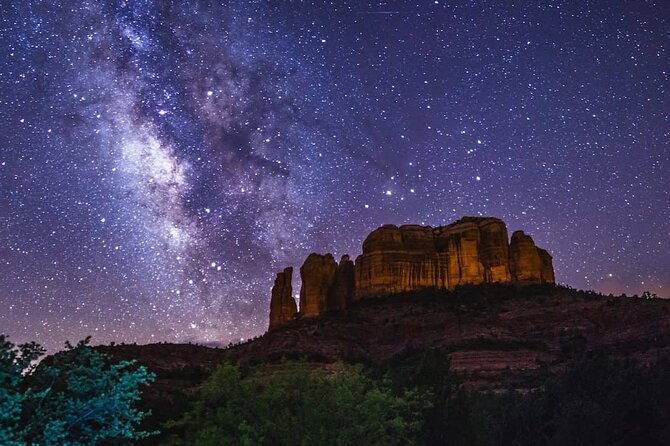
- Small group, one viewing spot: up to 15 people, seated with chairs
- No telescopes: you learn with the naked-eye sky and simple tools like a planisphere
- Two cultures of star stories: Greek mythology plus local Indigenous constellation connections
- Prop-based learning: a play-doh-style Milky Way model and other visuals
- Cold-weather-friendly setup: blankets and hand warmers, plus a clear note to dress warmly
The two-hour Sedona format: seated stargazing with a clear plan
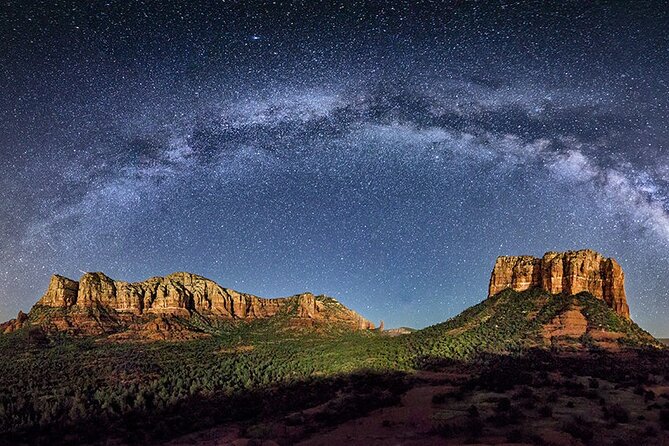
This tour runs about 2 hours and 5 minutes, starting at 7:30 pm. You’ll meet at 77 Cultural Park Pl, Sedona, AZ 86336, and the experience ends back at the same spot. That matters because you’re not doing a long drive between stops—you get to settle in, look up, and focus on the sky instead of logistics.
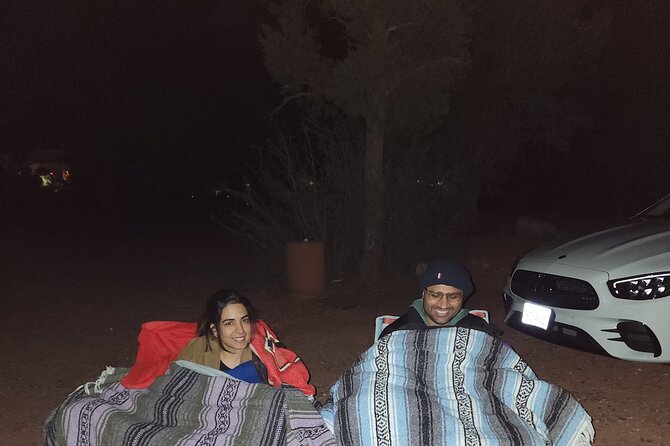
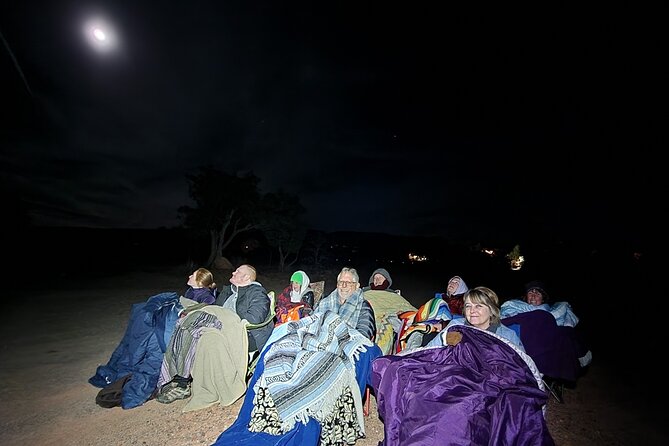
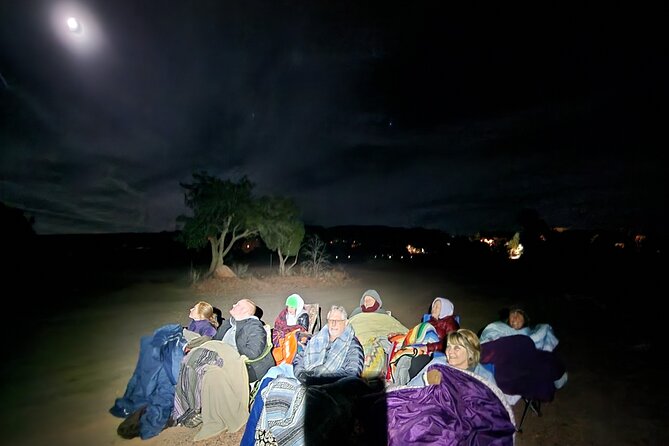
It’s also designed for comfort. There are chairs, and the guide provides blankets and hand warmers. That sounds like a small detail until you realize Sedona nights can feel cold, especially in winter. The tour explicitly encourages you to dress warmly, even with the provided extras—so plan for chilly hands and layers you can manage outdoors.
Finally, group size stays small. The cap is 15 travelers, which usually means you’re not lost in a crowd. You should expect a more interactive, “talk with the guide” vibe than a passive lecture you can’t hear.
You can also read our reviews of more tours and experiences in Sedona.

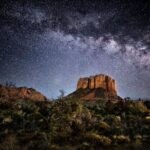
Meet Chad and why his teaching style works
Chad isn’t a casual stargazer who read a blog once. His background is built on years of leading night-sky tours—he’s been doing this for over six years, and he began professional guiding back in 2005. He also lives in Sedona (since 1996), so local knowledge isn’t just a sales line.
His teaching style blends three things:
- Mythic storytelling that gives the sky meaning
- Big-picture astronomy that explains what your eyes can actually catch
- A connection to his daytime work, tying the night stories to a broader theme of experience and science
If you enjoy a guide who can keep your attention, the vibe here is not stiff. People describe his humor and animation as part of the package. That’s useful because a night sky tour lives or dies on engagement—after all, you’re standing (or sitting) under darkness waiting for your brain to switch from daylight logic to sky logic.
The “no telescope” approach: learn the sky you actually have
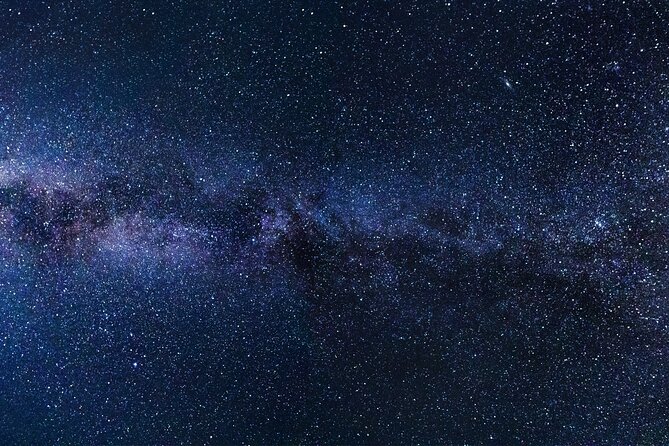
The promise here is direct: you’ll focus on what you can see without telescopes. Instead of sending you off to hunt for faint objects, the guide uses tools and visuals to help you place what’s overhead.
Expect support like:
- A planisphere (a simple device that helps you match the sky with the time of year)
- A play-doh-style Milky Way visual that makes the galaxy feel less abstract
- Other “fantastic visuals” that turn star patterns into something you can track
And yes, there’s a laser pointer used to point out constellations in the sky. A laser pointer is one of those tools that either helps immediately or makes things frustrating—here it’s used as a guide to the sky targets while the stories and concepts are explained.
This approach is valuable because it teaches you how to look. After the tour, you’re not just remembering names—you’re learning a repeatable method to find familiar patterns again later, even from a different location in Sedona.
Act 1: constellation stories—Greek myths meet local Indigenous associations
The night is structured like a story arc. Early on, you’ll hear constellation stories—both Greek and local Indigenous associations. The goal isn’t to turn the sky into trivia. It’s to show how different cultures have used the same stars to make sense of life, seasons, and meaning.
This is where many people get the biggest emotional payoff. Constellations become less like random dots and more like characters and narratives you can follow. One review noted that Cassiopeia felt like the “Dairy Queen” of the Milky Way, which is a fun example of the guide’s way of making stars feel personable.
You’ll also get context for why constellations matter beyond astronomy. When you hear cultural connections alongside the sky patterns, you’re learning two things at once:
1) how to spot the group of stars
2) why people have linked those patterns to stories and roles
That pairing can help even if you know little about stars. You’re not starting from scratch—you’re building meaning and orientation at the same time.
Act 2: “big picture” astronomy that keeps your feet on Earth
Next comes the part that helps you understand the mechanics. The guide emphasizes what he calls big picture astronomy—the big relationships: your position on Earth, how the sky appears to rotate, and how motion works across the solar system and galaxy.
This is useful because most stargazing confusion comes from perspective. The sky doesn’t move like a carousel you can walk around; it moves because you’re on a moving planet, and the sky is a projection of where objects are relative to you. Chad’s explanations focus on that kind of clarity—how you can understand the stars’ movement and placement without technical equipment.
If you’ve ever struggled to picture why constellations seem to change over time, this is where the “aha” tends to happen. The tour specifically highlights both the fast and slow movements of stars, which helps you connect what you see over minutes and nights to what’s really happening in space.
And because this is done with simple visuals (not a planetarium screen the whole time), you can link each explanation back to the real sky above you.


Act 3: the day-time connection and the “history” thread
A third component ties the night tour into the guide’s other work: his Experiential and Scientific Vortex Tour. The phrasing here is a bit artsy, but the real takeaway is straightforward—stories about the stars connect to bigger themes he covers in daytime sessions.
You don’t need prior knowledge to enjoy this section. It works more like a “so what” moment. It reminds you that star knowledge isn’t locked in textbooks. It can be a way to connect science, culture, and how people interpret their world.
What you might see: Orion, Sirius, Cassiopeia, the Dippers, and planets
Targets vary by season and date, but this kind of tour often uses the time to highlight the most recognizable constellations. One schedule highlight lists Orion, Sirius, Cassiopeia, Leo, Gemini, Taurus, Pleiades, plus bright planet sightings such as Jupiter and Saturn, and the Big Dipper / Little Dipper.
Moonlight is a big factor in how much you can see. This tour is aimed at nights when the Moon isn’t overpowering things—one example schedule notes no Moon during the tour hours. When that happens, you usually get better contrast, and it’s easier to notice patterns quickly.
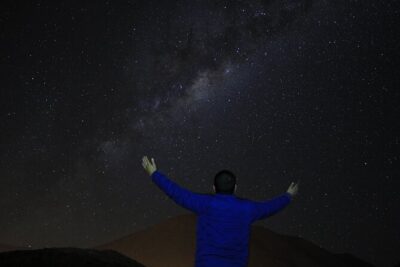
On clear nights, people have also reported shooting stars while stargazing. That’s not guaranteed, but it’s the kind of bonus you might catch when the sky cooperates.
Sedona at night: what to wear and how to stay comfortable
This tour comes with comfort items, so you can focus on looking up instead of shivering. Still, Sedona can surprise you after sunset, so plan like a pro:
- Wear warm layers
- Bring hat/gloves if you run cold
- Expect to sit outdoors for most of the tour
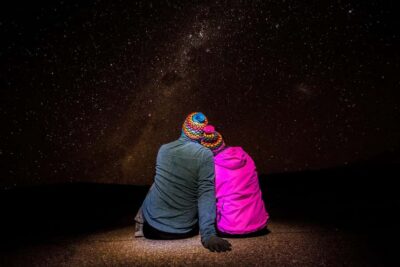
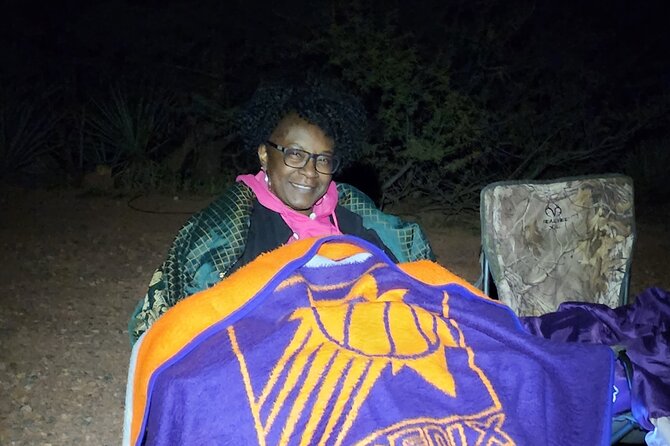
The guide provides blankets and hand warmers, and the instructions explicitly say to dress warmly. The comfort setup is clearly part of the overall value—people mention it made the night cozy even on chilly dates.
Also, note the tour asks you to refrain from bringing pets and alcohol. Service animals are allowed.
Weather reality: what happens when clouds roll in
This experience requires good weather. Sedona doesn’t get extreme rainfall, and the tour notes that clouds at night are uncommon. There’s also a local microclimate effect described as “chimney winds” from Oak Creek canyon that can shift and clear conditions near the tour time.
Still, clouds happen. If the night turns cloudy, the experience includes flexibility: you can cancel with a full refund based on discretion even if you’re inside the standard 24-hour policy window. If it clears, you get the best of both worlds—comfort plus a sky show. If it doesn’t, you aren’t stuck.
Practical advice: even if you’re optimistic, keep your schedule flexible enough to handle a weather decision.
Value for $100: what you’re paying for (and what you’re not)
At $100 per person for just over two hours, the value depends on what you want from stargazing.
You’re paying for:
- Storytelling you can remember later (Greek + local Indigenous constellation associations)
- A learning method that doesn’t require telescopes
- Practical visuals: planisphere, a Milky Way model style prop, and pointing aids
- Outdoor comfort: chairs, blankets, hand warmers
- A small group format that helps you follow along
You’re not paying for:
- Telescope viewing or astrophotography gear
- A “stand quietly and guess” experience
- A drive-it-yourself night where you’re on your own trying to match stars
So if you like science explained in human terms—and you’re happy to trade a bit of “quiet looking” for guided understanding—this tends to feel worth it.
If you’re the type who wants to see planets through equipment, or you already know the constellations cold and don’t want stories, you might feel disappointed. The tour’s whole point is naked-eye learning plus mythic context, not equipment.
Who this tour fits best (and who should think twice)
This tour is a great fit for:
- People who like constellation stories and cultural connections
- Star beginners who want a method, not a list
- Anyone who finds astronomy more interesting when it’s connected to meaning
- Families and groups who want a comfortable seated night activity
It may not fit as well if:
- You came specifically for telescope-only viewing
- You want minimal talking and maximum silence
- You prefer a super-technical astronomy lecture without mythology or pop-culture style connections
One subtle point: the guide encourages participation. If that’s your style, it can be fun. If you prefer passive listening only, you’ll want to mentally prepare for interaction.
Practical checklist for your Sedona night sky experience
Here’s how to set yourself up for a smooth evening:
- Arrive a little early to settle in at 77 Cultural Park Pl
- Dress for cold, even with provided blankets and warmers
- Expect a seated, one-location format—so bring layers that are easy to manage outdoors
- Don’t bring pets or alcohol
- If you’re coming at a time when cloud cover is a risk, keep your plans flexible for the weather decision
If you’re going for the best visibility, aim for a night when Moonlight is low. When Moonlight is reduced, the sky targets get easier to spot and the whole “learn the stars by sight” approach lands better.
Should you book this Sedona night-sky tour?
I’d book it if you want a star experience that actually teaches you how to look up—using stories, props, and big-picture explanations, all wrapped in a comfortable outdoor setup. It’s especially strong for first-timers who want a guided path to recognizable constellations like Orion, Sirius, Cassiopeia, and the Dippers.
I’d pass (or consider another option) if your goal is strictly telescope viewing or if you dislike myth and cultural storytelling in your learning. This tour is designed for naked-eye astronomy with meaningful context, not equipment-based observing.
If you like the idea of learning the sky in a way you can repeat later—standing in Sedona again, looking up, and knowing what you’re seeing—this is a solid choice.
FAQ
How much does the Night Sky Star Story, Galaxy, and Sedona Story Tour cost?
It costs $100.00 per person.
How long is the tour?
The tour lasts about 2 hours and 5 minutes.
What time does the tour start?
The start time is 7:30 pm.
Where does the tour meet?
You meet at 77 Cultural Park Pl, Sedona, AZ 86336, and the activity ends back at the same meeting point.
Is the tour in one location or multiple stops?
It stays at one location, with chairs provided for you to sit.
Does the tour use telescopes?
The tour focuses on what you can see with your own eyes and does not present itself as a telescope tour.
What comfort items are included?
The guide provides blankets and hand warmers, and there are chairs to sit in.
What should I wear or bring?
Dress warmly. The night is outdoors and you may want extra cold-weather items like a hat or gloves since you’ll be seated for a while.
What if it’s cloudy on the night of my tour?
Clouds happen sometimes. If the tour is canceled due to weather, you’ll be offered a different date or a full refund, and you also have an option to cancel for a full refund based on discretion even within the 24-hour window.
Are pets and alcohol allowed?
Please refrain from bringing pets and alcohol. Service animals are allowed.