A latte, then the border line. This DMZ-edge trip from Seoul to Aegibong is interesting because you get clear North Korea views from South Korea, right along the Jogang River.
I like how it stays “real” and practical: you ride with a guide, move through the main viewpoints in a logical order, and still have time to absorb what you’re seeing.
Two big things I love: the Aegibong observatory stop (조강전망대) that’s timed for the best look across, and the way the stops connect the Korean War story to what’s in front of you now.
Even the guide style has a strong track record in the feedback, with names like Gogo, Judy, Hana, Alex, Crystal, Alice, and Juno showing up in standout notes for clear explanations and patient Q&A.
One consideration: it’s not the full DMZ border-crossing experience. You’re close, but you’re still doing a structured day with a security checkpoint, and there’s a full 1-hour Starbucks stop that some people may wish were longer on the viewpoints side.
In This Review
- Key highlights to know before you go
- DMZ-edge views without DMZ entry: what you’ll really see
- Getting there from Seoul: pick-ups, timing, and the passport checkpoint
- Aegibong’s memorial stop: Marine Corps history with a view in mind
- Peace Eco Park to Peace Ecological Park: gardens, relics, and border-facing time
- The shaking bridge: the photo stop that gets your heartbeat going
- Peace moments: bell, altar, and a short performance-stage pause
- Starbucks Aegibong: the closest Starbucks to North Korea
- 조강전망대 observatory: binoculars and the 1.4 km claim
- How the day feels: short, structured, and very “look-focused”
- Price and value: is $49 a smart deal for this kind of access?
- Who should book this tour (and who should skip it)
- Should you book this DMZ-edge best-view and Starbucks tour?
- FAQ
- How long is the tour from Seoul?
- Does this tour enter the Korean Demilitarized Zone (DMZ)?
- Do I need a passport?
- Where are the pick-up locations in Seoul?
- Is coffee included at Starbucks?
- What is the viewing stop at the end of the tour?
Key highlights to know before you go
- Aegibong DMZ-edge views without entering the DMZ along the Jogang River
- Passport required at the Aegibong ticket office checkpoint area
- Aegibong Peace Eco Park stops with bird-spotting themed areas and border-facing gardens
- 애기봉 평화생태공원 흔들다리 (shaking bridge) for classic “north Korea from here” photos
- Peace bell and peace altar moments aimed at reunification symbolism
- Starbucks Aegibong + 조강전망대 observatory for the closest Starbucks to North Korea and a long-range look
DMZ-edge views without DMZ entry: what you’ll really see
Let’s clear up the main expectation. This is a DMZ-adjacent day trip, not a tour that takes you across the line. You won’t walk into the official restricted DMZ area, and you won’t do the kind of access you might imagine from the word DMZ alone.
What you do get is still powerful: you travel to Aegibong, where the Jogang River runs near the DMZ, and you spend time at vantage points facing North Korea. The viewing angle is the point of the day—South Korea, close to the border, with fewer barriers than you’d expect from a regular city tour.
This kind of access matters because it compresses the “wait and wonder” feeling into a short, guided format. You don’t spend your whole day asking, Where do we look? A guide handles the structure, and the stops are built around where you can actually point your camera and binoculars.
You can also read our reviews of more tours and experiences in Seoul.
Getting there from Seoul: pick-ups, timing, and the passport checkpoint
The day starts clean and simple. You’ll meet in the morning and get picked up around central Seoul, with stops that include Myeongdong Subway Station (Exit 9), Seoul City Hall Subway Station (Exit 6), and Hongik Univ / Hongdae area (Exit 3). Start time is listed as 9:00 am, and the tour runs about 5 hours total.
From a practical standpoint, the schedule is tight but not frantic. The itinerary moves through major stops in a set order, and each one has a time window that’s long enough to see, take photos, and listen without turning the day into a sprint.
Then comes the part that makes this tour feel serious. At Aegibong ticket office, you enter a security area where you’ll need your passport. The rules are straightforward: you cannot pass without it. So if you’re the type who packs everything in the hotel bag, do a last check before leaving.
If you’re doing this as a last-minute add-on, remember that the border region can be weather- and schedule-sensitive. One guide-handling detail from prior experiences: if the shaking bridge isn’t operating due to conditions, you may face extra walking up the hill to reach the best views.
Aegibong’s memorial stop: Marine Corps history with a view in mind
After the ticket-office security step, the tour moves to the Marine Corps Memorial. You’ll spend about 20 minutes here, with the focus on remembering the Korean War Marines—15,000 Marines are referenced in the stop overview.
What I like about this memorial stop is how it sets the emotional frame before the day turns into pure “looking north.” Without that context, the views can feel like a science project. With it, the scenery becomes a living map of where history still shows up in decisions, borders, and daily life.
Also, the timing works. You’re not rushing straight from buses into viewpoints. You get a pause that makes the later “what does it mean to see that line?” questions easier to handle.
Peace Eco Park to Peace Ecological Park: gardens, relics, and border-facing time
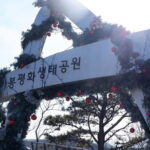
You’ll spend the heart of the morning at Aegibong Peace Eco Park (about 1 hour), followed by time at the Aegibong Peace Ecological Park (about 30 minutes). These park stops are designed for more than photos.
You’re looking for a blend of meaning and scenery: walking paths, themed areas, and war relics referenced as part of the park concept. The ecological side is also highlighted, including 80+ rare bird species that you can spot when conditions are right.
You don’t need to be an ornithology fan to enjoy it. The value is that it gives your eyes more than one focus. One minute you’re reading and absorbing the messaging around the area, and the next minute you’re turning your head toward the north-facing views when the park layout lets you.
The shaking bridge: the photo stop that gets your heartbeat going
Next up is 애기봉 평화생태공원 흔들다리, a 150m shaking bridge. The stop is about 30 minutes, and yes, it’s the one people remember later.
This is a classic “you’ll never forget where you took that picture” kind of stop. The bridge isn’t just a thrill ride. It’s placed to put you in the right direction for border shots, with the river and North Korea-facing sights part of the experience.
Here’s the practical angle: treat it like any viewpoint bridge. Wear comfortable shoes, keep your phone secure, and plan to move slowly if the bridge is active or has visitors ahead of you. If the bridge is closed due to conditions, you’ll likely need to adjust—based on prior notes, that could mean extra walking up the hill to keep getting the view.
Peace moments: bell, altar, and a short performance-stage pause
Midday becomes a mix of symbolism and rest breaks.
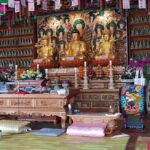
You’ll have a peace bell stop (애기봉 평화의종) for about 15 minutes, where you can ring the bell that symbolizes hope for reunification. After that, there’s a shorter peace altar reflection moment (about 10 minutes), built in 2018 according to the stop overview.
There’s also time at the outdoor performance stage (about 20 minutes). If your timing lines up, you may catch modern or traditional cultural performances. Even when there’s nothing scheduled, it’s still a useful pause—think of it as a chance to sit, regroup, and let your brain process what you’ve already seen.
These stops sound ceremonial, but they work because the day is intense. You’ve got security checks, war-memory context, and border views. The bell and altar give you a mental button: a moment to step out of “tour mode” before you go to Starbucks and then the final observatory.
Starbucks Aegibong: the closest Starbucks to North Korea
Then you hit the headline. The tour includes Starbucks with about 1 hour there, positioned as the world’s closest Starbucks to North Korea.
Two things to know so you don’t get disappointed:
- The tour data clearly says coffee/tea is not included. You’ll need to pay for your drink.
- The attraction is the view from the café stop area. The timing gives you a window to look across while you grab a latte and do the most honest version of “geopolitics with a straw.”
There’s also a media framing that’s been noted in coverage of this location. The idea is that the store’s presence has become a symbol of security and an unusual “inside look” without crossing a border.
One traveler used this tour as a backup when a standard DMZ tour got shut down because of a marathon-related government closure. If you’re in that situation, this Starbucks-and-vantage format can be a smart Plan B: not the same access, but still a memorable look across.
If you’re sensitive to how time is divided, be aware of the trade-off. You spend a full hour on Starbucks, and some people will wish that hour were instead added to the observatory or bridge time. If you’re a coffee person and you enjoy the symbolism of the spot, you’ll probably feel the opposite.
조강전망대 observatory: binoculars and the 1.4 km claim
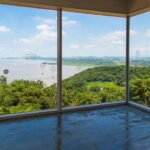
The last major viewing stop is 조강전망대 (Jogang Observatory), with about 30 minutes on site. This is the part built around the “best, unobstructed” look—your final chance to scan the far side.
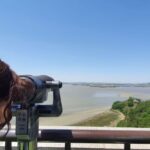
The stop overview includes a detail that’s easy to latch onto: binoculars can reveal villages about 1.4 km away. That doesn’t mean you’ll always see everything perfectly. Weather and distance still matter. But it does tell you the planners intend you to focus on long-range visual spotting, not just standing around.
I like ending with the observatory because it keeps momentum. Earlier you’ve had memorials, parks, and ritual stops. Now you have a clear job: focus on the view, use the tools, and take in what your guide has been connecting all day.
How the day feels: short, structured, and very “look-focused”
At about 5 hours, this tour is not trying to be a slow, reflective half-day. It’s more like a guided route with a theme: border access without crossing the DMZ.
The structure also affects your comfort. You move by coach and spend time walking only at each stop. That’s a big deal when you’re dealing with security processing and multiple locations in one region.
Group size is listed at a maximum of 100 travelers. That’s large enough that you’ll hear other people in the background, but it’s still not the chaos of a huge open-bus crowd. If you’re trying to take photos without constant shoulder-to-shoulder pressure, arrive ready to wait a little at each checkpoint and photo pinch point.
Also, there’s no meal included. Coffee/tea isn’t included either. I’d plan on eating before you go or grabbing food after you’re dropped off, so you’re not stuck deciding what to eat while your brain is already fixed on the border view.
Price and value: is $49 a smart deal for this kind of access?
The price is $49 per person, with round-trip transportation, a tour guide (English or Chinese), and entrance fees included.
Is it a deal? For this category of DMZ-edge access, it often is—mostly because you’re paying for three things at once:
- Transportation from central Seoul
- Guide time spent moving you through the key points where the views actually happen
- Entrance fees at the Aegibong-area sites
If you’re comparing it to doing something similar on your own, the security checkpoint and timing make DIY harder than it sounds. You’d still need to coordinate transit, locate entrance processes, and manage a tight schedule around specific viewpoints.
That said, value depends on what you want. If your dream is a full DMZ experience where you cross or get the most restricted access possible, this won’t match that. It’s built for the people who want the closest practical views from South Korea, plus the cultural stops and a very famous café moment.
Who should book this tour (and who should skip it)
This is a strong fit if:
- You have limited time in Seoul and want border-facing sights without a longer day
- You’re okay with a structured program that emphasizes viewing and context
- You want a guided explanation that helps the symbols make sense (especially the memorial and peace stops)
- You like the idea of Starbucks as a cultural “marker” of how close modern life sits to the border
I’d skip it if:
- You’re only interested in full DMZ entry and the experience must include crossing into the restricted zone
- You really dislike the idea of spending an hour at a café even if it comes with a view
- You don’t want to deal with a passport-based checkpoint step
Should you book this DMZ-edge best-view and Starbucks tour?
If you want North Korea views from Seoul with a clear route and guided context, this is a good booking. The biggest wins are the Aegibong viewpoints and the final observatory stop where binoculars come into play, plus the unusual Starbucks location that’s become part of the day’s story.
Just go in with the right expectation: it’s close and meaningful, but it’s not a full DMZ crossing. If that matches what you want, the $49 price with transport and entrance fees included can feel like solid value.
If you tell me your travel dates and whether you care more about photography, history, or the café stop, I can help you decide if this is the best fit or if a different DMZ-style option makes more sense.
FAQ
How long is the tour from Seoul?
The tour is listed at about 5 hours.
Does this tour enter the Korean Demilitarized Zone (DMZ)?
No. It does not technically enter the DMZ, but it takes you right up to the edge along the Jogang River near Aegibong.
Do I need a passport?
Yes. Your passport is required during the tour, and you need it to pass through the security area at the Aegibong ticket office.
Where are the pick-up locations in Seoul?
You can be picked up at Myeongdong Subway Station (Exit 9), Seoul City Hall Subway Station (Exit 6), and Hongik Univ. Station / Hongdae area (Exit 3).
Is coffee included at Starbucks?
No. The tour notes that coffee and/or tea are not included, so you’ll need to pay for your drink.
What is the viewing stop at the end of the tour?
The final main stop is 조강전망대 (Jogang Observatory), with binocular viewing mentioned and the claim that villages can be seen about 1.4 km away with binoculars.