REVIEW · SEOUL
Autumn Foliage-Mt. Seorak, Sokcho Fish Market, Sokcho Beach
Book on Viator →Operated by Korea Time Tour · Bookable on Viator
Autumn colors and seafood in one long day. That’s the hook of this Seoraksan–Sokcho route from Seoul, built for the Korean fall season when timing really matters. I love how the day blends Seoraksan National Park views with a temple and Buddha sight, then swaps to the easy fun of the Sokcho Fish Market and seaside stroll.
Two things I also like a lot: you get an English-speaking guide and round-trip transport that handle the hard parts for you, and the schedule gives you a decent shot at enjoying the park without getting crushed by peak crowds. A small consideration: this is a long day (about 12–13 hours) with at least intermediate hiking at Seoraksan, so you’ll want solid shoes and a pace that can handle wet or slippery autumn weather.
In This Review
- Key highlights to notice before you go
- Why Seorak and Sokcho work together on an autumn day trip
- The morning run from Seoul: Myeongdong and Hongik Univ meet-up points
- Seoraksan National Park: fall colors, temple stops, and your free-time choices
- Cable car option: a practical note
- Timing and guide skill: the service level is part of the value
- Sokcho Tourist & Fishery Market: seafood, street food, and local energy
- Sokcho Beach: a short seaside reset after the market
- Getting back to Seoul: drop-off choices and avoiding the last-minute confusion
- Price and value: why $68 can feel like more than it looks
- What to pack and how to pace yourself
- Who this tour suits best (and who should think twice)
- Should you book this Seoraksan and Sokcho autumn day trip?
- FAQ
- How long is the Seoraksan and Sokcho day trip?
- Where do you meet in Seoul?
- Is the cable car included?
- What should I wear for Seoraksan?
- Are admission fees included?
- Can I bring pets?
- What if weather is bad?
- What’s the cancellation window?
Key highlights to notice before you go
- Seoraksan National Park fall scenery plus time to walk, hike, or use the cable car option (if selected)
- Shinheungsa Temple and the Buddha statue area, great for a culture break in the mountains
- Sokcho Tourist Fishery Market street food and seafood in a traditional fishing hub
- Sokcho Beach for a reset with a park and walking trails after the market
- Attentive English-speaking guides and smart timing that helps you enjoy stops efficiently
- Small-group feel capped at 100 people, with vehicle type adjusted by group size
Why Seorak and Sokcho work together on an autumn day trip
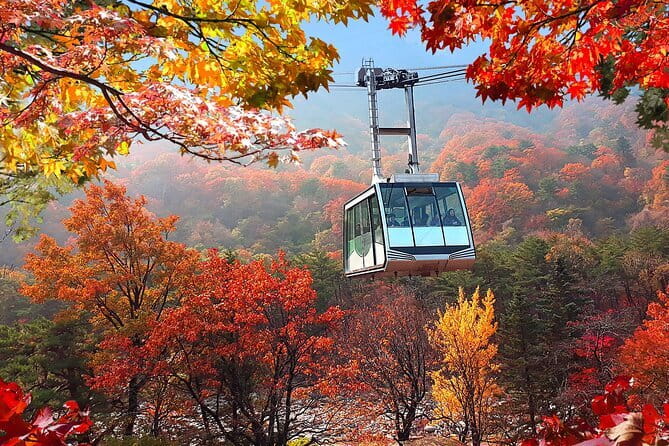
If you’ve only got one full day in Seoul, this kind of combo makes a lot of sense. Seoraksan is the big-name fall backdrop, and Sokcho gives you the payoff you can smell—sea air, seafood, and people-watching at the beach after you’ve been up in the mountains.
What makes this trip especially practical is that it covers two areas that are not always simple to stitch together by public transport in a single day. You’re not trying to solve schedules between changing buses and train transfers. Your guide and transportation do that work for you, and you can focus on actually enjoying the scenery.
I also like the tone of the itinerary: it’s not just park pictures and then you’re done. You get a temple stop mindset in the mountains, then a food-stop rhythm in Sokcho, then an easy nature-and-walk finish at the beach.
You can also read our reviews of more tours and experiences in Seoul.

The morning run from Seoul: Myeongdong and Hongik Univ meet-up points
This day trip starts with two Seoul meet-up options: Hongik Univ. Station (Exit 8) or Myeongdong Station (Exit 4). For most people, the Myeongdong option is the easiest if you’re already staying in the center of town and don’t want extra subway hops before departure.
Your first transfer heads toward Seoraksan, and that opening window is where the day usually feels smooth. You’re leaving early enough that you’re not starting the mountain portion in the thick of the busiest daytime rush.
One small tip: arrive 5–10 minutes early. This kind of day trip moves as a unit, and latecomers can lose their spot with no refund.
Seoraksan National Park: fall colors, temple stops, and your free-time choices
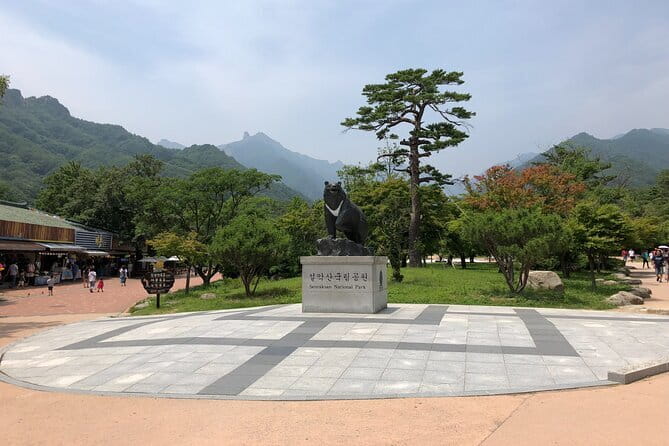
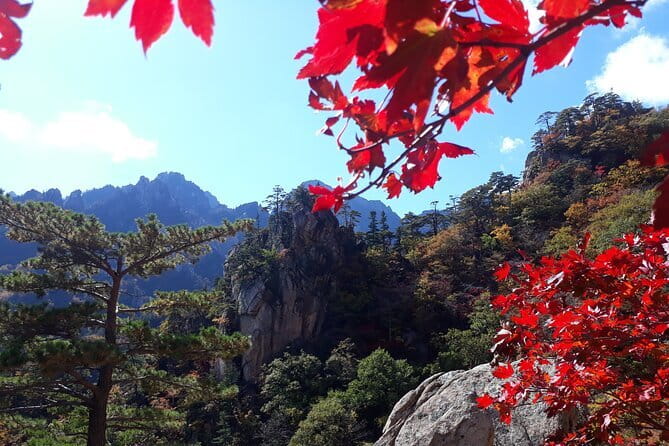
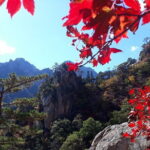
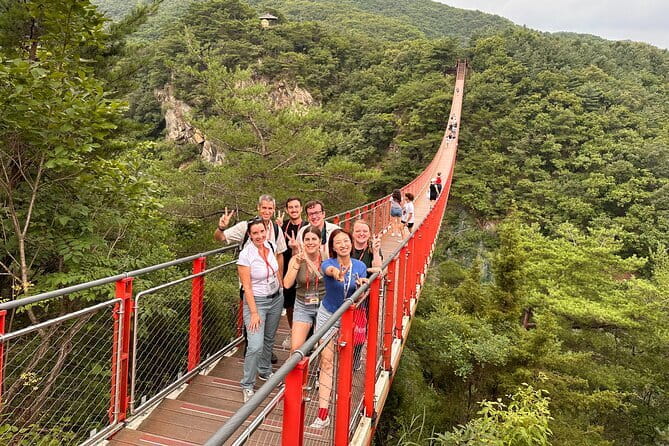
Seoraksan is the star. Plan on about 5 hours at the park, with multiple ways to spend that time depending on how energetic you feel. You can walk or hike, and there’s also a cable car option if you choose it in advance.
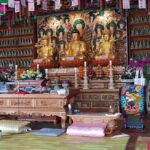
You’ll also see two standout cultural pieces: a large Buddha statue and Shinheungsa Temple. That matters because it breaks up the “only scenery, only steps” effect. Even if you’re not doing a long hike, you still have memorable stops that feel tied to Korean mountain culture.
From what I’ve seen work best in this kind of place, you’ll want a simple plan:
- Start with the temple/Buddha area if you want an easy win early.
- Then decide if you want a longer walk, a shorter loop, or a more scenic viewpoint direction.
- If weather shifts, keep your time flexible—autumn can turn fast.
Cable car option: a practical note
If you selected the cable car option, you’ll handle the ticket through the tour team. If the cable car isn’t operating, you’ll get a refund of the cable car fee in cash from your guide.
Also, remember that even with cable car access, the park still expects you to walk around. The tour notes an intermediate level of hiking at Seoraksan, so comfortable shoes aren’t optional here.
Timing and guide skill: the service level is part of the value
The guides are consistently one of the biggest reasons people rate this trip so highly. Names you might hear in the group include Kangwon and David Oh, and the common thread is attention—helping you pick the right options once you’re at each stop, plus keeping the day moving at a pace that doesn’t waste your time.
In practical terms, a good guide changes how you experience the day:
- They help you choose routes inside the park based on what you want most that day.
- They guide you on what’s worth trying at the fish market.
- They keep transitions tight so you spend more time at the sights and less time stuck in transit.
There’s also a pattern of smart scheduling. People describe feeling like they arrived at the right times—especially important in autumn, when everyone wants the same views.
The only caution is weather. On a rainy day, the day can feel more rushed at each stop since you’re dealing with travel time plus slippery ground and umbrellas. If you’re sensitive to crowds and rain discomfort, pack for wet conditions and plan to keep moving even if you’d rather slow down.
Sokcho Tourist & Fishery Market: seafood, street food, and local energy
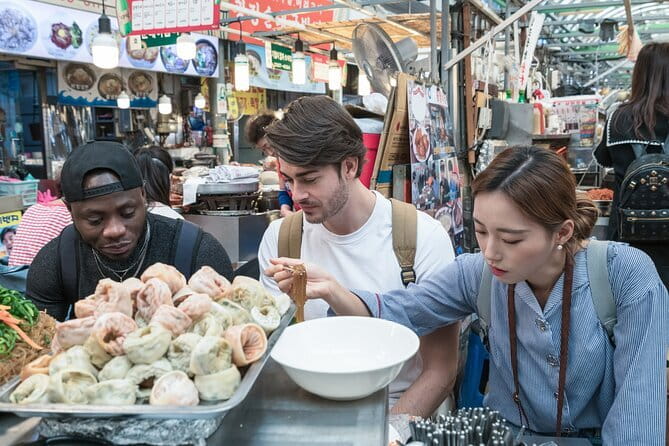
After the mountain, Sokcho Fish Market is a change of pace that feels almost like a reward. You’ll spend about 1 hour 15 minutes at the Sokcho Tourist & Fishery Market, a large traditional market tied to the local fishing industry and tourism.
This stop is built for eating on the move. You can try street food and seafood straight from the market energy, which is exactly what makes the place feel authentic rather than like a staged restaurant break.
One thing I’d treat as a priority: don’t overthink what to buy first. If you’ve got an English-speaking guide with you, ask what specialties are best that day and then sample. The market works best when you treat it like a tasting mission, not a single “main dish” plan.
Practical note: market time is short by design. It’s long enough for a few tastings and photos, not long enough for a relaxed wander all day. If you want to focus on eating, come ready to move.
Sokcho Beach: a short seaside reset after the market
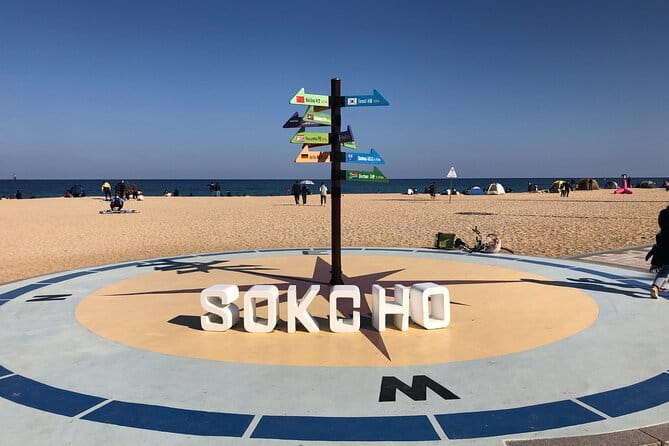
Next comes the quick, easy nature break: Sokcho Beach for about 30 minutes. This is the kind of stop that lets your legs reset after Seoraksan steps and market standing.
Sokcho Beach is described as popular with both locals and tourists, and it includes a park, a flower path, and a pine forest trail. That combination is why 30 minutes can work: you’re not forced into one long hike. You can choose what fits your energy—walk a section, enjoy the sea air, and grab a few photos without needing a strict itinerary.
If you’re traveling in autumn, this is also when you’ll appreciate the contrast. Mountains first, then the coast. It’s a simple rhythm that feels balanced rather than exhausting.
Getting back to Seoul: drop-off choices and avoiding the last-minute confusion
At the end, you return to Seoul, departing from Sokcho Beach. Your drop-off can be either:
- Dongdaemun History & Culture Park Station, or
- Myeongdong Station
This matters because it changes how easy your evening plans will be. If you’re trying to get back to the Hongik Univ area, pay attention: the tour notes that the group will not go back to Hongik Univ Station at the end. In that case, you’ll likely take subway line 2 from Dongdaemun History & Culture Park Station to reach Hongik Univ on your own.
So before you leave for the day, figure out which drop-off fits your hotel. It’s one of those small planning steps that prevents stress when you’re tired.
Price and value: why $68 can feel like more than it looks
At $68 per person, this trip is priced for a full-day, multi-stop day out with round-trip transfers and an English-speaking guide. You’re also getting free admission at the listed stops (Seoraksan park time and the market/beach entries are noted as free), which helps the price feel fair.
What you’re really paying for is logistics. Getting from Seoul to Seoraksan and then to Sokcho in one coherent schedule is the hard part. When transportation and timing are handled, you can spend your energy on the actual experience—views, food, and the seaside reset.
If you add the optional cable car, your total cost will go up. But it’s optional, and the tour team will refund the cable car fee in cash if it isn’t operating, which reduces the risk of paying for something you can’t use.
Overall, this is good value if you want one organized day covering three distinct “moods”: mountain culture, market food, and beach walking.
What to pack and how to pace yourself
Even with the guide, you’re doing real walking—especially in Seoraksan. At minimum, plan for:
- Comfortable shoes for intermediate hiking
- Weather protection, since autumn rain can hit and the day may feel rushed outdoors
- A light plan for snacks and water since meals and beverages aren’t included
Also think about pacing. This trip gives you time windows that are enough if you move with purpose. If you love slow wandering, you might feel the time crunch at the market or the park, especially when weather turns.
Who this tour suits best (and who should think twice)
This fits you best if you:
- Want Korean autumn foliage in a single day without sorting transportation
- Like a structured plan but still want free time to choose your pace inside the park
- Enjoy seafood markets and are happy to treat the fish market as a tasting experience
- Prefer a guided day with English support
It’s not ideal if you:
- Need a fully relaxed day with no intermediate hiking
- Hate being on a tight schedule if it rains
- Want to end near Hongik Univ specifically, since the tour end drop-off is limited to the two stations listed
Should you book this Seoraksan and Sokcho autumn day trip?
I’d book it if your goal is to get the big fall checkmarks—Seoraksan fall scenery, Shinheungsa, the Buddha statue area, plus Sokcho’s market and beach—in one smooth, guided day. The guide quality and timing focus make a difference, and the price reflects that value well.
I’d pause if you’re not comfortable with intermediate hiking or if you’re traveling during a period where rain is a concern and you hate wet, slippery walking. In that case, bring gear and be ready to adjust your expectations for how leisurely each stop feels.
If you’re flexible, this is a satisfying day out: mountain air, market food, and a sea-side finish, all handled with less hassle than doing it on your own.
FAQ
How long is the Seoraksan and Sokcho day trip?
It runs about 12 to 13 hours total.
Where do you meet in Seoul?
You can meet at Hongik Univ. Station (Exit 8) or Myeongdong Station (Exit 4).
Is the cable car included?
The cable car at Seoraksan is included only if you choose an option that includes it. Otherwise, it’s not included.
What should I wear for Seoraksan?
Seoraksan requires an intermediate level of hiking, so wear proper footwear like comfortable shoes.
Are admission fees included?
Admission tickets at the stops are listed as free for the tour’s included activities. The cable car (if chosen) is handled separately.
Can I bring pets?
No, pets cannot be accommodated.
What if weather is bad?
The experience requires good weather. If it’s canceled due to poor weather, you’ll be offered a different date or a full refund.
What’s the cancellation window?
You can cancel up to 24 hours in advance for a full refund. Less than 24 hours before the start time is not refundable.