REVIEW · SAN PEDRO DE ATACAMA
San Pedro de Atacama: Etno-Stargazing Tour with Transfer
Book on GetYourGuide →Operated by Astronomic tour, Observatory Licanatay · Bookable on GetYourGuide
The stars feel close in Atacama. This tour mixes telescope viewing with an Andean sky-story lesson, and guides like Felipe and Claudio make the night feel like a live class you actually want to attend. You’re not just staring up—you’re learning how people in this region mapped the sky long before modern astronomy.
I especially like the two-part approach: a Western-style walkthrough of the universe, then a cultural journey through how ancient inhabitants of the Andes interpreted the Milky Way and the figures in the dark. One thing to plan for: the desert can be seriously cold, even when daytime feels fine, so you’ll want real warm layers and to take the weather seriously.
In This Review
- Key highlights to look for
- Why this San Pedro de Atacama night-sky tour feels special
- The full flow: pickup, drive, guided lecture, and your telescope turn
- Two skies in one night: Western astronomy plus Andean sky knowledge
- Telescope time at the darkest point you’ll reach
- The photo souvenir and how moonlight changes the night
- What you’ll likely see: constellations, planets, and deep-sky targets
- Cold desert reality: what to bring so the night stays enjoyable
- Price and value: why $41 can actually be a smart spend
- Who should book this etno-stargazing tour
- Should you book this tour?
- FAQ
- How long is the San Pedro de Atacama etno-stargazing tour?
- Where do I get picked up?
- What time is pickup?
- What languages are offered?
- Is telescope viewing included?
- What drinks are included?
- Does the moon affect the tour or the photo?
- What should I bring?
- What happens if weather is bad?
Key highlights to look for
- Two different ways of reading the sky: classic astronomy ideas plus Andean interpretations of the Milky Way and constellations
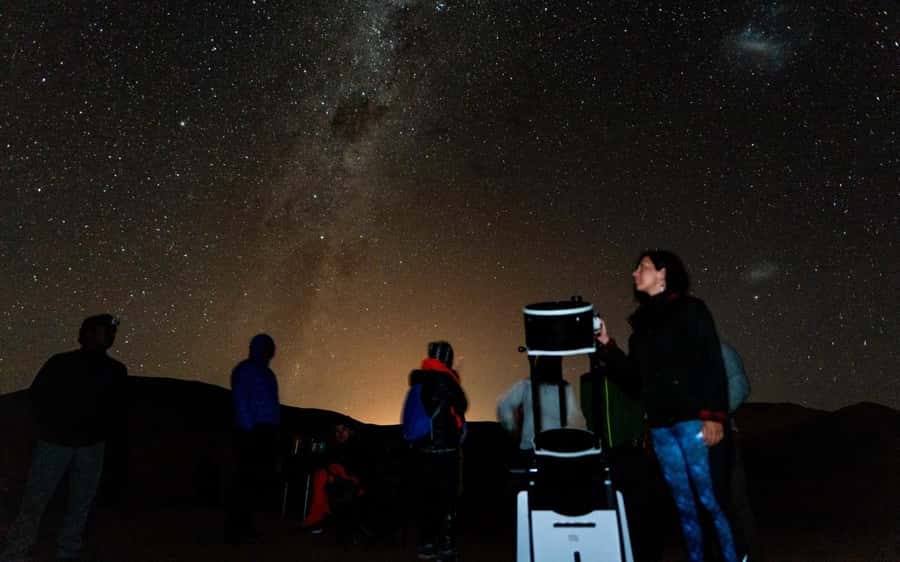
- Telescope time with an astronomy guide: they help you focus and point the scope at targets in the southern sky
- Southern Hemisphere targets on the menu: you can catch constellations like the Southern Cross, plus planets and more depending on the night
- A souvenir photo with the stars: emailed courtesy photo after the session
- Warm drinks around a fire: coffee, tea, and sometimes red wine to take the edge off the night
- Short, efficient transfers: pick up in San Pedro de Atacama with drop-off in the same area
Why this San Pedro de Atacama night-sky tour feels special
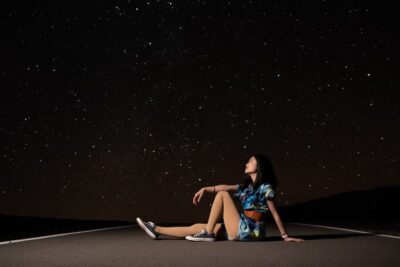
San Pedro de Atacama already earns its reputation for clear skies. This experience adds something that most stargazing tours skip: you get real context. Instead of treating the heavens like random pretty dots, you’ll learn how to identify what you’re seeing, what it means, and why ancient observers bothered at all.
The first part leans Western—think how astronomy builds a map of the sky, how brightness and color can hint at what stars are doing, and how to connect your eyes to a bigger story about the cosmos. Then the tour shifts into an Andean lens, describing how indigenous communities read patterns in the Milky Way and the night sky to understand everyday life—animals, water and rivers, timing/schedules, and even beliefs about what comes after death. It’s a meaningful switch that makes the sky feel personal, not distant.
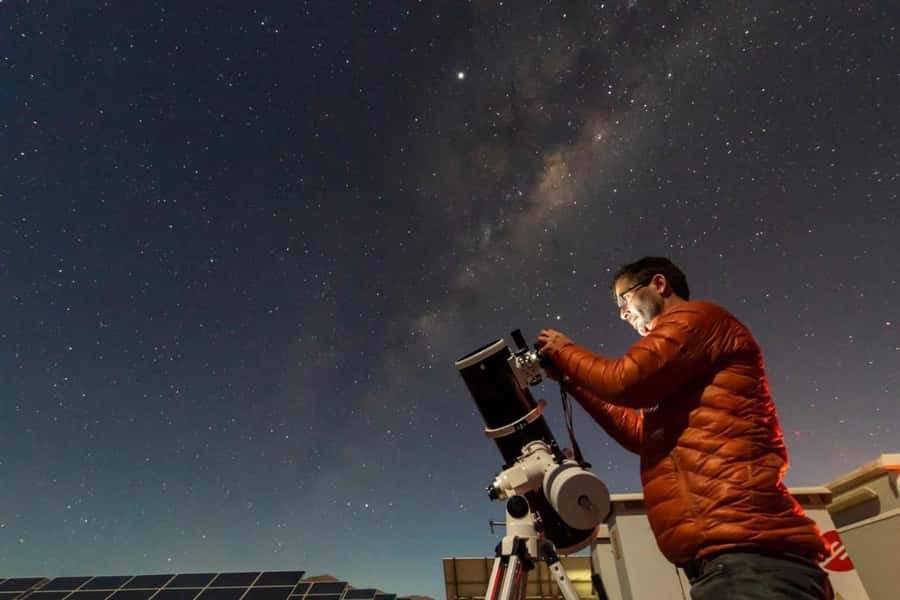
The second big reason I like this tour: the telescope isn’t a gimmick. With an astronomy specialist (guides you might meet include Felipe, Claudio, Margarete, and Yvonne), you don’t just get a quick look and move on. The emphasis is on seeing details—planets, stellar groupings, and deep-sky targets when conditions allow—and getting the image sharp enough to matter.
You can also read our reviews of more tours and experiences in San Pedro De Atacama.
The full flow: pickup, drive, guided lecture, and your telescope turn
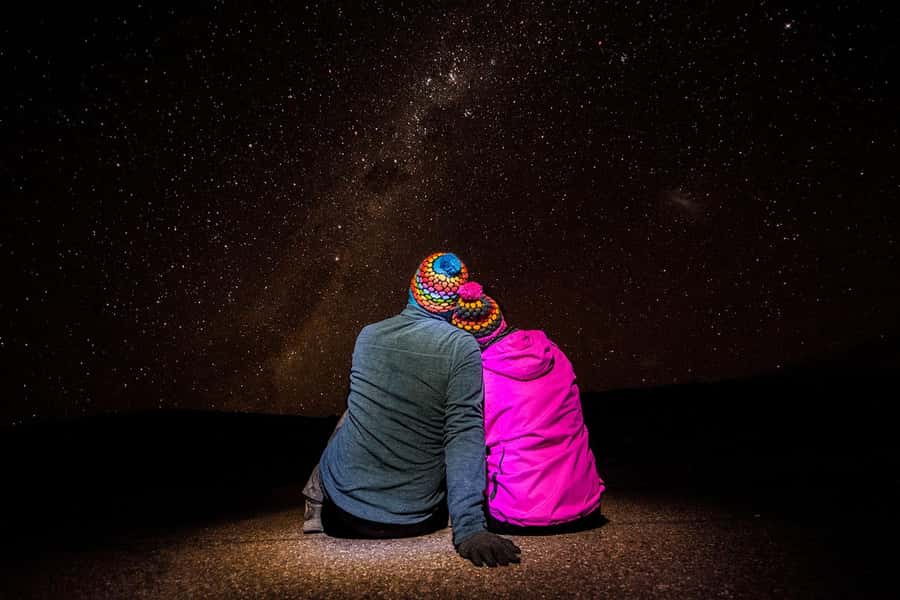
This is a 150-minute outing built around one goal: get you somewhere dark, then keep you there for a high-quality viewing session. Pickup is in central San Pedro de Atacama at either Restaurant Tara (Licancabur 10) or directly at Licancabur 10, depending on the option you choose. Timing runs a bit by season: pickup is set for 7 PM in April through August, and 9:00 to 9:20 PM in Chile’s summer.
You’ll board a van for a short ride into darker conditions. Even that quick transfer matters. Stargazing in town lighting is like trying to read a book with a flashlight in your face—it works, but it’s never as good as it could be.
Once you reach the viewing area, the tour moves into the main guided session. You’ll get that two-part lesson: first a “Western vision” of the sky (how we study stars, planets, and the structure of the universe), then the Andean “ethnic astronomical journey,” where the focus turns to the Milky Way and how constellations and sky figures were used for practical and spiritual information.
After the lecture comes the part most people came for: telescope observing. The guide helps you aim and focus, and the scope is used to show objects that can change with season—planets, stars, binary stars, star clusters, nebulae, and galaxies (again, depending on the time of year and the night’s conditions).
Near the end, you wrap up with a warm-drink and snack-style stop around a fire. Some nights include ponchos or blankets for warmth, and you’ll likely finish with a bit of relaxed social time before the ride back.
Two skies in one night: Western astronomy plus Andean sky knowledge
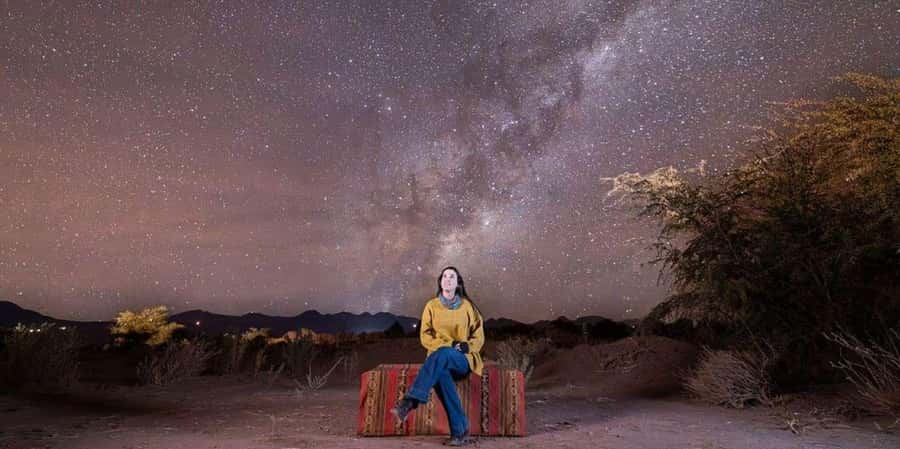
The most interesting structure here is that you get two separate “reading skills” for the same sky. That’s not just educational—it changes how you look.
In the Western-style segment, you’ll learn the basics of how astronomers interpret brightness and how to connect what you see to planets and deeper space objects. Expect talk that moves from the familiar (constellations you can learn to spot) to bigger ideas like how the universe forms and why the night sky looks the way it does. The tour also mentions bringing in ancient Greece as part of that tradition, which makes sense: Greek thinkers helped shape the early framework for describing celestial patterns with logic and models.
Then comes the Andean portion. This is where the tour gets more than scientific. You’ll hear how ancient observers in the Andes recognized patterns in the Milky Way and in the dark spaces between stars. The idea wasn’t only to admire the sky—it was to use it. The sky patterns were connected with animals, water, rivers, seasonal rhythms, and even beliefs about life after death.
If you like travel that respects local ways of knowing, this second half is the reason to book. It helps you see the Milky Way not as a backdrop, but as an information system—one that made sense to the people who lived under that sky every night.
Telescope time at the darkest point you’ll reach
The telescope segment is built around guided viewing, not a free-for-all. You’ll typically get access to telescope equipment and a specialist who helps keep targets in view and teaches you what to look for.
This matters because the desert sky is clear but unforgiving. If you don’t know what you’re aiming at, you can end up staring at the wrong spot and thinking nothing is happening. Here, the guide points out what you’re looking at, then you use the telescope with their help.
From the experiences shared, the telescope moments can include memorable views such as Saturn, crescent moon features, star clusters, and different bright targets in the southern sky. People also mention specific favorites like Antares and more. Since targets depend on the time of year, you shouldn’t expect the exact same lineup every night—but the core promise stays the same: you’ll look through a telescope at real objects, with guidance.
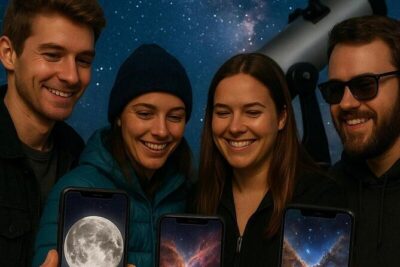
One helpful detail: on nights with higher moonlight, your included photo may be taken differently. Instead of a wider starfield shot, it can be taken through the telescope eyepiece only. That doesn’t stop the observing, but it does change what the souvenir looks like.
The photo souvenir and how moonlight changes the night
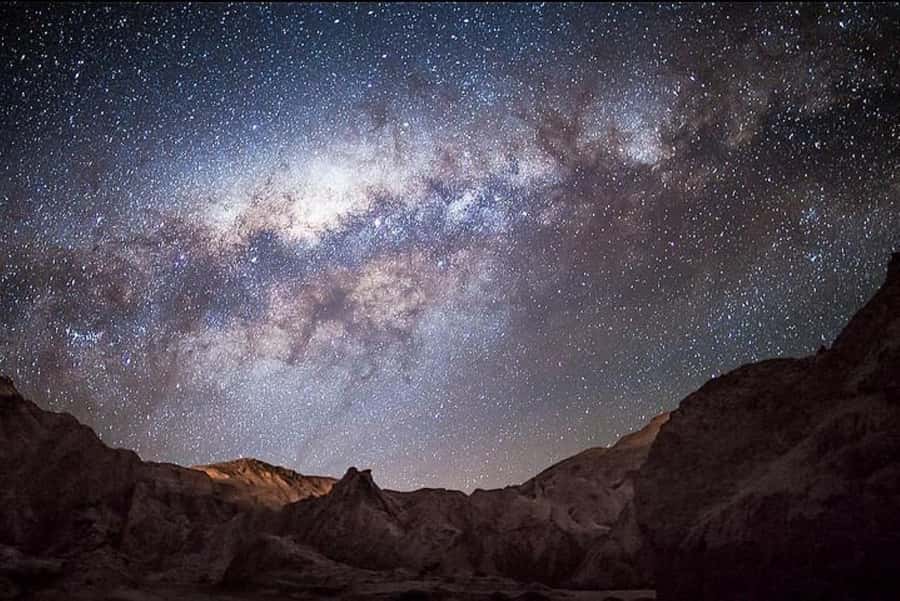
You’ll receive a courtesy photo emailed to you after the tour. It’s a nice touch because it turns “I saw stars” into “Here’s proof I was there,” without you needing to wrestle with camera settings at altitude.
However, keep one thing in mind: the moon affects the entire experience. The tour specifically notes that you should check the lunar calendar before booking, because moonlit nights can change what you see and how the included photo ends up being taken. With bright moonlight, stars can look less crisp to the naked eye, and it may reduce the impact of the darkest-sky targets.
If you’re planning around optimal viewing, aim for nights with less moon interference when possible. If you end up on a higher-moon night, don’t panic. You’ll still have telescope time and a guided session, just with a slightly different look in the sky.
What you’ll likely see: constellations, planets, and deep-sky targets
One of the most practical parts of this tour is that it’s designed for the southern sky. You’ll learn constellations and celestial objects that match the season, and the telescope session can include:
- Planets and stars you can actually confirm with the scope
- Binary stars, when available on the night
- Star clusters that look like tiny sprays of light
- Nebulae and galaxies when conditions let them show up
People also call out big highlights like the Southern Cross, the Milky Way, Saturn, and showy bright stars. Even if you’ve seen some stargazing elsewhere, San Pedro’s sky tends to make everything look more defined. The guide’s job is to help you turn that brightness into a map you can understand.
Cold desert reality: what to bring so the night stays enjoyable
The night can be chilly. Like, really chilly. Even with blankets or ponchos provided on some nights, you’ll feel the temperature once you stop moving for extended telescope time.
Bring the basics the tour lists:
- Warm clothing
- Comfortable shoes
- A passport or ID card
- Binoculars (you can bring them, and it’s useful even if you also use the telescope)
If you want a quick packing rule: layer up, then add one extra warmth layer for the evening. The desert doesn’t care if you planned for stargazing; it’ll still drop the temperature once the sun goes.
Also note the tour does not allow smoking and does not allow alcohol and drugs. Coffee, tea, or red wine are included, but you still want to follow the rule set for the tour.
Price and value: why $41 can actually be a smart spend
At $41 per person for about 150 minutes, this tour is priced like a value play compared with other astronomy experiences in the region. The math that makes it feel worth it is simple:
- You’re paying for a specialist guide, not a generic “stand outside and point” setup
- You get telescope equipment and guided observing
- Pickup and drop-off are included within San Pedro de Atacama
- You get coffee/tea or red wine, plus a courtesy star photo afterward
When a tour nails the guide component and includes real telescope time, it’s usually the difference between a fun evening and a meaningful one. Here, the consistent theme is that the guides stay engaged, answer questions, and help you see more than you would on your own.
Who should book this etno-stargazing tour
This is a great fit if you want:
- First-time stargazers who still want a real explanation and not just pretty views
- Culture-minded travelers who like local sky knowledge alongside modern astronomy
- Families looking for an engaging nighttime activity (kids have been kept involved with age-appropriate explanations)
- People who enjoy a small-group feel and don’t want to wait in long lines for telescope turns
It’s also wheelchair accessible, and pickup/drop-off are handled within San Pedro de Atacama using the listed meeting points.
Should you book this tour?
Yes—if you want stars plus meaning, this one is easy to recommend. The mix of Western astronomy and Andean sky interpretation is a strong match for people who don’t just want photos, but want to understand what they’re looking at.
Book it especially if:
- you care about telescope guidance, not just casual stargazing
- you want an emailed souvenir photo with the night sky
- you’re open to learning how the Milky Way was used as information by ancient observers
Skip it or reconsider if:
- you hate cold nights and aren’t willing to layer up
- you’re booking only for a dramatic wide star photo and you’re landing on a high-moon schedule (the included photo may be taken through the telescope eyepiece instead)
FAQ
How long is the San Pedro de Atacama etno-stargazing tour?
It runs for 150 minutes.
Where do I get picked up?
Pickup is available at Restaurant Tara (Licancabur 10) and Licancabur 10 (you choose the option).
What time is pickup?
Pickup is 7:00 PM in April, May, June, July, and August. In Chile’s summer, pickup is between 9:00 and 9:20 PM.
What languages are offered?
The live guide speaks English and Spanish.
Is telescope viewing included?
Yes. The tour includes telescope equipment, and you’ll use it with the help of your guide.
What drinks are included?
You’ll be offered coffee, tea, or red wine.
Does the moon affect the tour or the photo?
Yes. On high-moonlit nights, the included photo may be taken only through the telescope eyepiece. The tour also suggests checking the lunar calendar before booking.
What should I bring?
Bring passport or ID, comfortable shoes, and warm clothing. Binoculars are also listed as something to bring.
What happens if weather is bad?
The tour schedule and execution are subject to weather conditions. If needed, the tour may be moved to a later time for the same night or the next night, and you’ll be notified.