REVIEW · MENORCA
Menorca Astronomical Observation with Telescopes, Night Sky
Book on Viator →Operated by Polaris Menorca · Bookable on Viator
Menorca at night feels like another planet. This 2-hour stargazing session turns the island’s protected darkness into a hands-on lesson on Milky Way, planets, nebulae, and constellations. You start with a short intro, then you move from theory to real sky pointing, using the tools that actually help things click.
Two things I really like: first, the guides mix the science with constellation mythology, so you’re not just staring at dots. Second, you get more than one viewing tool, including laser pointers, astronomical binoculars, and state-of-the-art telescopes, which makes the experience feel practical, not just observational.
One drawback to plan around: this is weather-dependent. If conditions are poor, the session may be moved or refunded, so you’ll want to be flexible with your Menorca evening.
In This Review
- Key things to circle before you go
- Menorca’s protected night sky, explained in plain language
- Price and timing: is $35.57 worth two hours?
- Arriving at La Vall: the comfort details that matter at night
- The intro: Starlight territory, biosphere thinking, and why myths help
- Laser pointers, binoculars, and telescopes: the hands-on part that makes it click
- What you’re likely to see: Milky Way, planets, galaxies, and nebulae
- The vibe: small group attention and guides who explain without condescension
- Weather and comfort: how to make sure you actually enjoy the night
- Who should book this Menorca night sky tour?
- Should you book this stargazing session in Menorca?
- FAQ
- How long is the Menorca astronomical observation?
- Where does the tour start?
- Is transport included?
- What’s included in the tour experience?
- Are restrooms available?
- How big are the groups?
- Do I get a ticket on my phone?
- What if the weather is bad?
- When will I receive confirmation after booking?
- Is free cancellation available?
- Are service animals allowed?
Key things to circle before you go
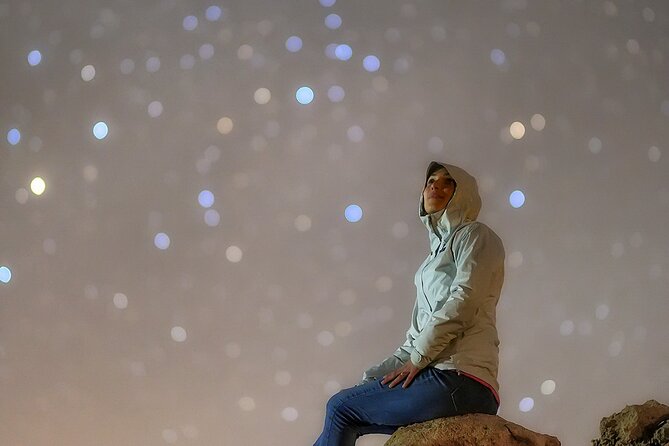
- Starlight territory focus: Menorca’s protected night sky is treated like a resource worth defending.
- Myth plus science: You’ll connect constellations to stories, not just names.
- Real viewing tools: Laser pointers, binoculars, and telescopes all get used during the night watch.
- Small group size: Up to 15 people means you’re less likely to feel lost in the crowd.
- Facilities at the start point: The headquarters area has WC, plus tables and chairs so you can settle in.
- Guides named Edu and Javier: Based on recent guest feedback, expect clear, friendly, and funny explanations.
Menorca’s protected night sky, explained in plain language
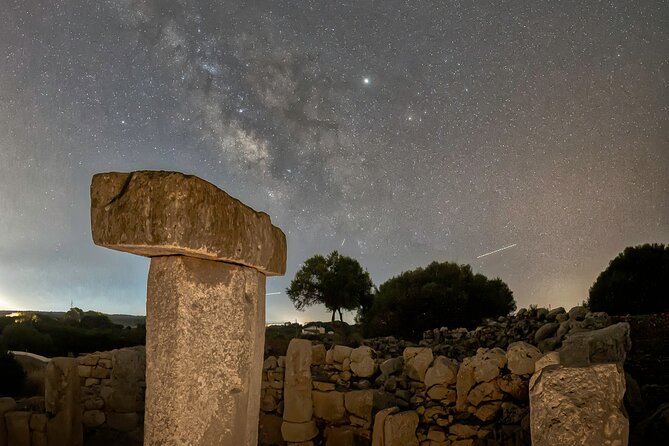
Menorca is one of those places where you can actually see why “dark sky” matters. In much of Europe and the Mediterranean, light pollution has washed out the Milky Way and dimmer objects. Here, the darkness is part of the deal. You’re shown the night sky from different observation points on the island (you’ll meet at the main base for this session), and the goal is simple: get you looking at what you can’t easily see elsewhere.
This tour leans hard into the island’s identity as a biosphere reserve and a Starlight territory. That matters for two reasons. First, it frames what you’re doing as more than entertainment. Second, it helps you understand why the night looks the way it does—why certain stars or fuzzy patches of light are visible, and why the sky can look different from town versus open darkness.
And yes, it’s also gorgeous. The point is you’re not just admiring. You’re learning how to read the sky as it changes hour by hour and season by season.
You can also read our reviews of more tours and experiences in Menorca.
Price and timing: is $35.57 worth two hours?
At about $35.57 per person for roughly 2 hours, this is priced like an evening activity rather than a full-day excursion. That’s good news if you want something memorable without losing your whole night.
What makes it feel like good value is the structure. You don’t start with 10 minutes of telescope chaos and hope for the best. You get a theoretical intro first, then a guided run through the sky using a Starlight guide. After that, you spend time on the big targets: the Milky Way, galaxies, nebulae, and the brightest stars—using tools that let you actually see details.
Where you might feel short is if you’re the type who expects a long, quiet solo observing session. This is a guided, educational night out. If you want hours of slow sky gazing with no talking, you may prefer something longer and less structured. But if you want to leave with a mental map of what you saw, two hours is a solid length.
Arriving at La Vall: the comfort details that matter at night
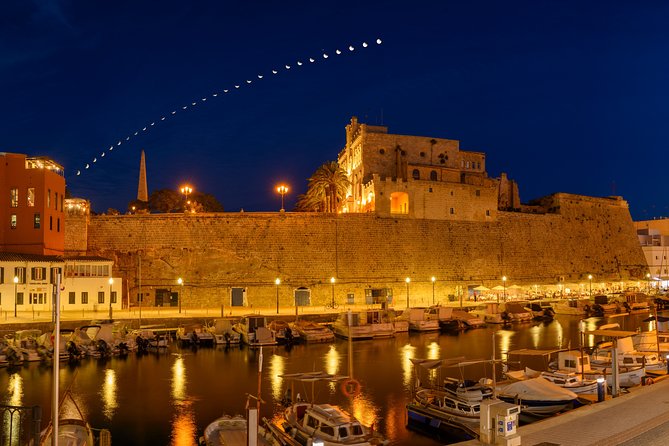
You’ll meet at Aparcament de la Vall in Ciutadella de Menorca, and the activity returns to the same meeting point. The viewing session starts at the headquarters in a private area, and that small detail makes a difference.
Night astronomy can be uncomfortable fast. Cold, waiting around, and nowhere to sit are the usual problems. Here, the base has WC, plus tables and chairs on a terrace area. That means you can get settled before the sky show begins, and you’re not hunting for a restroom in the dark.
Also, the setting is private. With a group capped at 15 travelers, it helps keep the experience calm enough for learning. You can ask questions and follow the guide without fighting for space.
The intro: Starlight territory, biosphere thinking, and why myths help
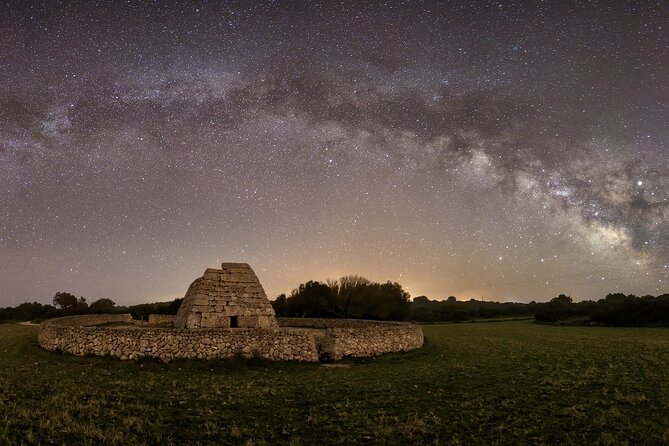
The first part is basically your launchpad. You’ll get a briefing on Menorca and its commitment as a biosphere reserve to sustainability. From there, you’ll hear what it means to be a Starlight territory, reserve, and destination—so the night sky is actively protected, not taken for granted.
Then comes the part I enjoy most in this style of tour: the bridge between what you see and the stories people used to explain it. You’ll hear mythology linked to constellations and stories of the Menorca sky. That might sound like a nice extra, but it actually helps your brain. When you connect patterns in the sky to names and stories, it becomes easier to remember where to look next and what you’re seeing.
Expect the guide to keep it approachable. Recent guest feedback highlights guides like Edu for clear, simple explanations that stay interesting to listen to. You also may meet Javier, praised for professionalism and kindness, especially when the night doesn’t go exactly to plan.
Laser pointers, binoculars, and telescopes: the hands-on part that makes it click
This is where the tour earns its keep. A good stargazing session teaches you how to aim your attention. A great one gives you the tools to do it.
In this experience, you’ll have laser pointers guiding you through the sky. This is more useful than it sounds. In the dark, your eyes take time to adjust, and “just look left” is hard to follow. A pointer helps you confirm what the guide is pointing out, without you feeling lost.
Next, you’ll use astronomical binoculars. Binoculars are underrated in astronomy tours. A telescope is amazing, but it’s also a bit of a commitment to focus and positioning. Binoculars let you see wider star fields and get context. You start noticing patterns: bright stars anchor constellations, and nearby points form shapes you can follow with the guide.
Finally, you’ll get telescope time on the main celestial objects. The tour mentions state-of-the-art telescopes for enjoying things like the Milky Way, galaxies, nebulae, and bright stars. That combination matters because not every object looks the same through every tool. Telescopes are for detail; binoculars are for relationships between objects; lasers are for orientation.
The end result is that you stop thinking of “the sky” as a single image and start seeing it as a map.
What you’re likely to see: Milky Way, planets, galaxies, and nebulae
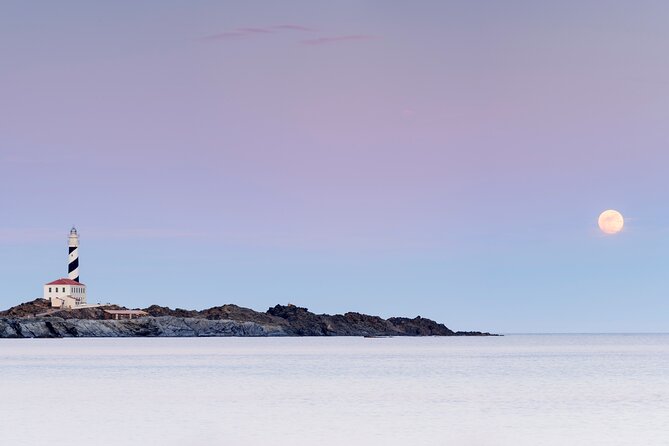
The sky of Menorca is the star here. The tour is built around the kind of targets that light pollution usually hides elsewhere: the Milky Way (with enough visibility to feel like a band, not a rumor), stars and constellations, plus planets and “endless objects” in the night sky.
You should also expect the tour to focus on:
- Bright planets and standout stars, likely enough to identify even if you’re new to astronomy.
- Constellations tied to the mythology you’re told during the intro, so you can connect names to shapes.
- Deep-sky objects like galaxies and nebulae, which are the big payoff when the night is truly dark.
A practical note: the exact targets depend on what the sky allows on that particular night. The tour is “complete astronomical observation,” but the sky doesn’t follow a calendar the way people do. Still, the structure is designed so you’ll cover a mix: orientation (constellations), standout objects (bright stars and planets), and harder targets (galaxies and nebulae).
The vibe: small group attention and guides who explain without condescension
For a group activity, this one seems to score high on personality and teaching style. Guests praised the team as fantastic, and specifically named Edu and Javier as professional, friendly, and funny. That matters because astronomy can go two ways.
If the guide is overly technical, you feel like you’re behind from minute one. If they’re overly vague, you feel like you’re watching without learning. The sweet spot is what this tour appears to aim for: you get scientific facts, plus playful explanations, without turning it into a lecture.
One detail worth noting from recent feedback: the team may adjust the session date because of climate conditions, and guides like Javier have been described as professional and amply informative even under changing conditions. So if the night shifts, you’re not stuck with a dead end. You’ll likely adapt within the limits of the sky.
Weather and comfort: how to make sure you actually enjoy the night
You should assume weather will be a real factor. The experience requires good weather, and if it’s canceled due to poor conditions, you’ll be offered a different date or a full refund.
So what should you do? Keep your evening flexible if possible. Menorca nights can be chilly, especially once the sun drops. Dress for the idea that you’ll stand around at a dark-sky location. And do it with layers so you’re not sweating through your jacket and then freezing when you stop moving.
Also, give your eyes time. Even with lasers and binoculars, your vision will need a minute to adjust in a dark setting. If you bounce back and forth between your phone screen and the sky, you’ll slow down your night vision. The tour gives you guidance, but you still control how quickly you see.
Finally, arrive ready to be patient. Astronomy rewards attention. Two hours can feel fast or slow depending on whether you keep leaning in.
Who should book this Menorca night sky tour?
This experience is a strong fit if you want:
- A guided introduction to the night sky that actually helps you identify things.
- A dark-sky night in a place where the Milky Way is more than theoretical.
- A small-group evening (up to 15 people) with time for questions and equipment use.
- A mix of science and stories, not one or the other.
It may not be ideal if you want:
- A long solo observing session with minimal talking.
- A tour that includes transport to the meeting point, since transport isn’t included.
- A guaranteed show regardless of weather. Cloud cover and poor conditions can change plans.
Best match: first-timers to astronomy, couples, and families old enough to enjoy a guided activity at night. It also works well if you like nature and sustainability themes and want the science story tied to the place itself.
Should you book this stargazing session in Menorca?
If your goal is to see the Milky Way, learn a few constellations you can remember later, and use real astronomy tools (lasers, binoculars, telescopes), this is an easy recommendation. The pricing for a guided, equipment-supported evening is fair, and the small group size plus friendly guides (often Edu and Javier) is exactly what makes astronomy tours enjoyable instead of confusing.
Just book it with one mindset: weather is part of the deal. Go in ready to dress warm, arrive on time, and look when the guide points. If the sky cooperates, you’ll come away with more than pretty views—you’ll have a usable sense of direction in the night.
FAQ
How long is the Menorca astronomical observation?
It lasts about 2 hours.
Where does the tour start?
You start at Aparcament de la Vall, 07769 Ciutadella de Menorca, Balearic Islands, Spain.
Is transport included?
No. Transport is not included.
What’s included in the tour experience?
You get a theoretical introduction, a guided tour of the sky by a Starlight guide, and observation time using laser pointers, astronomical binoculars, and telescopes. The tour also includes mythology and stories of the Menorca sky.
Are restrooms available?
Yes. The headquarters at La Vall has WC, tables, chairs, and a terrace.
How big are the groups?
The activity has a maximum of 15 travelers.
Do I get a ticket on my phone?
Yes. The tour uses a mobile ticket.
What if the weather is bad?
The experience requires good weather. If it’s canceled due to poor weather, you’ll be offered a different date or a full refund.
When will I receive confirmation after booking?
Confirmation is sent within 48 hours of booking, subject to availability.
Is free cancellation available?
Yes. You can cancel for a full refund up to 24 hours in advance. If you cancel less than 24 hours before the start time, the amount paid is not refunded.
Are service animals allowed?
Yes, service animals are allowed.