REVIEW · TOKYO
Tokyo: Sunshine 60 Observatory Tenbou Park Entry Ticket
Book on GetYourGuide →Operated by LINKTIVITY Inc. · Bookable on GetYourGuide
Tokyo looks different from up high.
The Sunshine 60 Observatory Tenbou Park is an easy, family-friendly way to get that wow factor, with a panoramic view from 251 meters above the city. I like that it works as a simple plan: go in the daytime for clarity or at night for the glow. It’s also built as a sky park for all ages, so it doesn’t feel like a “sit quietly and wait” attraction.
Two things I’d highlight right away: the 360° view really is the main event, and you can enjoy it whether the sky is bright or the streets are lit. The second great part is that the observatory experience is paired with a lively building area below, including shopping and places to snack, which makes it easy to turn one ticket into a longer stop. One consideration: getting to the exact elevator and areas for the observatory can be a little tricky inside the building, and on very busy days some parts of the complex may be limited.
In This Review
- Quick hit points
- Sunshine 60 Tenbou Park: the 251-meter, 360-degree Tokyo payoff
- Day vs Night at the observatory: plan for the mood you want
- Sky Circus Sunshine 60 and the mall below: make one ticket last longer
- Audio guide option: great when you’re prepared, pointless if you aren’t
- QR code entry and the no-number-ticket system: avoid the common headache
- Timing and last entry: how to avoid arriving after the best part
- Price and value: why a low-cost deck can still feel like the real deal
- What to watch for: congestion, limited areas, and building navigation
- Who this Sunshine 60 entry ticket is best for
- Should you book this Sunshine 60 entry ticket?
- FAQ
- How high is Sunshine 60 Observatory Tenbou Park?
- Is the view better in the daytime or at night?
- Do I need a numbered ticket for a specific date?
- What do I need if I select the audio guide option?
- What’s the last entry time?
- Are food and drinks included with the ticket?
- Are there any rules about smoking or drones?
- Can I resell the ticket or combine it with other coupons?
Quick hit points
- 251m-high, 360° city views with a clear reason to look up and stay awhile
- Day or night viewing so you can match your schedule to the lighting you want
- Family-friendly sky park design that works even with younger kids
- Shopping and food spots on lower levels to extend your visit without extra transport
- QR code entry flow that skips the numbered-ticket hunt
- Audio guide option that only works if you bring a smartphone and earphones
Sunshine 60 Tenbou Park: the 251-meter, 360-degree Tokyo payoff
This is a straight shot to one of Tokyo’s most satisfying travel moments: standing above the city and taking it in at 251 meters. Sunshine 60 Observatory Tenbou Park focuses on views, and it does it well. Instead of trying to cram in a lot of separate exhibits, it gives you a real perspective shift—the kind where Tokyo stops being “lots of buildings” and becomes a map you can actually read.
What makes the experience feel worth it is the way the viewing deck is treated like a sky park. That matters in Japan, where some observation stops feel strict and grown-up. Here, the setup is meant for all ages, so you’re not fighting the energy level of the place. If you’re traveling with kids (or you just don’t want your day to turn into a rigid queue-and-stand routine), that’s a big plus.
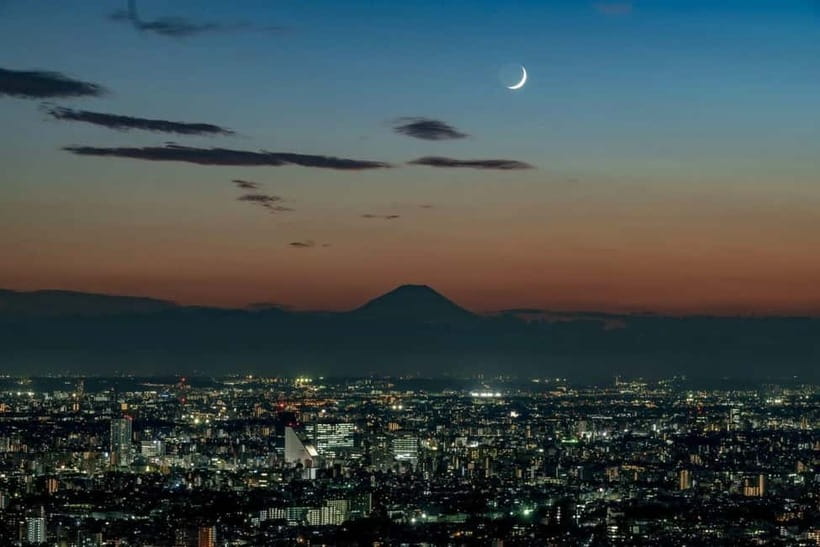
And yes, the view is the point: a panoramic, likely 360° feel of the city from above. The height helps, but what really changes your thinking is how the city’s structure shows up—major roads, dense neighborhoods, and the way light spreads at night.
You can also read our reviews of more tours and experiences in Tokyo.


Day vs Night at the observatory: plan for the mood you want
Tokyo is a different city after dark, and Sunshine 60 lets you choose your version of the skyline. If you go in the day, you’ll likely enjoy sharper detail—buildings and streets look more defined, and it’s easier to orient yourself to neighborhoods you’ve already explored. Daytime also tends to be kinder for families since it’s easier for kids to move around and for people to see where they’re going.
Go at night and you get the other kind of magic: the city lighting layers the skyline with glow. The general vibe is that night viewing is a must if you can swing it, because the skyline turns into a pattern of bright and dark. Even the short comments people leave tend to circle back to the night view when they’ve had the choice.
If you’re deciding between the two, here’s a practical way to think about it:
- Pick day if you want to get your bearings and see Tokyo in “daylight mode.”
- Pick night if your goal is atmosphere, contrast, and that classic Tokyo look.
If your schedule is tight and you can’t go twice, prioritize based on what you’re after—clarity or mood.
Sky Circus Sunshine 60 and the mall below: make one ticket last longer
One reason this observatory ticket works so well is that it doesn’t end when you step back inside. The Sunshine 60 complex has a “hangout” feel—shopping and food options right there in the building. That means you’re not stuck planning a whole second activity from scratch.
A highlight from people who’ve visited: the lower levels can be genuinely fun to browse, and one shop people specifically call out is Kirby Cafe. Even if you’re not a big character-cafe person, the point is practical: you can turn this into a half-day block without adding extra transport costs or time-consuming wandering elsewhere.
So your best approach is simple:
- Do your main observatory time first (day or night).
- Then use the building levels as your “buffer” so the day doesn’t feel rushed.
This is especially useful if you’re traveling with kids who get tired of constant walking. You can let them burn energy in the complex while adults recover from the height-sightseeing marathon.
Audio guide option: great when you’re prepared, pointless if you aren’t
If you choose the option that includes an audio guide, the experience gets more contextual. You’ll be listening on your smartphone, so you don’t need to rely on reading every sign while you’re standing near the glass.
But there’s a hard requirement: bring your smartphone and earphones. The audio guide isn’t something you can magically access without them, and if you don’t have a smartphone on the day, refunds aren’t issued. That’s a big “know before you go” detail, and it changes your packing list.
My advice is to treat this like any other phone-dependent museum device:
- Charge your phone ahead of time.
- Bring wired earphones or confirm your adapter situation.
- Download nothing in advance unless the venue asks, but make sure your phone battery plan is realistic.
If you’re the kind of traveler who enjoys quick background facts while you look out at the skyline, the audio option is a nice upgrade. If you prefer just staring at views and people-watching, you can still enjoy the deck without it.
QR code entry and the no-number-ticket system: avoid the common headache
The entry process is designed to be straightforward. If you already reserved and paid, you don’t need to hunt for a specific numbered ticket for a particular date. On the reserved date, you just go to the observatory entrance and show your voucher’s QR code.
This is the kind of system that saves time and stress—especially in big buildings where signage can be confusing and you don’t want to waste minutes figuring out the “right line.” If you’ve ever shown up holding the wrong screenshot or trying to remember where the ticket is, this QR flow is the opposite of that.
At the entrance, expect the need for your QR code for admission and ticket collection (it’s issued after reservation). After that, you’re free to focus on the reason you came: the view.
One more detail worth knowing: access to the observatory can be restricted depending on congestion, and some areas may be unavailable due to events. That doesn’t mean the experience is ruined—it just means you should be ready for slight differences in what’s open on your day.
Timing and last entry: how to avoid arriving after the best part
The observatory’s schedule can change, so you should check the official website for the latest hours. What you can count on from the info provided is that the last entry is one hour before closing.
That last-entry rule matters because observation decks aren’t like “drop in and run back out.” If you arrive too late, you can lose your chance to settle in with a proper view—especially if you’re traveling with kids or you want time for shopping and wandering afterward.
A good rule of thumb:
- Arrive with enough buffer that you can still enjoy your chosen lighting (day or night).
- If you’re aiming for night views, plan to be inside before the evening mood window, not just before closing.
Also keep in mind that if weather turns bad, facilities may temporarily close. In those cases, you won’t get transportation costs reimbursed, so it’s smart to keep your weather outlook in mind when deciding whether to go.
Price and value: why a low-cost deck can still feel like the real deal
At about $4.51 per person, this ticket price is a huge part of the value story. In Tokyo, observation and ticketed skyline experiences can get expensive fast, so a low entry cost changes the math. You can justify going even if it’s not the only “big” thing on your list.
But the value isn’t just the number. People often notice that it can feel less dominated by crowds and more like a place with locals in the mix. When a view spot feels more local and less jammed, you tend to spend longer looking instead of constantly adjusting around other groups.
Add in these practical benefits:
- The deck is built for all ages, which reduces friction if you have kids or a mixed group.
- The building around it gives you free time to browse and snack afterward.
- The whole setup can fit into a simple day plan without requiring you to commit to a long tour schedule.
So if you’re trying to stretch your Tokyo budget while still getting that “from above” perspective, this is the kind of option that makes sense.
What to watch for: congestion, limited areas, and building navigation
Even with a great view, a few real-world issues can affect your experience.
Congestion can limit admission and use. That means you might not be able to access every area exactly as expected, depending on the situation on your date. The venue also notes that some areas may not be available due to events. In other words, your visit might not look like a perfect checklist.
The other practical issue: the complex can be easy to get turned around in. One visit note points out that the elevator to find can be a bit difficult at first—so go slowly, look for correct signs, or ask nearby staff for help.
Neither of these is a deal-breaker. They just mean you should go in with a flexible attitude. If you’re the type who gets stressed by slight changes, build a bit of extra time into your plan.
Who this Sunshine 60 entry ticket is best for
This is a strong match for:
- Families who want a simple, safe-feeling plan with a sky park layout for all ages
- Budget-conscious travelers who still want a serious Tokyo skyline view
- Couples or solo travelers who want day or night sightseeing without overcommitting to a long itinerary
- People who like pairing a view stop with shopping and casual dining right downstairs
It may be less ideal if:
- You’re hoping for a quiet, ultra-minimal, “escape the world” observatory experience. Because it’s part of a major complex, there’s more of that mall energy.
- You only have a tight window and can’t risk last-entry timing. This is still a deck with closing rules.
Should you book this Sunshine 60 entry ticket?
If your main goal is the view—and you want it without spending a lot—this is an easy yes. The 251m height plus the option for day or night viewing hits the core reason most people want an observation deck. The best part is that you’re not just buying a ticket to stand somewhere; you’re also buying time in a building where kids (and adults) can keep moving afterward.
Book it if you:
- Want a low-cost skyline stop in Tokyo
- Are traveling with family or a mixed-age group
- Plan to spend time around Ikebukuro and want a practical indoor-outdoor plan in one location
Skip it only if you’re set on a super-quiet, minimal experience or you can’t manage the smartphone requirement if you choose the audio guide option.
If you want a Tokyo view with less drama, Sunshine 60 is a solid choice.
FAQ
How high is Sunshine 60 Observatory Tenbou Park?
The view comes from a height of 251 meters above sea level.
Is the view better in the daytime or at night?
You can use the ticket for either day or night, and the observatory is designed for both. Day is typically better for clarity, while night is better for the illuminated city look.
Do I need a numbered ticket for a specific date?
If you already reserved and paid, you don’t need a specific numbered ticket. On your reserved date, just go to the observatory entrance and show your voucher QR code.
What do I need if I select the audio guide option?
Bring your smartphone and earphones on the event day. These are required to access the audio guide, and if you do not have a smartphone, no refunds are issued.
What’s the last entry time?
The last entry is allowed one hour before closing time.
Are food and drinks included with the ticket?
No. Food and drinks are not included.
Are there any rules about smoking or drones?
Yes. Smoking is not allowed and drones are not allowed.
Can I resell the ticket or combine it with other coupons?
No. The ticket cannot be resold, and it can’t be used with other coupons, special coupons, or discounts.