REVIEW · TABERNAS
Tabernas Desert: Stargazing with Telescopes
Book on GetYourGuide →Operated by espacio_supernova · Bookable on GetYourGuide
One night of stars can change how you look at everything. In the Tabernas Desert, you get a certified astronomy guide, plus two professional telescopes, all away from city light pollution. It’s a compact, high-impact experience built around real sky viewing, not just a slideshow.
I love the hands-on feel: you’re learning how to orient yourself in the sky and then using telescopes to confirm what you’ve found. I also love that the guide, often led by Gonzo, blends practical astronomy with storytelling that keeps kids and adults focused.
The one thing to plan around is comfort: there are blankets, not chairs. If your back needs support, tell the operator ahead of time so they can try to bring something.
In This Review
- Key things that make this stargazing night worth it
- Why the Tabernas Desert makes the stars easier to enjoy
- The full 2-hour flow: walk, guided sky session, then a star photo
- Gonzo and the certified astronomy guide approach
- Telescopes you actually get to use: 305 mm plus Seestar S50
- What you’ll learn under the sky: constellations, the North Star, and moon science
- Deep-space objects: open clusters, globular clusters, and binary stars
- When the sky throws a curveball: wind and satellite streaks
- What to wear and when to show up: sunset timing drives everything
- Comfort, rules, and who should skip it
- Is it good value at about $41 per person?
- Who this stargazing tour suits best
- Should you book this Tabernas Desert stargazing night?
- FAQ
- How long is the Tabernas Desert stargazing experience?
- When does the tour start?
- Where do I meet the group?
- Are telescopes included?
- What kinds of objects will I be able to see through the telescopes?
- Will we look at constellations during the tour?
- What about moon viewing?
- Are chairs provided?
- Is the tour wheelchair accessible?
- What languages is the guide available in?
- FAQ
- Is smoking allowed during the activity?
- Is there free cancellation?
- Can I reserve without paying right away?
- Will there be a group photo?
Key things that make this stargazing night worth it
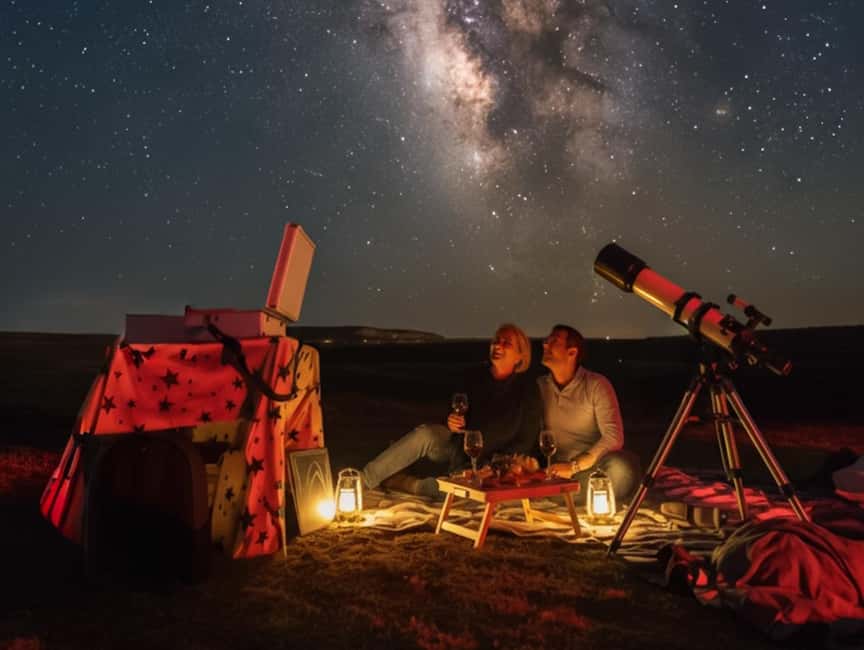
- Two telescopes at once: a 305 mm Explore Scientific telescope plus a Smart Telescope (Seestar S50).
- Desert skies, lower light pollution: better visibility of stars, clusters, and planets.
- You learn the sky while you watch it: constellations, positional astronomy, and moon basics.
- Moon views can be a highlight: if there’s a moon, you may see craters in detail and learn how they form.
- Deep-space targets through the scopes: open clusters, globular clusters, and binary stars are part of what you can explore.
- A souvenir built in: a group night photo with the starry backdrop (and sometimes follow-up photos).
Why the Tabernas Desert makes the stars easier to enjoy
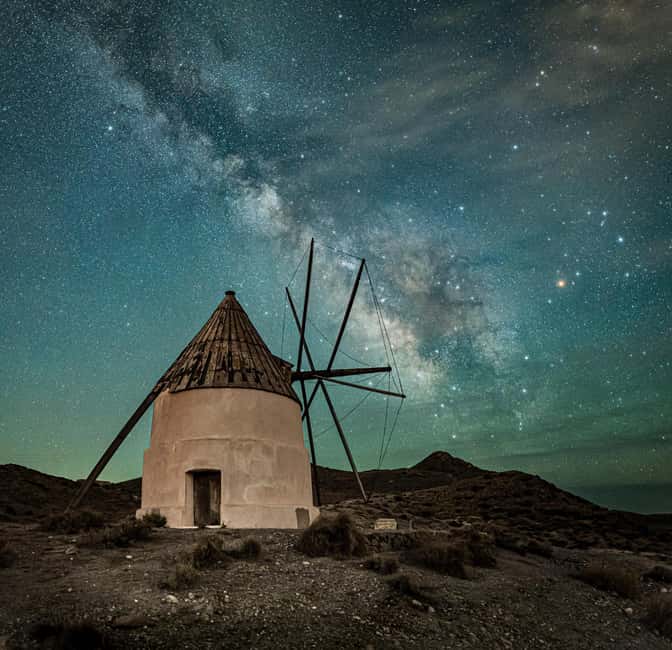
The Tabernas Desert in Andalusia is famous for clear, open skies, and that matters more than people think. City light does two annoying things: it washes out faint stars and it makes the sky feel less “three-dimensional.” Out here, you get that darker backdrop where constellations look more obvious and telescope targets feel more dramatic.
This tour leans into that advantage. You’re not rushing past views. You’re spending a full 2 hours under the sky with a guide, so you get time for the sky to “settle” after sunset and for your eyes to adjust. That alone makes the experience feel calm instead of chaotic.
The full 2-hour flow: walk, guided sky session, then a star photo
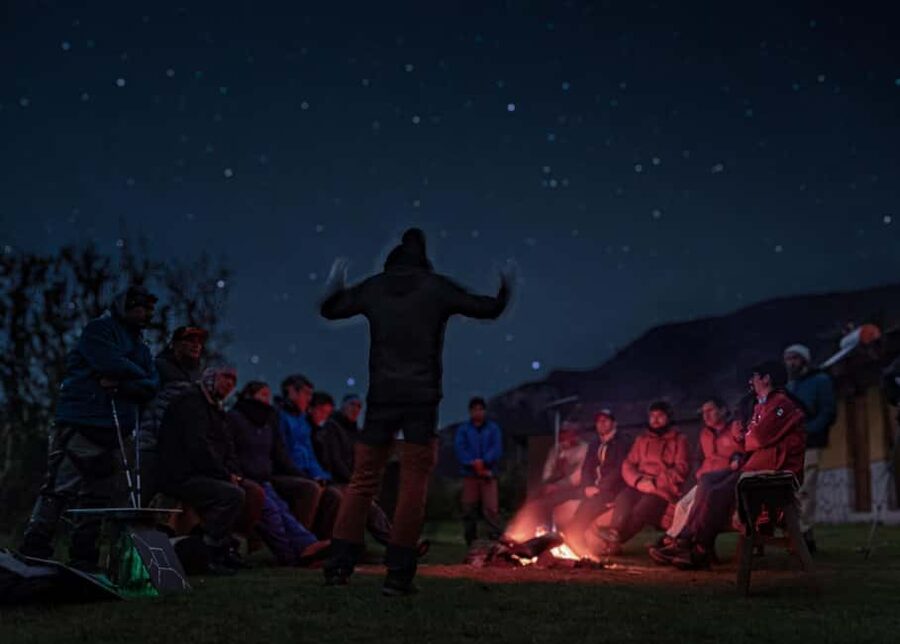
This is a straightforward schedule, and it’s designed for night viewing.
First, you’ll meet at one of several starting points in the Tabernas area. Then you’ll do a short 5-minute walk to the main stargazing spot. That brief walk isn’t filler. It helps you arrive at the viewing area once the lighting is right and everyone is ready to get comfortable.
Next comes the heart of the night: a 105-minute guided observation. This is where the guide helps you identify major constellations visible on your specific night, explains how to navigate the sky using basic positional astronomy, and then connects those “where am I?” skills to what you can see through the telescopes.
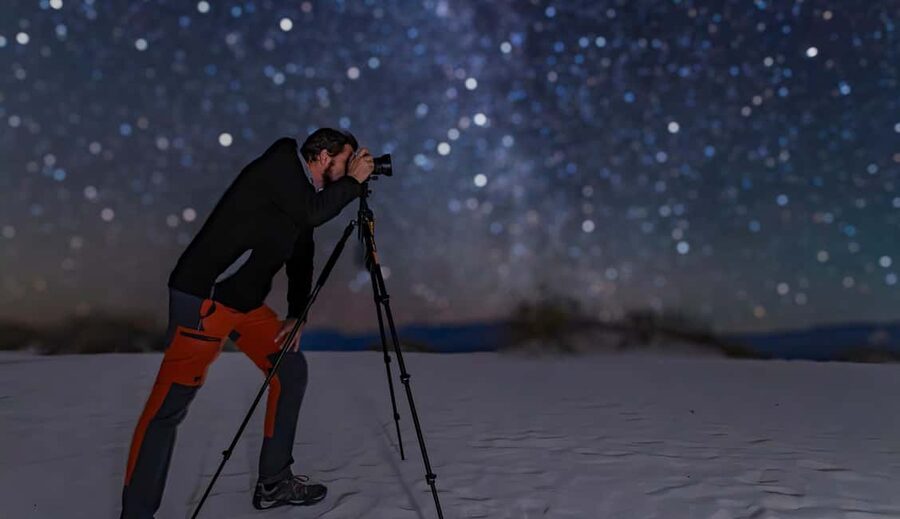
Finally, you’ll wrap up with a 10-minute photo stop. Expect a group photo with the stars as a backdrop. If you like having something tangible from the night, this is the part that makes sure you’re not leaving with only blurry phone memories.
Gonzo and the certified astronomy guide approach
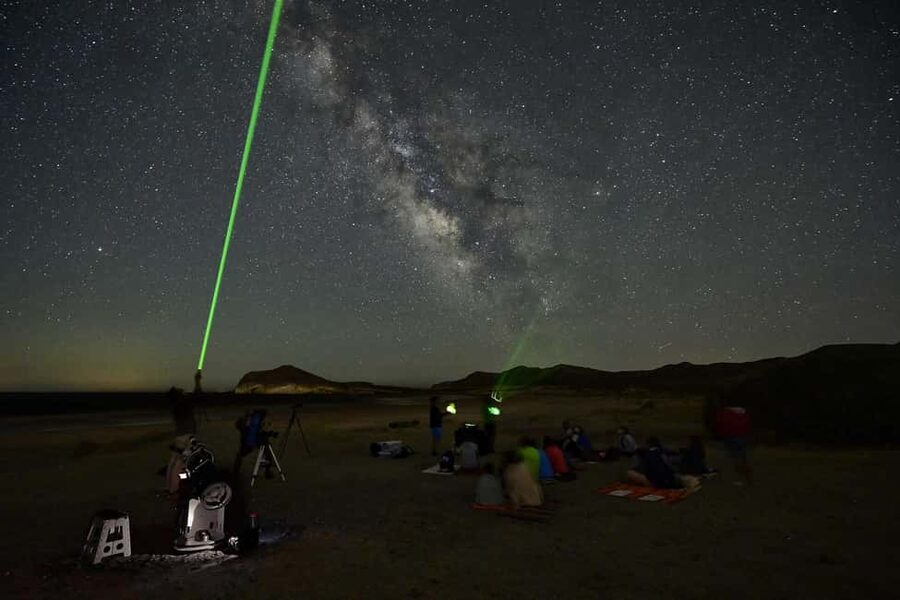
A big part of why this experience gets top ratings is the guide style. Gonzo comes up repeatedly in recent bookings: energetic, patient, and able to explain astronomy in a way that works for both teenagers and younger kids.
What I like about this setup is that the “learning” isn’t separate from “looking.” You’re guided to find the constellations first, then you use the telescopes to confirm what you expected to see. That link makes the sky feel logical, not random.
The tour also includes an astronomy monitor certified by the Starlight Foundation of the Canary Islands Institute of Astrophysics. In plain terms, that certification signals that the guidance and astronomy training aren’t casual.
Telescopes you actually get to use: 305 mm plus Seestar S50
Two telescope setups are included, and that’s a real value point for an experience that lasts only 2 hours.
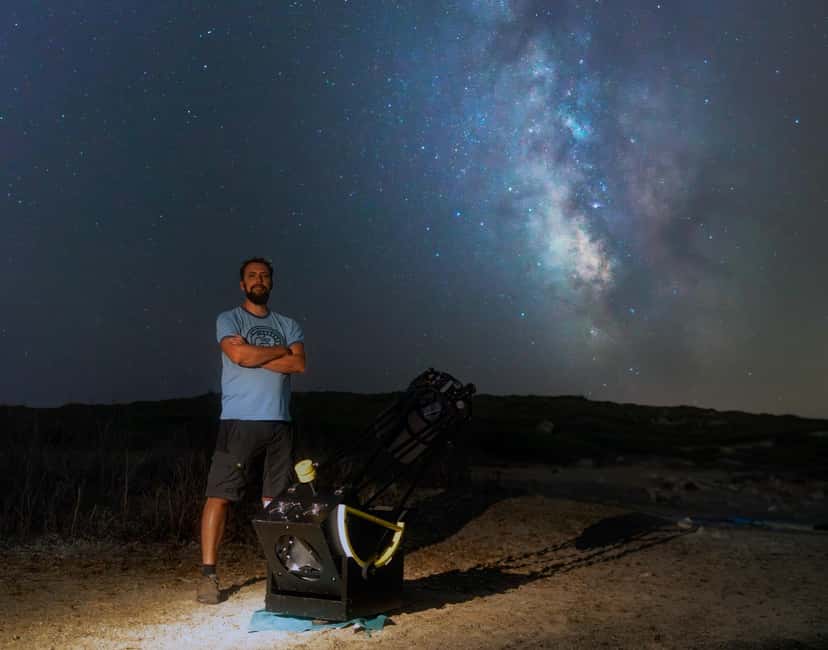
One is an Explore Scientific 305 mm telescope. A 305 mm (about 12 inches) aperture is big enough to show meaningful detail on targets like planets and to make star clusters look richer than you’ll ever get with binoculars. When conditions are good, the night can turn from “pretty stars” into “wow, that’s a whole world.”
The second is a Smart Telescope (Seestar S50). Smart telescopes can be great for quick target finding and can help keep the session moving, especially when the group is waiting their turn. Together, you get both the classic, detail-focused telescope experience and the flexibility that comes with modern automated pointing.
What you might see depends on the night and sky conditions, but the important part is that you’re not just watching the guide look. You’ll get your turn through the professional equipment.
What you’ll learn under the sky: constellations, the North Star, and moon science
This tour isn’t only about passing objects through a lens. It teaches you how to read the sky.
You’ll learn to identify the main constellations visible on your visit night. The practical payoff: after the tour, you’re more likely to recognize what you see again from a future trip, even without a telescope.
A key piece of the lesson is positional astronomy basics—the ideas that help you navigate the night sky. You’ll also learn how to find the North Star and why it appears fixed in the night sky. That kind of orientation skill turns stargazing from guessing into getting your bearings fast.
Moon viewing can be a highlight too. If there’s a moon, you may be able to observe craters in detail and learn how they form over time. Even if you usually ignore the moon, seeing it through a telescope reframes it as a real landscape instead of just a bright disk.
Deep-space objects: open clusters, globular clusters, and binary stars
Through the telescopes, the program includes deep-space targets such as open clusters, globular clusters, and binary stars.
Here’s why that matters: these objects are great for first-time viewers because they teach you what “scale” means in astronomy. Open clusters can look like scattered jewels; globular clusters often have a dense, grainy glow that feels surprisingly complex; binary stars can reveal the idea that some “single points” in the sky are actually pairs.
You may also see planets when they’re up. Recent nights in this tour’s reviews include views of Jupiter and Saturn (including Saturn’s rings and how the planet casts a shadow on itself), plus a variety of constellations like Orion. The exact lineup changes, but the tour is clearly built to handle the big, teachable targets.
When the sky throws a curveball: wind and satellite streaks
Night sky viewing has two natural enemies: weather and wind.
If wind picks up, observing can become tricky. In at least one recent experience, it didn’t fully stop viewing, but it made the experience more challenging. That’s not a reason to skip—just a reminder to dress for the temperature and be ready for “real outdoor” conditions.
You might also notice satellites. In one recent booking, the horizon showed a parade of roughly 30 satellites before they were directed to assigned locations. Even if you’re there for planets and clusters, that’s one of those modern sky moments you can’t unsee once you spot it.
What to wear and when to show up: sunset timing drives everything
Timing is built around darkness.
The start time depends on sunset, and it always begins 45 minutes after sunset. The operator contacts you two days before to check weather conditions and give the exact meeting time. That matters because sky clarity can change quickly, especially in open desert areas.
Bring warm clothes. Even if the daytime feels comfortable, desert nights can turn cold fast. If you run hot, you still want a warm layer for the hours you’ll be sitting on blankets.
Also note what’s provided versus not provided:
- Blankets are included for sitting or lying on the floor.
- Chairs are not included, though the operator says they’ll try to bring one if you need it due to a back problem.
Comfort, rules, and who should skip it
This tour is designed for people who can handle floor sitting for the duration.
It’s not suitable for wheelchair users. The activity involves sitting or lying on blankets and it’s set up for a ground-level viewing setup. If mobility is a challenge, I’d treat this as a hard mismatch.
One simple rule: no smoking during the experience. It’s a small thing, but it helps keep the night environment comfortable.
Is it good value at about $41 per person?
At around $41 per person for a 2-hour night, the value is mostly about what you get for the money: a certified guide, professional telescopes (including a 305 mm), and an experience that teaches you how to look, not just where to point your eyes.
You’re paying for the darkness (the desert location), the guide expertise (certified astronomy monitor), and equipment time (two telescope systems). For a short excursion, that’s a strong mix.
If you’re the type who enjoys science stories, star orientation, and seeing real objects through real optics, this price-to-experience ratio holds up well. If you only want casual scenery from a phone camera, you may find it more satisfying to spend less time in the telescope-focused format and more time on other desert viewpoints.
Who this stargazing tour suits best
This experience fits best if you want a guided night sky that feels interactive.
It’s especially good for:
- Families with kids who need explanations that feel fun and not preachy.
- First-timers who want a quick way to learn constellations and find the North Star.
- Couples who like shared “one big moment” trips, capped with a group photo.
It may feel less ideal if:
- You strongly prefer sitting in chairs for long periods.
- Your tolerance for cold desert evenings is low.
- You need wheelchair access.
Should you book this Tabernas Desert stargazing night?
I’d book it if you want a compact night in Andalusia that turns the sky into a hands-on lesson. The combination of a certified guide, repeatable sky skills (constellations and positional astronomy), and professional telescopes is the key. The included group night photo is a nice bonus that makes the experience feel complete.
Before you commit, check your comfort plan: you’ll be using blankets instead of chairs, and the timing is fixed to sunset-darkness (45 minutes after). If you pack warm layers and you’re okay with floor seating, this is an easy yes.
FAQ
How long is the Tabernas Desert stargazing experience?
It lasts 2 hours.
When does the tour start?
The start time depends on sunset, and it begins 45 minutes after sunset. The operator contacts you two days before to confirm the exact meeting time based on weather.
Where do I meet the group?
The meeting point may vary depending on the option you book, with multiple starting locations listed around Tabernas.
Are telescopes included?
Yes. The experience includes two professional telescopes: an Explore Scientific 305 and a Smart Telescope (Seestar S50).
What kinds of objects will I be able to see through the telescopes?
The session includes deep-space objects like open clusters, globular clusters, and binary stars. You may also observe planets and, if there is a moon, you can look at moon craters in detail.
Will we look at constellations during the tour?
Yes. You’ll learn to identify the main constellations visible on the night of your visit.
What about moon viewing?
If there’s a moon, you’ll be able to observe it and learn about how its craters formed over time.
Are chairs provided?
No. Blankets are provided for sitting or lying on the floor. If you need a chair for a back problem, the operator says you can let them know and they will try to bring one.
Is the tour wheelchair accessible?
No, it is not suitable for wheelchair users.
What languages is the guide available in?
The live guide is available in English and Spanish.
FAQ
Is smoking allowed during the activity?
No, smoking is not allowed.
Is there free cancellation?
Yes. You can cancel up to 24 hours in advance for a full refund.
Can I reserve without paying right away?
Yes. The option says reserve now & pay later, so you can book and pay nothing today.
Will there be a group photo?
Yes. The activity includes a group night photo with the stars as the backdrop.