REVIEW · LAS VEGAS
Death Valley Sunrise & Stargazing Day Tour Group Discount for 2 More People
Book on Viator →Operated by AQUA TRAVEL · Bookable on Viator
Death Valley nights set the stage for sunrise. This all-day, early-morning trip is built around stargazing and a classic Death Valley morning view from Dante’s View. You also get a full circuit of must-see stops, so the day doesn’t feel like a single-point photo run.
Two things I like a lot: the chance to see the sky before dawn, and the way the itinerary strings together seriously different sights in one day (salt flats at Badwater, color layers at Artists Palette). In the guide department, this is the kind of tour where people talk about guides like Hideto and J.G as friendly, lively, and good at timing photo stops.
One thing to consider: this experience depends on clear desert conditions. If clouds roll in, you can still enjoy the views and photo stops, but the tour notes there’s no refund if you can’t see the stars or sunrise due to weather—so dress for cold mornings and expect Mother Nature to have a say.
In This Review
- Key points to know before you go
- Death Valley Sunrise and Stargazing: Why this tour format works
- Pickup and timing from Las Vegas (the early-morning reality)
- Small-group comfort: what a cap of 11 travelers changes
- Night sky stop: Death Valley Junction under the stars
- Dante’s View sunrise: the main event
- Zabriskie Point: the color-light photo stop
- Furnace Creek Visitor Center: break time with real options
- Artists Palette: oxidized minerals and that patchwork look
- Golden Canyon and Badwater Basin: two extremes in one morning
- The breaks at Pahrump: quick resets, not full meals
- Lunch, water, and what’s actually included
- What to pack for a cold, dark start
- Pace, walking, and who this tour suits best
- Price and value: why $319 can make sense
- Should you book this Death Valley sunrise and stargazing tour?
- FAQ
- What time do you get picked up for the Death Valley sunrise and stargazing tour?
- How long is the tour?
- Is pickup and drop-off included?
- What’s included in the price?
- Is breakfast included?
- What are the main sunrise and photo stops?
- How long do we spend at each stop?
- Are there restrooms on the vehicle?
- What should I wear for an early Death Valley morning?
- Can kids, car seats, or strollers be accommodated?
- What if the weather is cloudy?
Key points to know before you go
- You leave Las Vegas about 3 hours before sunrise (pickup typically emailed between 2:15am and 4:00am).
- Dante’s View is the main sunrise stop, at roughly 1,669 m elevation, with about 30 minutes on-site.
- Badwater Basin and the colored viewpoints (Zabriskie Point, Artists Palette, Golden Canyon) are all included in one long circuit.
- Small group size is capped at 11 travelers, which helps keep the pace and photos manageable.
- Lunch and bottled water are included, and there’s an extra longer break at Furnace Creek Visitor Center.
- Stops are short by design, so if you hate tight photo windows, this may feel rushed.
Death Valley Sunrise and Stargazing: Why this tour format works
Death Valley has a special talent for making early mornings feel like they belong on a movie set. The reason this tour is structured the way it is—departing Las Vegas in the dark, then stacking viewpoints all day—is that you’re trying to catch two separate shows.
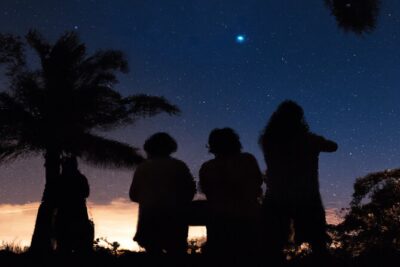
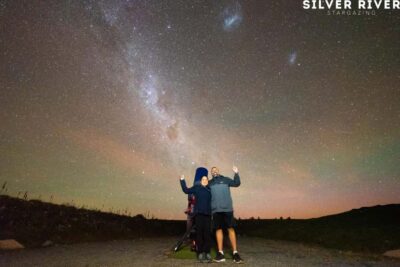
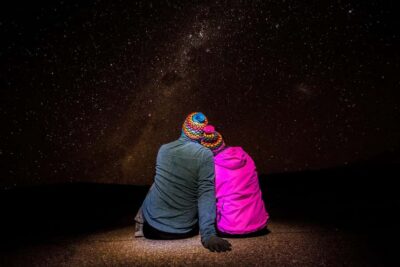
First is the night sky. You’ll stop to look up near Death Valley Junction, where the desert emptiness gives you a better chance of seeing stars than you’d get anywhere near town. Second is the sunrise. That’s why the trip is timed around reaching Dante’s View before the sun breaks the horizon. This isn’t just about seeing a sunrise. It’s about watching it happen from a viewpoint that’s famous for the way light hits the valley.
I also appreciate that you don’t spend the whole day sitting in the van waiting for one dramatic stop. You get a sequence of places with different textures and colors—salt, layered rock, sculpted canyons—so even if your stars are limited, you still have a full, varied day.
You can also read our reviews of more tours and experiences in Las Vegas.

Pickup and timing from Las Vegas (the early-morning reality)
The tour runs long—about 10 hours—and the schedule starts earlier than most people expect. Pickup is typically emailed with a window between 2:15am and 4:00am, depending on sunrise timing. The operator estimates you’ll be leaving roughly 3 hours and 15 minutes before sunrise in Death Valley.
From Las Vegas to Death Valley you’re looking at about a two-hour drive, and you’ll make at least one restroom-and-break stop in each direction. Plan on being half-asleep at departure, because once you’re in the desert, you’re going to want your body ready for cold air and quick photo walks.
The tour returns to your original departure point, typically around 11:30 AM, though traffic can shift that. If you have a late-afternoon plan on arrival day, you should be fine. If you have something that depends on being wide awake right after, I’d schedule it later.
Small-group comfort: what a cap of 11 travelers changes
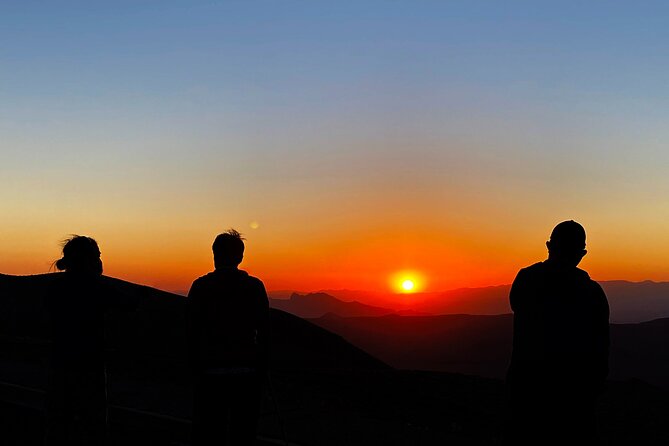
This tour caps at 11 travelers, which matters more than it sounds. With a smaller group, the guide can actually keep an eye on timing—so you don’t end up waiting forever at viewpoints. It also helps with the photo flow. At multiple stops, you’ll have only around 20–30 minutes, so the difference between 6 people and 20 people is a lot.
The vehicle is air-conditioned (and heating is available too), which is helpful because dawn in the desert can feel surprisingly cold even if daytime is hot later. A couple of practical things to know: there’s no storage space in the vehicle, and anything you bring needs to fit comfortably in your lap. If you’re the type who likes a big daypack, you may want to rethink that.
Night sky stop: Death Valley Junction under the stars
You’ll get one dedicated moment to look up at the sky at Death Valley Junction. The stop is about 15 minutes, and it’s positioned early enough in the morning-to-night flow that you’re still working in darkness.
Here’s how I’d approach it: don’t just glance up and move on. Take a minute to let your eyes adjust. If you’re serious about photos, bring a camera setup that you’re comfortable using quickly—because this is not a slow, sit-for-an-hour observatory moment.
This is also where the “weather matters” part becomes real. If clouds cover the sky, your stars won’t be as dramatic. The upside is that even on less-perfect nights, you’re still traveling through a desert region where the light and scale of the space feel unique.
Dante’s View sunrise: the main event
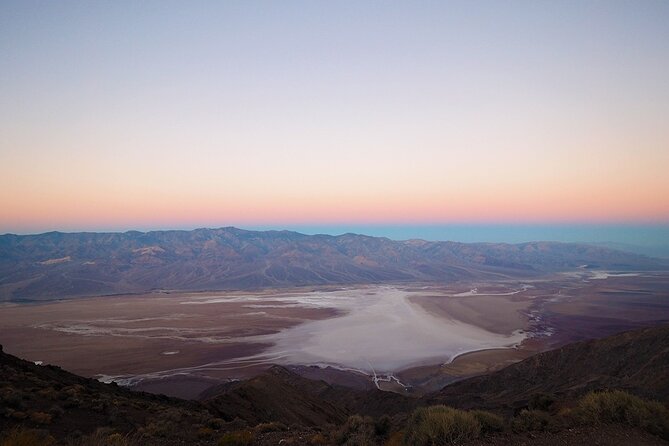
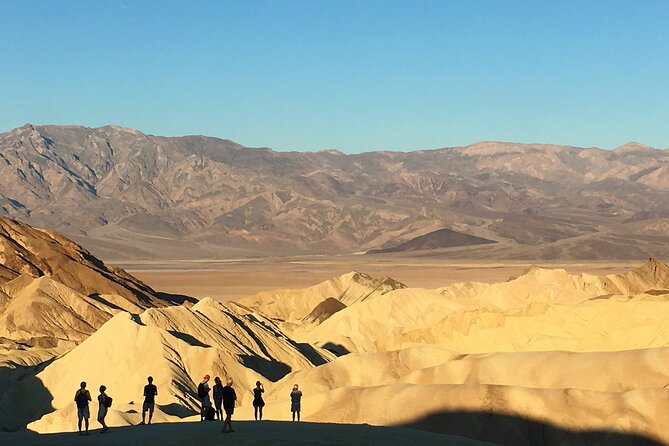
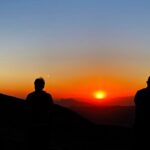
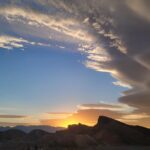
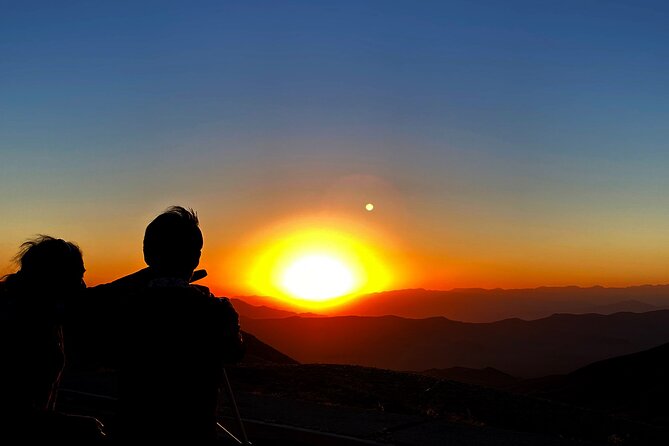
Dante’s View is the big sunrise stop, and it’s why you’re booking this tour. You’ll be taken to the observatory area at around 1,669 m altitude, and you’ll have about 30 minutes there.
This is one of those spots where timing and positioning are everything. Sunrise isn’t something you can force. You’re there to catch the actual moment the light begins to spill across the valley. If conditions are clear, the view can be breathtaking in a very practical way: you can see the valley’s depth and the way daylight changes rock and sand tone.
Two tips that make this easier:
- Dress for cold, not just for comfort. The desert can go chilly before the sun warms things up.
- Use the guide’s timing. Good guides keep the group moving so you don’t miss the transition between pre-sunlight gray and the first real glow.
In the reviews connected to this tour, people consistently praise guides for being animated and for knowing the best spots for photos. That matters at Dante’s View because you don’t want to be hunting for the perfect angle after the moment has passed.
Zabriskie Point: the color-light photo stop
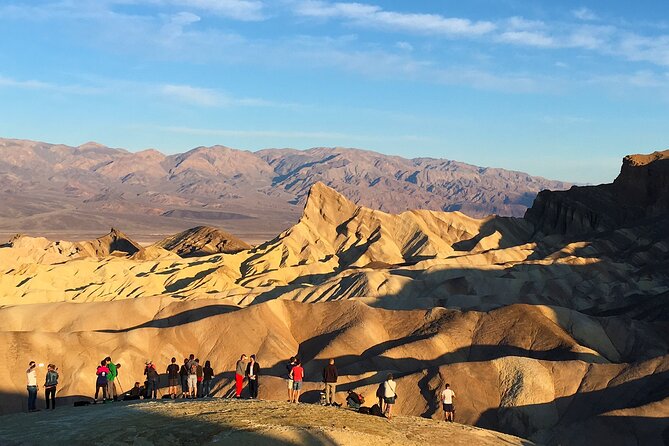
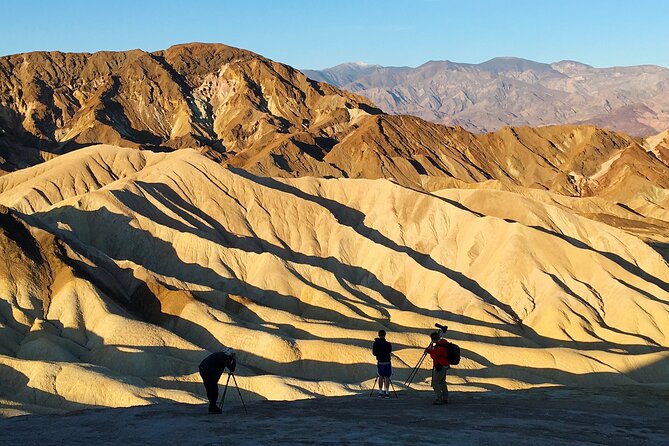
After sunrise, the itinerary keeps momentum with Zabriskie Point, a well-known photo location inside Death Valley National Park. You’ll get about 20 minutes here, with park admission included.
Zabriskie Point is famous for the way light plays across layered strata. The idea you’ll hear is that sunlight can make these layers look like they shift through multiple colors. In practical terms, that means your photos will look different depending on where the sun is in the sky and whether clouds soften the light.
The only drawback is the short time. If you love lingering with a camera, 20 minutes can feel quick. But if you like moving from viewpoint to viewpoint and getting a full “greatest hits” day, this timing works.
Furnace Creek Visitor Center: break time with real options
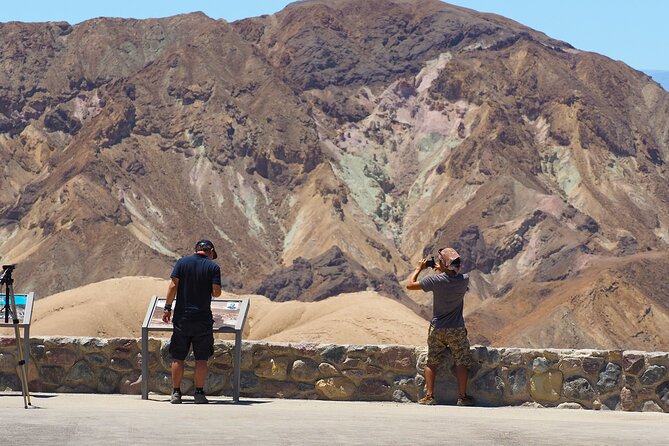
Next up is Furnace Creek Visitor Center, where you’ll have about 1 hour for a breakfast and break stop. Park admission is included here too.
Lunch is included on the tour, but breakfast is not listed as included. So when the plan says breakfast, think of it as a chance to eat on your own at this stop, then settle into the rest of the day’s viewpoints.
This is also the point where you’ll want to reset your body. You’ve been up early, and now you’re going to be in the sun and wind with constant short walks. Use the restroom, drink water, and avoid the temptation to do nothing at all—because the day after this is still packed with quick photo stops.
Artists Palette: oxidized minerals and that patchwork look
Artists Palette is one of those spots where geology turns into color. You’ll have about 30 minutes here, and park admission is included.
The core idea is that exposed minerals from the area take on different tones after erosion and oxidation. The result is a patchwork effect—hills and ridges that look like someone mixed pigments into the sediment. If you enjoy photography, this is a place where small changes in sun angle make a difference, so don’t rush your photos.
Keep your expectations realistic: you’ll be standing on the outside of the view, not wandering for miles. The time limit is still there, but for a color-layer stop, 30 minutes is enough to get a few angles and adjust exposure if needed.
Golden Canyon and Badwater Basin: two extremes in one morning
Then you move into Golden Canyon (about 30 minutes) and Badwater (about 30 minutes), both with admission included.
Golden Canyon is known for cliffs with glowing golden tones and complex color gradations—orange, apricot, yellow tones moving across the rock face. Again, time is short. Your job is to show up, find the viewpoint the guide directs you to, and take your shots quickly.
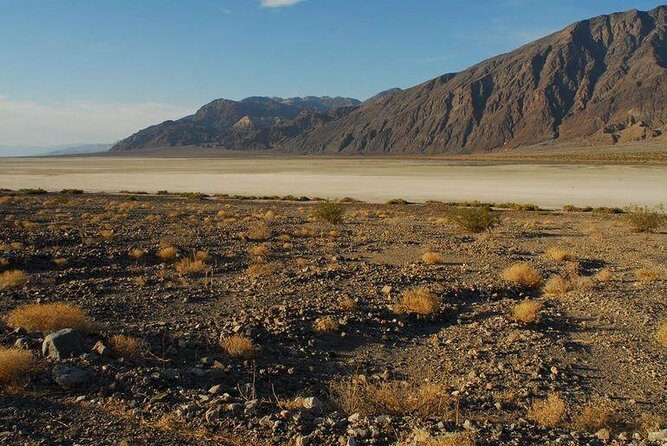
Badwater Basin is different in a good way. It’s the famous salt flat area and is known as the lowest point in North America at -282 feet. The stop is about 30 minutes. What you’ll notice isn’t only the famous number, but the strange emptiness of the salt plain in front of you. It feels flat in a way that makes your brain recalibrate.
One practical consideration at both Golden Canyon and Badwater: wind can be a factor, and heat (later in the morning) can hit harder than you expect. Bring sunglasses and keep water in mind. Even though bottled water is included, you’ll still want to pace yourself.
The breaks at Pahrump: quick resets, not full meals
You’ll also have short breaks in Pahrump, each about 15 minutes. These are basically for stretching, restroom access, and getting your bearings on a long day.
Don’t plan on eating big meals here. Think of them as transition points.
Lunch, water, and what’s actually included
This tour includes:
- Lunch
- Bottled water
- Professional tour guide
- Pick-up and drop-off at designated hotels
- Death Valley National Park admission
- An air-conditioned vehicle
- Mobile ticket
- English-speaking guide
What’s not included:
- Tip for the guide
- Breakfast
If you’re comparing value, this is one of those days where the inclusions matter. National park admission is included, which saves you a separate chore. Lunch and water reduce the chances you end up paying premium prices at inconvenient times. And the guide handles timing across several viewpoints, which is the hard part if you’re doing this solo.
What to pack for a cold, dark start
This is the part where people either have a great time or spend the morning miserable. The desert early morning can be cold even in summer, so pack for layers.
Bring:
- A long-sleeved jacket or long-sleeved sweatshirt
- Sunscreen and a hat
- A camera (and any cold-protection you need for your battery)
In winter, the FAQ suggests warm clothing like a down jacket, and you can bring a blanket if you want in colder months. Also note: restrooms aren’t on the vehicle, but there are restrooms at several stops.
One more logistics note: because there’s no storage, you’ll want to keep your essentials small enough to sit comfortably on your lap.
Pace, walking, and who this tour suits best
This is a tour with short walks at each stop. The terrain is mostly paved and dirt roads and is described as relatively even. That’s good news if you want to get out, take photos, and move on without a strenuous hike.
Who it fits best:
- You want big highlights without the stress of driving at night.
- You like photography, but you’re okay with short photo windows.
- You prefer a guide who helps keep the timing tight so you don’t miss sunrise.
Who might feel less happy:
- If you hate early mornings, you’ll feel it.
- If you expect long, slow exploring at each viewpoint, the schedule won’t match that style.
Price and value: why $319 can make sense
At $319 per person for an about 10-hour day from Las Vegas, it isn’t a budget excursion. But it can be good value if you factor in what you’re buying.
You’re paying for:
- Hotel pickup and drop-off
- A professional guide
- Park admission included
- A long day of transport across multiple Death Valley hotspots
- Lunch and bottled water
- The early timing that gets you to sunrise and a stargazing stop
If you tried to replicate this on your own, you’d pay for park access and meals anyway, plus the cost and headache of night driving and coordinating sunrise timing. The guide’s role—especially at Dante’s View—turns out to be part of the value, not just a nice-to-have.
If you’re traveling with two people, the title mentions a group discount for adding more people, so it’s worth checking the booking options if you have friends who can join.
Should you book this Death Valley sunrise and stargazing tour?
I’d book it if you want a guided day that covers the classic Death Valley stops in one shot, and you’re willing to commit to an extremely early start. It’s especially worth it when you care about sunrise timing from Dante’s View and you’d rather trust a guide than calculate everything yourself in the dark.
I’d hesitate if:
- You know you’re likely to be disappointed by clouds. The tour states there’s no refund if you can’t see the stars or sunrise due to weather.
- You prefer slow, lingering exploration. The time at each stop is intentionally short.
If you go in prepared—layers, sunscreen, and camera ready—you’ll get a day that feels like two different environments stitched together: night sky first, then bright desert geology right after. That combination is exactly why this tour is such a popular way to do Death Valley from Las Vegas.
FAQ
What time do you get picked up for the Death Valley sunrise and stargazing tour?
Pickup time is sent by email after booking is confirmed. It’s typically between 2:15am and 4:00am, depending on the sunrise time. The operator estimates departure is about 3 hours and 15 minutes before sunrise.
How long is the tour?
The tour runs about 10 hours (approx.).
Is pickup and drop-off included?
Yes. The tour includes pick-up and drop-off at designated hotels.
What’s included in the price?
The listed inclusions are an air-conditioned vehicle, lunch, bottled water, a professional tour guide, pick-up and drop-off at designated hotels, and Death Valley National Park admission.
Is breakfast included?
No, breakfast is not listed as included. There is a break at Furnace Creek Visitor Center where you’ll have time for breakfast.
What are the main sunrise and photo stops?
Dante’s View is the main sunrise stop. You’ll also visit places such as Zabriskie Point, Artists Palette, Golden Canyon, and Badwater.
How long do we spend at each stop?
Stop times are short and vary by location. For example, Dante’s View is about 30 minutes, Zabriskie Point about 20 minutes, and several other key photo stops are about 30 minutes each.
Are there restrooms on the vehicle?
No. There are no restrooms on the tour vehicle, but restrooms are available at several stops along the way.
What should I wear for an early Death Valley morning?
Bring a long-sleeved jacket, even in summer. The desert can get cold in the morning and evening. In winter, warm clothing such as a down jacket is recommended.
Can kids, car seats, or strollers be accommodated?
Children over 2 years old can participate. Car seats are available if requested for children under 5 years old and under 60 lbs. Strollers are not permitted due to size constraints.
What if the weather is cloudy?
The tour requires good weather. The information provided also notes there is no refund if you cannot see the starry sky or sunrise due to weather. If the experience is canceled due to poor weather, you’ll be offered a different date or a full refund.