REVIEW · LAS VEGAS
Las Vegas: Death Valley Day Trip with Stargazing
Book on GetYourGuide →Operated by iTravel USA LLC · Bookable on GetYourGuide
Death Valley at night is a whole different planet. This tour strings together the park’s top hits at an unhurried pace, then adds stargazing support so you’re not just driving through darkness. I especially love the way the stops feel efficient without being rushed, and how the guide helps with photo moments all day, including night-sky tips. One heads-up: if you don’t want lots of narration or being asked to pose for pictures, this kind of guided experience can feel a bit too “tour-y.”
The logistics are built around comfort. You start with hotel pickup, get express security support, and spend the day on a van that’s moving but not frantic. You also get meaningful time at key viewpoints where you can actually look around, not just snap and go.
In my view, the best fit is people who want the classic Death Valley sights plus the payoff of a clear-night sky when conditions cooperate. The guide matters too, and the name Jay shows up in multiple positive comments for being professional and taking great shots.
In This Review
- Key things I’d plan around
- Price and what you actually get for $299
- Starting from the Strip: comfort, timing, and first photos
- Dante’s View: why elevation gives you instant scale
- Zabriskie Point: golden badlands and a classic viewpoint walk
- Mesquite Flat Sand Dunes: soft sand, sunset silhouettes later
- Furnace Creek: the sanity break with exhibits, restrooms, and dinner time
- Badwater Basin: lowest point drama and salt-crystal photos
- Artist’s Palette and Devils Golf Course: color minerals, dramatic shapes
- Sunset over the mountains: the light you came for
- Death Valley Junction stargazing: constellations, planets, Milky Way on clear nights
- Small group rhythm: unhurried sightseeing with real time at stops
- Who this tour suits best (and who should choose differently)
- Should you book this Death Valley + stargazing day trip?
- FAQ
- How long is the Death Valley day trip from Las Vegas?
- Where does pickup and drop-off happen?
- Does the tour include stargazing?
- What’s included in the price?
- What stops do you visit during the day?
- What should I bring?
- Are there restrictions on who can join?
Key things I’d plan around
- Pickup on the Las Vegas Strip plus express security help to start the day without as much hassle
- A full day-to-night Death Valley route that hits viewpoints, dunes, salt flats, and color-rich mineral hills
- Guide-led photography support, including long-exposure stargazing tips after dark
- A real sunset plan, with a remote viewpoint for the light change over the mountains
- Furnace Creek time for museum-style exhibits, restrooms, and a dinner break
Price and what you actually get for $299
At $299 per person for an 11-hour outing, this isn’t the cheapest way to see Death Valley. But you’re paying for three things that add up fast if you try to do it on your own: your guide’s route planning, the transportation from Las Vegas, and the time saved from sorting driving schedules, entrance access, and stop logistics.
Here’s what’s included that can make the price feel more fair:
- Hotel pickup and drop-off (Strip area, plus reasonable off-Strip addresses along the route)
- Death Valley entrance
- A sandwich and water
- A live guide (English, Spanish, Italian)
- Multiple structured photo stops, plus a sunset and stargazing phase
- A van ride timed for a day that works with daylight and darkness
What you should expect to manage yourself:
- Your own meals during the Furnace Creek dinner break (the day includes a break for dinner time, and the tour also provides a sandwich and water)
If you’re the kind of traveler who hates the “figure-it-out” part of a road trip, the value is easier to see. If you prefer complete freedom and don’t want a camera-focused guide, you may feel the cost more sharply.
You can also read our reviews of more tours and experiences in Las Vegas.
Starting from the Strip: comfort, timing, and first photos
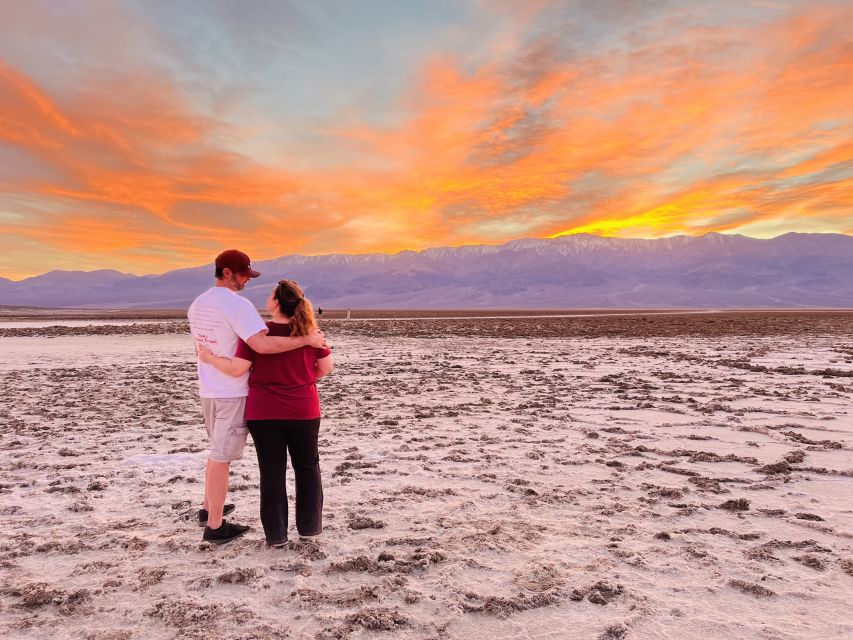
Your day begins with a van pickup, with options along the Las Vegas Strip from Mandalay Bay to The STRAT. You’ll also get express security assistance, which matters because the first hours set the tone. Nobody wants a slow start when the desert heat is already waiting.
Once you’re in Death Valley territory, the tour wastes very little time getting you oriented with an early photo opportunity at the park’s welcome area. It’s simple, but smart. You get that first “I’m really here” moment before the day’s viewpoints start stacking up.
Then it’s forward into the park, with stops built around the way the light shifts. In Death Valley, the difference between morning shadows and late-day warmth can change how the colors show up—especially around salt flats and mineral formations.
Dante’s View: why elevation gives you instant scale
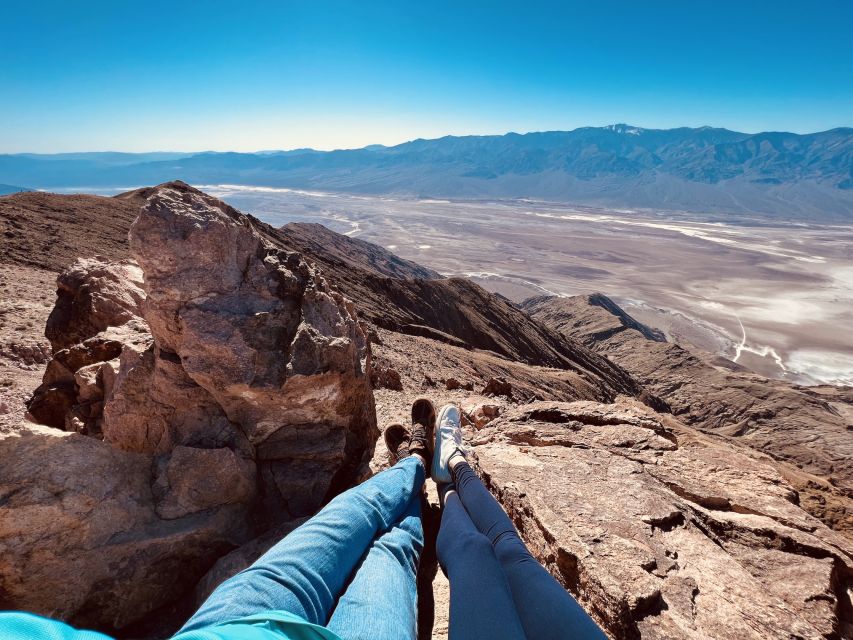
One of the day’s best moves is hitting Dante’s View early enough to still have good visibility. From up high, you see more than just a single “pretty spot.” You get scale—ridges, valleys, and the strange geometry of the desert as a whole.
This stop is mostly about lookout time: photo opportunity, guided sightseeing, and time to actually look. It’s not a quick drive-by. You’ll feel how Death Valley earns its reputation for extremes: heat, distance, and that stark stillness that makes it hard to believe a place like this exists just beyond the city.
Practical tip: bring a charged smartphone if you want to use it for quick GPS checks and photos, but also remember you’ll be at higher viewpoints where sun protection still matters.
Zabriskie Point: golden badlands and a classic viewpoint walk
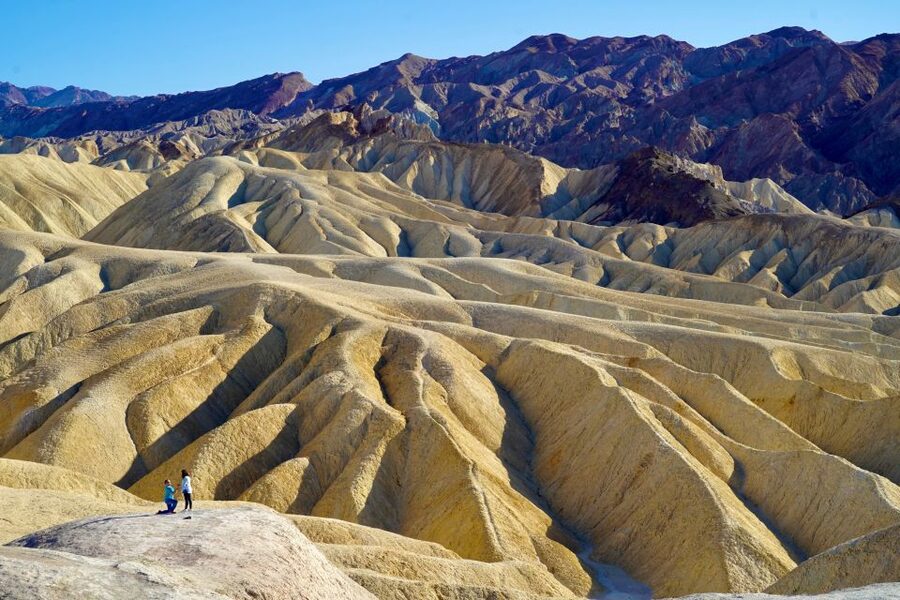
Zabriskie Point is one of those Death Valley names that travels well in stories, and for good reason. You’re set up for wide panoramas over golden badlands, with a mix of guided talk and time to walk out and take in the view.
What I like about this stop on a guided day is that you don’t just stand and guess what you’re looking at. The guide helps you connect the scenery to what you see on the ground—how the terrain has shaped over time and why certain angles make the colors pop. Even if you’re not a geology person, you’ll still understand what makes this place look the way it does.
This is also where the tour’s “photo support” can help. If you want shots that look like they came from a professional camera, you’ll likely be glad your guide is thinking about angles and timing, not just locations.
Mesquite Flat Sand Dunes: soft sand, sunset silhouettes later
Mesquite Flat Sand Dunes are about the feel as much as the look. You get a chance to walk in the dunes with guided time set aside for actually getting your boots (or shoes) into the sand and exploring textures up close.
The best part is what the dunes do for your day-to-night plan. This is the kind of place where late light makes silhouettes and shadows dramatic. Even if you don’t do a sunset immediately from here, the dunes still help you understand why the evening stargazing phase matters so much. The ground gets quiet. The sky gets bigger.
Practical tip: wear comfortable shoes with grip. Sand can be deeper than you expect, and you’ll want a shoe that doesn’t slide around.
Furnace Creek: the sanity break with exhibits, restrooms, and dinner time
Furnace Creek is the practical center of the day. You get a break with restrooms, museum-style exhibits, and time to reset before the darker parts of Death Valley come into play.
This pause matters because Death Valley can feel intense: heat earlier, big distances, and long stretches on the road. The 45-minute break helps you avoid that late-day fatigue that can ruin your evening views.
It’s also your dinner window. You should plan on using this time to eat and recharge. The tour provides a sandwich and water, but the real benefit of Furnace Creek time is that you can choose how you want to handle dinner and how long you want to linger.
Badwater Basin: lowest point drama and salt-crystal photos
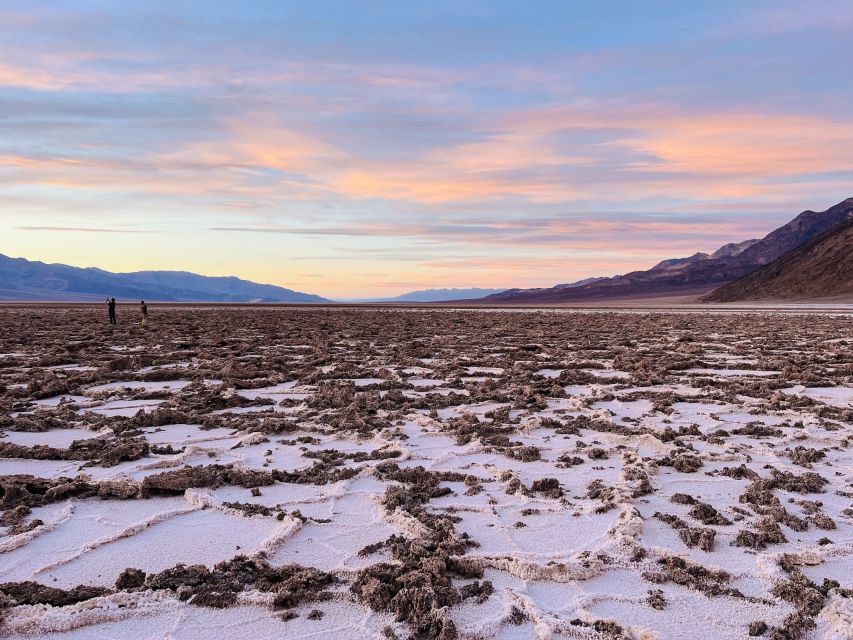
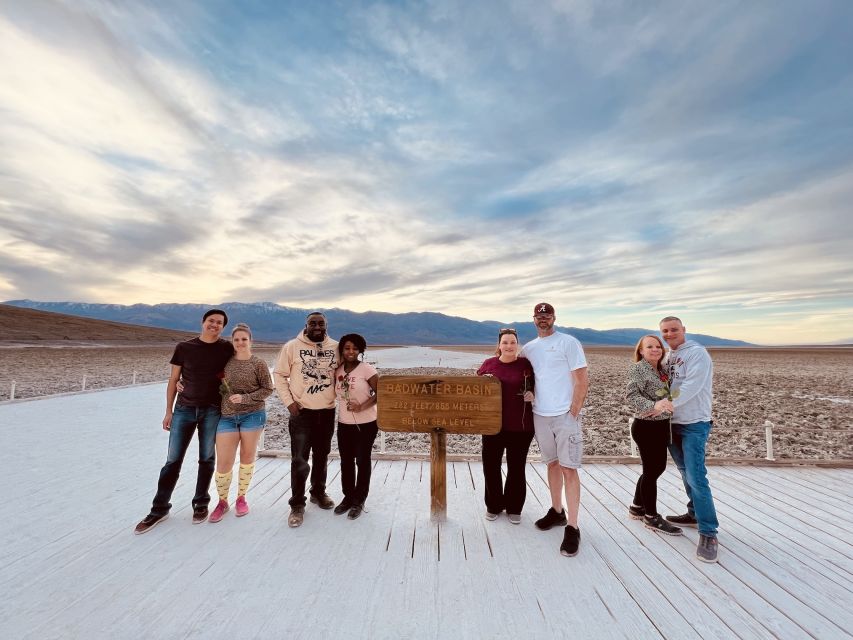
Badwater Basin is the signature “wow” moment for a lot of people, and it earns it. You’ll walk among salt flats at the lowest point in North America and get time for sightseeing plus guided steps for capturing the unique look of the salt-crystal formations.
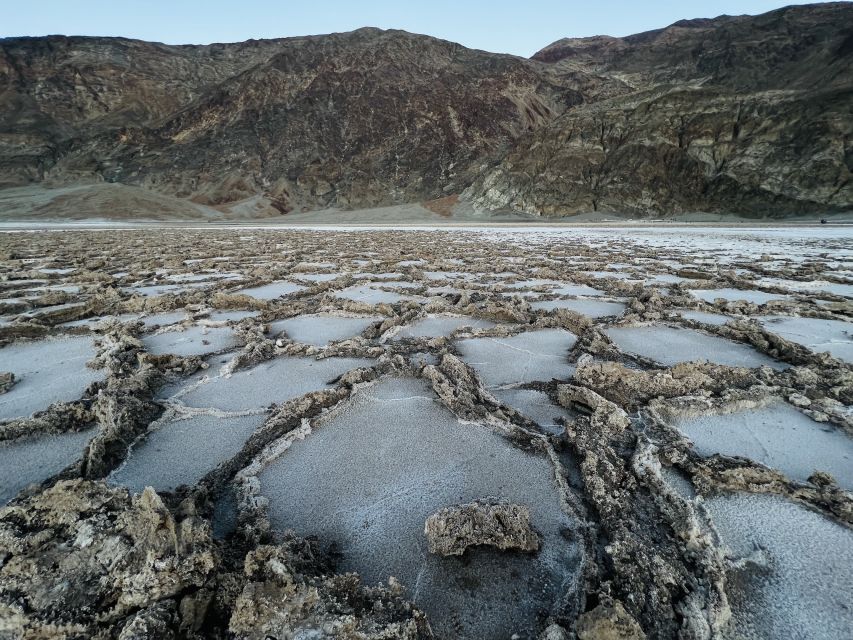
This stop has a different feel from the viewpoints. Viewpoints give you distance. Badwater gives you proximity. Up close, you start noticing patterns: textures that look almost like a frozen surface, and bright highlights that can overpower your eyes if you’re not ready.
Photography note (useful even if you don’t care about photos of yourself): salt glare can be harsh, so sunglasses and sun protection help. The guide’s photo support can help you time shots when the brightness is most forgiving.
Artist’s Palette and Devils Golf Course: color minerals, dramatic shapes
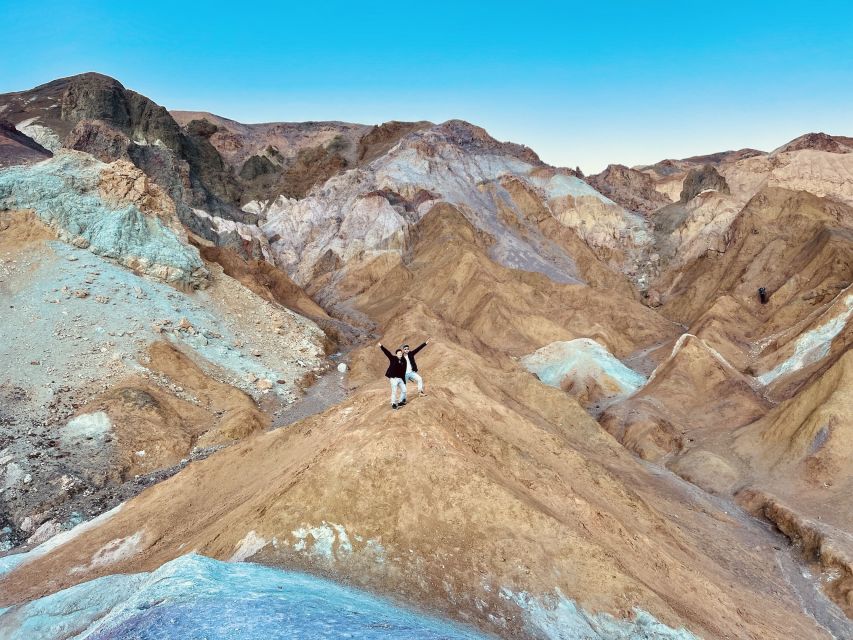
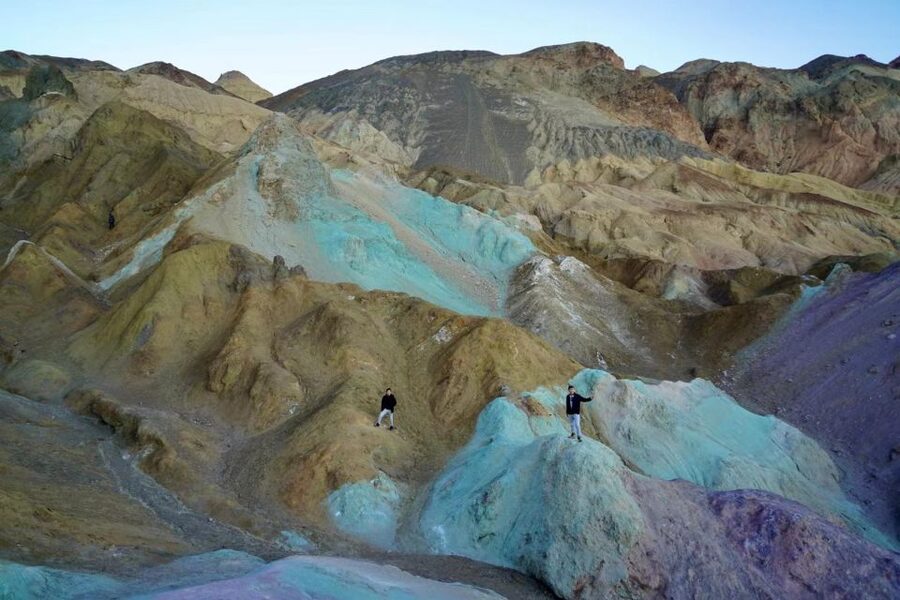
After Badwater, the tour heads toward mineral-rich scenery along the Artist Drive area. Artist’s Palette is the stop people remember because the hills can show shades of pink, green, and purple depending on the light and mineral presence. It’s not just one flat color wall. It’s a gradient of tones that looks different with every step and angle.
Then you’ll also see the dramatic formations at Devils Golf Course. The name sounds funny, but the terrain is serious-looking—rocky shapes and rugged textures that feel otherworldly.
These two stops work well together because one is more about color and the other is about form. If you’re keeping a photo log in your head, this is where you’ll feel you’re getting variety, not repeating the same “wide desert view” photo five times.
Sunset over the mountains: the light you came for
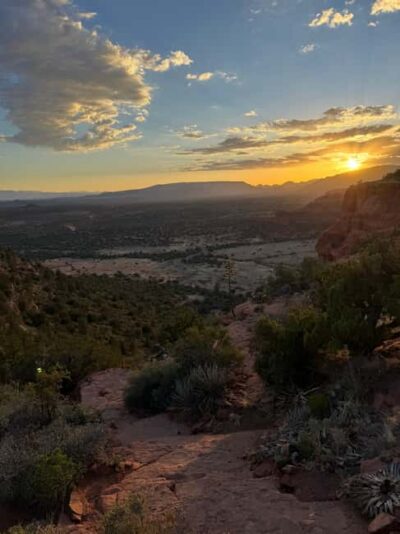
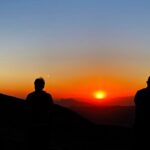
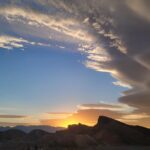
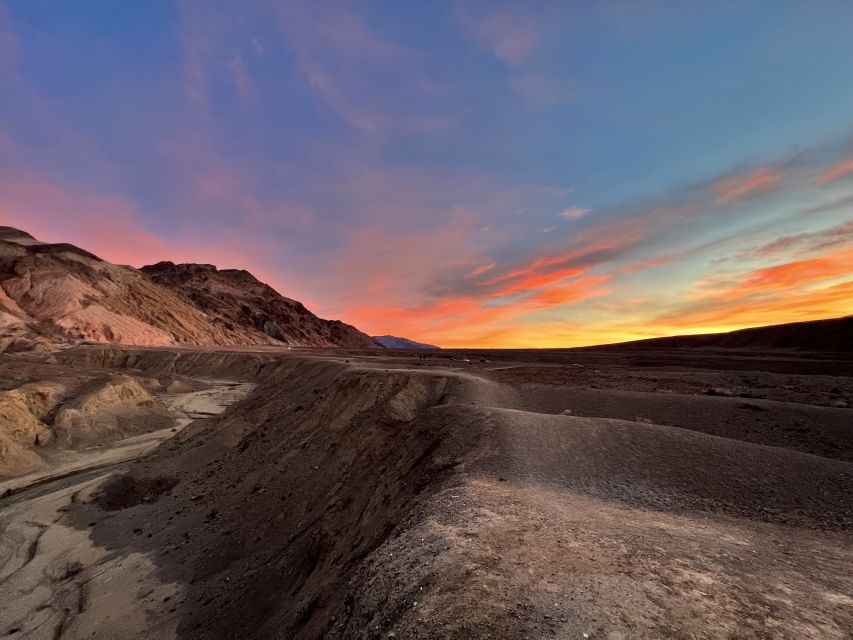
Once dinner time is handled at Furnace Creek, you shift into the “light show” phase. The tour heads to a remote viewpoint for sunset over the mountains. This is where you start seeing why Death Valley feels so unreal even in daylight. At sunset, the contrast sharpens: sky gradients deepen, shadows stretch, and the desert’s stillness becomes the main character.
You get guided sunset time, which helps because sunset is one of those moments that moves fast. When someone’s watching the timing with you, you spend less effort guessing when to look up.
If you want an atmospheric “silent desert” feeling, this is the part of the day that most reliably gives it to you.
Death Valley Junction stargazing: constellations, planets, Milky Way on clear nights
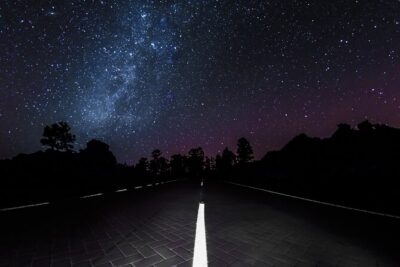
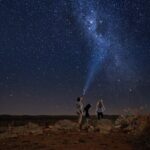
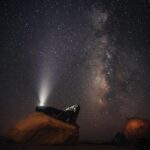
After darkness falls, the tour heads to Death Valley Junction, described as a quiet spot that’s ideal for stargazing when conditions are right. This is the phase that turns a sightseeing day into something you’ll remember.
The goal is to see constellations, planets, and the Milky Way on clear nights. And here’s where the guide’s role becomes genuinely valuable. You’re not just told to look up. You get help enjoying the night sky safely, plus photography tips for long-exposure shots.
This is also where weather matters most. If clouds roll in, stargazing becomes less spectacular. One drawback that showed up in real-world feedback is that the night-sky plan can be affected by conditions, and the guide may set expectations if the sky isn’t cooperating.
Practical tip: bring a sun hat and sunscreen for the day, but once you’re out at night, be ready for temperature swings too. Weather-appropriate clothing is not optional.
Small group rhythm: unhurried sightseeing with real time at stops
The tour is designed around small groups (and private options are available). That changes the vibe. You’re not fighting crowds at every turnout. You have a better chance to move at a comfortable pace and linger at the viewpoints that catch your eye.
Still, it’s a guided day. You’ll hear from the guide throughout the drive, and in some cases that includes lots of talking and frequent calls for photo posing. If you’re the type who gets camera-shy or prefers quiet, plan to manage that expectation before you go.
I’d call this tour a good fit for:
- People who want the classic Death Valley highlights without the hassle of arranging a self-drive
- Travelers who enjoy photography and want help getting better shots
- Anyone who wants a full-day arc that ends with real night-sky time
I’d skip it if:
- You want pure quiet and zero direction
- You dislike being prompted for photos
- Your group’s priorities are more about independent wandering than structured stops
Who this tour suits best (and who should choose differently)
This is best for adults and older kids (the tour isn’t suitable for children under 5). It’s also not a match for wheelchair users or guests with mobility impairments, since the experience includes walking at multiple stops and viewing areas that aren’t described as fully accessible.
Choose it if:
- You’re staying on the Las Vegas Strip and want an organized way to get into Death Valley for a day-to-night experience
- You want to tick off iconic locations like Zabriskie Point, Badwater Basin, Artist’s Palette, the dunes, and the stargazing location
- You care about photos, including night photography guidance
Choose a different approach if:
- You prefer slow, self-paced stops where you decide everything
- You only care about one or two sights and would rather spend less time on a full schedule
Should you book this Death Valley + stargazing day trip?
I’d book it if your wishlist includes both the daytime icons and the nighttime sky, and you want a guide to handle the route, timing, and photography support. The biggest selling point isn’t just the list of stops—it’s how the day is paced so you can actually see, walk, and photograph, then finish under the stars.
I wouldn’t book it if your top priority is silence and independence. The guided format can mean constant commentary and photo prompts. Also, the stargazing part depends on clear night conditions, so you’re buying into the desert’s weather randomness as part of the deal.
If you want a classic Death Valley checklist plus professional-style photo help and a serious stargazing phase, this is one of the more complete ways to do it from Las Vegas in a single day.
FAQ
How long is the Death Valley day trip from Las Vegas?
It runs for 11 hours total, from hotel pickup to drop-off.
Where does pickup and drop-off happen?
Pickup and drop-off are available along the Las Vegas Strip from Mandalay Bay to The STRAT. If you’re staying off-Strip, you can provide your address and they’ll try to accommodate locations reasonably along the route.
Does the tour include stargazing?
Yes. After sunset, you go to a remote viewpoint near Death Valley Junction for stargazing, with guide help and long-exposure photography tips on clear nights.
What’s included in the price?
The tour includes hotel pickup and drop-off, Death Valley entrance, a sandwich, and water.
What stops do you visit during the day?
You’ll visit iconic areas including Zabriskie Point, Badwater Basin, Artist’s Palette, and Mesquite Flat Sand Dunes, plus other major photo stops and viewpoints such as Dante’s View. There’s also a sunset stop and the stargazing viewpoint.
What should I bring?
Bring comfortable shoes, sunscreen, cash, weather-appropriate clothing, a charged smartphone, and a sun hat.
Are there restrictions on who can join?
The tour isn’t suitable for children under 5, wheelchair users, or people with mobility impairments. Luggage or large bags aren’t allowed, and alcohol and drugs are not allowed. Unaccompanied minors aren’t allowed.