REVIEW · FORT MYERS
Night Sky Stargazing Tour in Punta Gorda Florida
Book on Viator →Operated by Starry Night Florida · Bookable on Viator
Plan a night under real darkness.
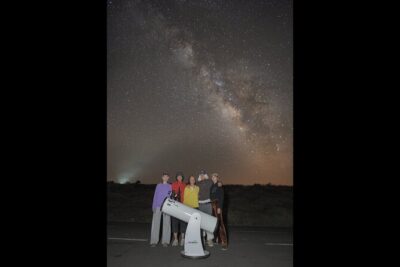
This Punta Gorda stargazing tour takes you to a Dark Sky site in Charlotte County parks, where Jason gives a guided, laser-pointed tour of the sky. You’ll sit in a circle for an easy start, then get real telescope time with a large Celestron setup—plus a chance to spot planets and deep-sky objects that most people only see in photos.
I especially love the small group size, with room for up-close questions, and the way you go from simple star-hunting to wow-moments through the telescope. I also like that binoculars are included, so you’re not stuck waiting for the big views to happen.
One consideration: the experience is weather-dependent, so you’ll want a jacket and mosquito spray ready just in case conditions are chilly or bug-active.
In This Review
- Key Things That Make This Tour Worth Your Time
- Entering Hathaway Park: How The Night Sky Tour Starts
- Dark Sky Site Setup: Why the Circle Intro Works
- Telescope Time With a Celestron Schmidt-Cassegrain: What You’ll Notice
- Binoculars, Laser Pointers, and the Moment It Clicks
- Snacks, Chairs, and Staying Comfortable During a 2.5-Hour Sky Show
- Weather-Dependent Nights: When the Sky Doesn’t Cooperate
- Who This Tour Fits Best (and Who Might Want to Skip)
- Price and Value: Is $59 Worth It?
- Should You Book This Punta Gorda Night Sky Tour?
- FAQ
- How long is the night sky stargazing tour?
- What does the tour cost?
- Where does the tour start?
- Is the tour limited to a small group?
- What viewing tools are included?
- Are snacks and drinks included?
- What if the weather is bad?
- Is it accessible and are service animals allowed?
Key Things That Make This Tour Worth Your Time
- Up to 10 people total for a less crowded, more personal sky show
- Laser-guided night sky introduction that helps you know what you’re seeing
- Binoculars provided, so you can scan the sky before the telescope
- A large Celestron telescope for detailed planet and deep-sky views
- Snacks and refreshments included to keep the night comfortable
- A true dark-sky location inside Charlotte County parks
Entering Hathaway Park: How The Night Sky Tour Starts
The tour meets at 35461 Washington Loop Rd, Punta Gorda, FL 33982, and then heads to Hathaway Park for the viewing night. The whole experience runs about 2 hours 30 minutes, which is a practical length: long enough for a real guided sequence, not so long that you freeze before anything good happens.
When you arrive at the dark-sky site, you join a small group—up to 9 other astronomy enthusiasts. That matters because stargazing can feel slow if you’re in a huge group. Here, you can actually follow along, ask questions, and adjust when you’re not seeing what the guide is pointing out.
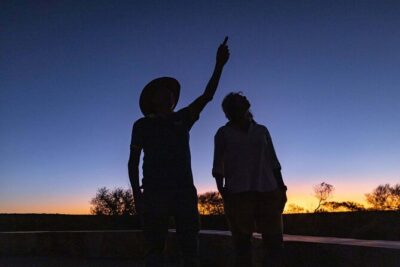
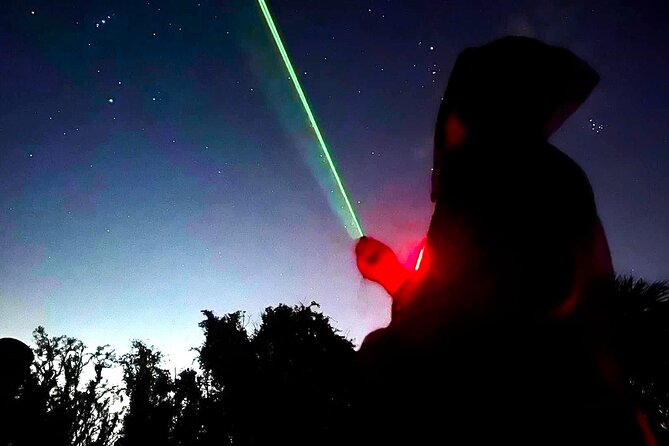
The kickoff is built around an orientation session. You’ll get a seat in a circle for an intro to the night sky, with a laser guide to show what to look for. This is one of the smartest parts of the format: it helps you build quick “mental maps” of where to look before you rely on equipment.
Jason is the guide name you’ll hear most, and he’s the type who answers questions as you go. In a subject like astronomy, that’s a big deal. People aren’t just watching—they’re learning how to find things, which makes the night feel more like a skill you can reuse later.
Dark Sky Site Setup: Why the Circle Intro Works
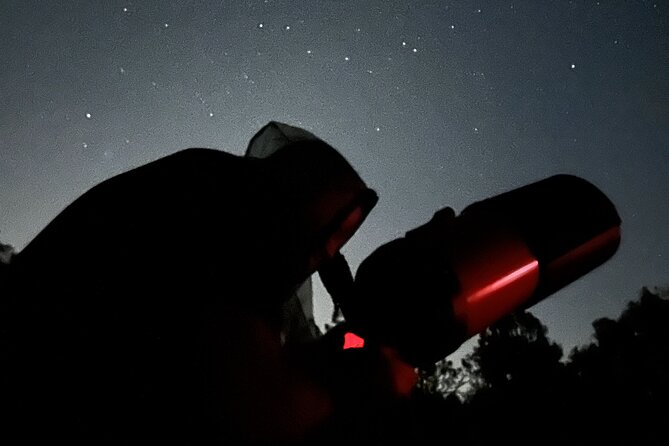
The circle intro sounds simple, but it’s doing a lot of work for you. First, it gets you oriented to the big landmarks in the sky—constellations and bright targets that act like signposts. Second, the laser guidance reduces the frustration of saying, I know where it should be, but I can’t find it.
And since binoculars are part of the plan, you’re not waiting for the telescope to start having fun. After the intro, you’ll be able to look around on your own with guidance in mind. That turns the sky from something mysterious into something navigable.
The best part is that you leave the guessing behind. Even if you consider yourself a beginner, Jason’s explanations are aimed at helping you track what’s happening above you, including the stories behind what you’re seeing. You can expect myth-and-constellation context as part of the way the night unfolds, which makes the science feel easier to remember.
Telescope Time With a Celestron Schmidt-Cassegrain: What You’ll Notice
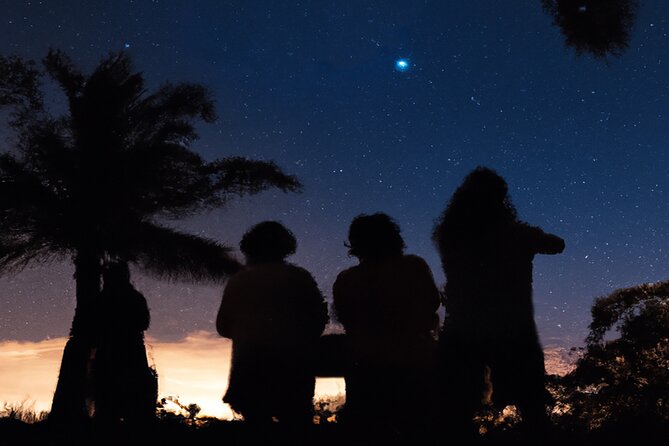
Once it’s telescope time, you’ll move from broad scanning to detailed viewing. The tour includes plenty of time with a large Celestron Schmidt-Cassegrain telescope, which is exactly the kind of instrument that turns bright objects into something you can really see.
This is where a stargazing trip often either lands or falls flat. When the telescope is the main event, it’s not enough to just point it in the sky. You want a sequence, enough time to focus, and a guide who helps you understand what the view means.
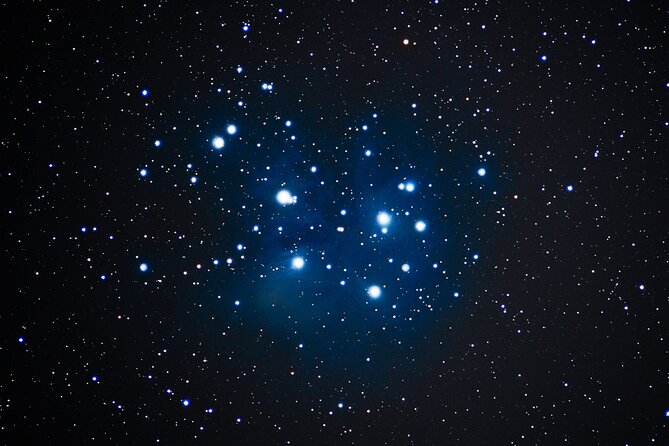
Here, you get that structure. You’ll likely see a mix of planets and brighter deep-sky targets on clear nights. From recent night-sky highlights, people have called out views like Saturn, Jupiter, Mars, Venus, Uranus, the Orion Nebula, and the Andromeda galaxy. Depending on the season, you might also catch things like the Milky Way structure, Andromeda, Vega, or the Pleiades.
One practical note: telescope viewing is a shared experience. That’s good for conversation and questions, but it also means you’ll want to be patient while the view is adjusted. If you’re the type who wants instant perfection, stargazing might test your timing. If you’re okay with small waiting moments, it’s part of the charm.
Binoculars, Laser Pointers, and the Moment It Clicks
Binoculars are provided, and I love that this tour doesn’t treat them like an optional extra. Binoculars are the tool that helps you see stars as more than pinpoints. They also help you practice tracking objects the guide points out, so the big telescope moments make even more sense.
This matters for one reason: astronomy is visual pattern recognition. Once you learn how to find a target, the sky starts rewarding you even when you’re not staring through the telescope.
People have reported spotting the Milky Way, Saturn’s rings through the telescope, and shooting stars during the night. Even when you’re mostly focused on planets or nebulae, those small extras—like a streak of light or a dense band of stars—help the whole night feel alive.
The laser-guided instruction also helps you learn the sky in a way you can repeat. If you ever try stargazing on your own later, you’ll remember the quick orientation steps: where to look first, how to use brighter stars as anchors, and what to expect when you switch tools.
Snacks, Chairs, and Staying Comfortable During a 2.5-Hour Sky Show
No one wants stargazing to turn into endurance. This tour includes snacks and refreshments, and that little buffer helps you stay present instead of scanning for the next bite or worrying about when it ends.
The food element also signals something important: the tour is designed to feel like a night out, not a rushed science lecture. Even the seating is set up for comfort so you can look upward for longer stretches without immediately getting stiff.
That said, the weather is the wildcard. One of the clearest tips from past guests is to bring a jacket and mosquito spray if you’re going out in the evening. In Florida, the air can shift quickly after sunset, and insects don’t always respect your schedule.
A good rule: dress for a cool, still night. Layers beat one heavy item. And if you’re sensitive to bites, bug spray is a sensible move.
Weather-Dependent Nights: When the Sky Doesn’t Cooperate
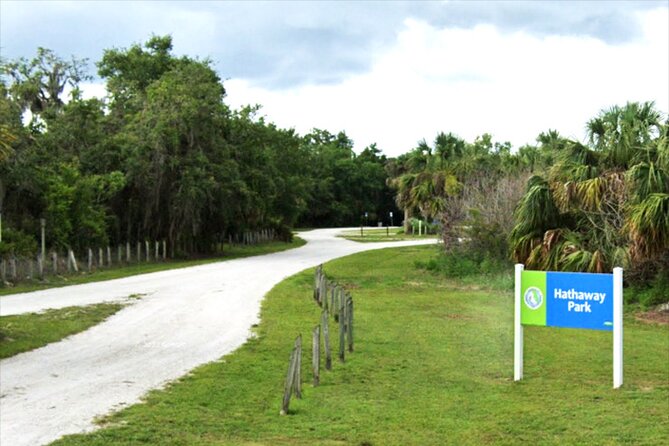
This experience requires good weather. If conditions aren’t right, you’ll be offered a different date or a full refund. That’s fair, because stargazing is brutally honest: clouds and haze can wipe out the very reason you came.
The other weather-related factor is how your eyes react when you’re outside. Your night vision improves over time, and watching the sky also takes a little adjustment. The best nights feel smooth because you get time to settle in, get oriented, and then enjoy the telescope views without rushing.
Since the tour’s highlights depend on what’s visible in the sky that season, you may see different objects on different nights. That’s normal for astronomy tours and honestly part of the fun. If you’ve got your heart set on a specific target, it’s smart to ask what’s likely to be viewable around your dates when booking.
Who This Tour Fits Best (and Who Might Want to Skip)
This is a great fit if you want a guided night that still feels interactive. If you’re traveling with family or friends who might not all be science buffs, the tour’s pace and tools make it accessible. The small group size helps too, because questions don’t get swallowed by crowd noise.
I’d also recommend it if you want more than a quick peek. With both binoculars and telescope time, you’re not just waiting for a single highlight. You’re learning how to observe, and that makes the whole evening more satisfying.
If you hate being outdoors at night or you know you get cold easily, consider the season and your comfort needs. The tour includes snacks, but it can’t change the local weather. Also, if you’re hoping for nonstop guaranteed views in any conditions, stargazing will always have some variability.
Finally, if you’re the kind of person who loves hands-on moments and wants to understand what you’re seeing, this tour style clicks fast. Jason’s instruction and the step-by-step approach help you go from confused to confident.
Price and Value: Is $59 Worth It?
At $59 per person, this tour is priced like a value option compared with big, impersonal astronomy events. You’re paying for more than just someone pointing at the sky. You get a small-group guided experience, binoculars, a substantial telescope setup, and snacks and refreshments—all in a dark-sky park setting.
What makes the cost feel fair is the combination of time and equipment. Two hours 30 minutes is enough to do orientation, hunt with binoculars, and then enjoy telescope viewing with adjustments and explanations along the way.
Booking in advance is usually a good move here, since it’s commonly booked about 17 days ahead on average. If you wait until the last minute, you may miss the night that matches your schedule or the weather window you want.
If you’re a first-time stargazer, this is one of those purchases that can turn into a repeat habit. You’re not buying a photo op. You’re buying an evening of guided seeing that you can recreate later.
Should You Book This Punta Gorda Night Sky Tour?
Yes, I’d book it if you want a beginner-friendly, guided night that still delivers real telescope views. The strongest reasons are the small group, the laser-guided start that helps you find objects quickly, and the fact that you’re not stuck only watching—you’re equipped with binoculars and time at the Celestron.
I’d hesitate only if you’re not willing to dress for an outdoor evening or if your plans can’t flex around weather. Since the tour depends on clear conditions, it’s best for travelers who can adapt.
If you do book, prepare for the night like a pro: check what you can see around your dates, bring a jacket, and pack mosquito spray. Then arrive ready to look up, ask questions, and enjoy the kind of sky that’s hard to appreciate from most places.
FAQ
How long is the night sky stargazing tour?
It runs about 2 hours 30 minutes (approx.).
What does the tour cost?
The price is $59.00 per person.
Where does the tour start?
The start point is 35461 Washington Loop Rd, Punta Gorda, FL 33982, USA, and the tour ends back at the meeting point.
Is the tour limited to a small group?
Yes. The maximum group size is 10 travelers (with up to 9 other astronomy enthusiasts).
What viewing tools are included?
Binoculars are provided, and the tour includes plenty of telescope time with a large Celestron Schmidt-Cassegrain telescope.
Are snacks and drinks included?
Yes. Snacks and refreshments are included.
What if the weather is bad?
This experience requires good weather. If it’s canceled due to poor weather, you’ll be offered a different date or a full refund.
Is it accessible and are service animals allowed?
The Dark Sky site is fully accessible, and service animals are allowed.