REVIEW · LAS VEGAS
Death Valley Day & Night Tour – Scenic Stops, Sunset & Stargazing
Book on Viator →Operated by iTravel USA · Bookable on Viator
One day, two worlds of desert darkness. This Death Valley day & night tour strings together big-name overlooks and salt flats by daylight, then heads to a darker spot for serious stargazing. You also get convenient Las Vegas hotel pickup and drop-off, which makes the whole day feel way less like a road-trip chore.
Two things I really like are the photo coaching and the way the route hits so many signature spots in one long loop. Guides like Alex, Jay, and Mama Lankun focus on where you stand, how to frame shots, and the timing for sunset, and several guests said they even received their photos after the trip. That means you spend more time looking and less time wrestling with your camera settings.
One drawback to consider: the drive on desert roads can be rough, and the day includes curvy roads and some walking. If you have vertigo or motion sickness, or if mobility is tight for you, this can be a tough fit even if the guide drives carefully.
In This Review
- Key highlights I’d plan around
- Why this Death Valley day and night format works
- Pickup, group size, and what 11 hours feels like
- The highlight route: from the welcome sign to the salt flats
- Dante’s View: big elevation, big payoff
- Zabriskie Point: layers of rock and golden tones
- Badwater Basin: lowest point, brightest salt
- The color and texture stops: dunes and Artist’s Palette
- Mesquite Flat Sand Dunes: soft sand, surreal patterns
- Furnace Creek Visitor Center: restrooms and a breather
- Artist’s Palette: mineral colors you can’t fake
- Sunset and the final dark-sky session at Death Valley Junction
- The desert logistics nobody wants to think about
- Price and value: what you’re really paying for at $299
- Who should book this tour, and who should skip it
- Should you book Death Valley Day & Night?
- FAQ
- FAQ
- Do I need to arrange hotel pickup for this Death Valley tour?
- How long is the tour?
- What group size is this tour limited to?
- Is lunch and water included?
- Where does the tour stargazing take place?
- How much time do you spend exploring during the Death Valley portion?
- What should I wear?
- Are restrooms available?
- What if the weather is bad?
- Is this tour suitable for young children?
Key highlights I’d plan around
- A full day Death Valley loop with sunrise-to-stars pacing
- Stargazing at Death Valley Junction in a low-light area outside the park
- Guides help with framing at Dante’s View, Zabriskie Point, and Badwater Basin
- Lunch, snacks, and bottled water included so you can pack lighter
- Artist’s Palette adds color, not just scale, to your photos
- New moon nights are best for star visibility, even if weather can still spoil the plan
Why this Death Valley day and night format works
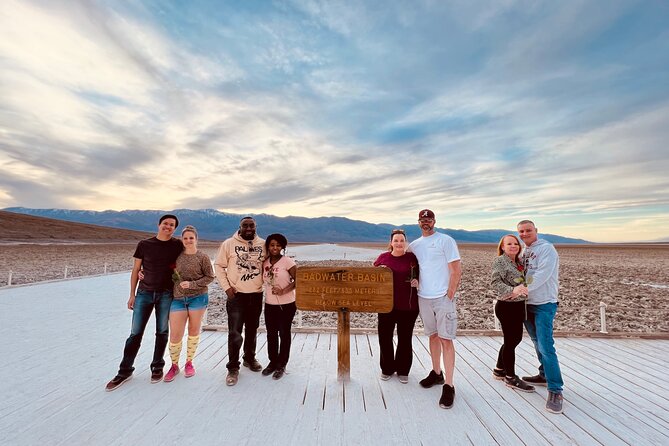
Death Valley looks different at every stop, and this tour leans into that. In daylight you get sweeping overlooks like Dante’s View (high above the valley), plus ground-level weirdness at Badwater Basin. Then after sunset you switch gears to night skies, where the desert turns into a different kind of attraction.
The “day & night” part isn’t just marketing either. You’re scheduled to linger long enough at key viewpoints to actually see the light change, not just snap one photo and hurry along. At the end, you’re not doing stargazing from a parking lot under bright nearby lighting; the tour uses a darker dark-sky area at Death Valley Junction for constellation spotting and Milky Way watching when conditions cooperate.
This is also a good “first trip to Death Valley” style outing. If you only have one day near Las Vegas, it’s hard to build your own route that includes the overlooks, dunes, and the salt flats in a single day without stress. A guided day-and-night route simplifies that whole planning problem.
You can also read our reviews of more tours and experiences in Las Vegas.
Pickup, group size, and what 11 hours feels like
This runs about 11 hours, which is long, but it’s the kind of long that makes sense for the distance. You get pickup from hotels along the Las Vegas Strip, and you’ll be dropped off where you started. The group max is 13 travelers, so you’re not packed into a bus where nobody can hear the guide.
What I like about the small-group size is that you can usually move with less chaos at viewpoints. You also tend to get more specific help with photos. In reviews, guests highlighted guides taking time to choose the right spots to stand, then capturing shots of the group so people didn’t have to do everything themselves.
The trade-off is that you’re in a vehicle for lots of that day. Expect plenty of driving and some waiting between viewpoints. Also plan for the “desert time” reality: sunsets happen whether you’re ready or not, and the tour schedule is built around timing. If you hate long days, this won’t magically fix that. If you like seeing a lot, it’s a good match.
The highlight route: from the welcome sign to the salt flats
Your tour begins with an easy, quick stop at the iconic Death Valley welcome sign area. It’s brief, but it’s a handy way to get the classic shot early—before you start moving deeper into the park.
Then the stops start stacking up:
Dante’s View: big elevation, big payoff
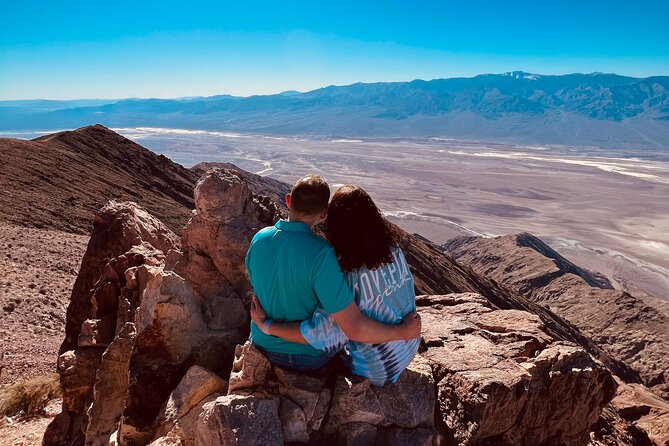
Dante’s View is one of those places where the view feels wide even when you’re standing still. You’re at nearly 5,500 feet above the valley floor, looking out over Badwater Basin and the Panamint Mountains. There’s a short, easy walk along the ridge for photos, and guides often coach you on how to frame the sweep in wide-angle shots.
If you want something that feels almost cinematic, start here. Even when the desert looks harsh at ground level, the higher vantage shows how all the parts of Death Valley connect.
Zabriskie Point: layers of rock and golden tones
Zabriskie Point is a must-stop for a reason: it’s one of Death Valley’s most famous viewpoints, and the view is made of layered rock formations. You’ll take a short paved walk to the viewpoint and have time to enjoy the scenery and shoot photos.
This is also a great stop for “light changes.” If the sky cooperates, the rock colors can shift as the sun moves.
Badwater Basin: lowest point, brightest salt
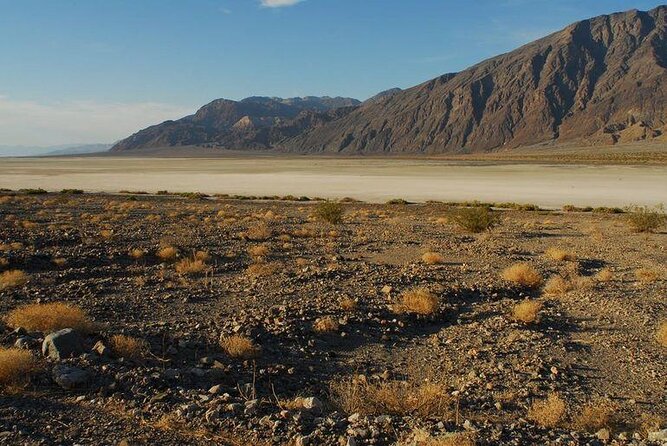
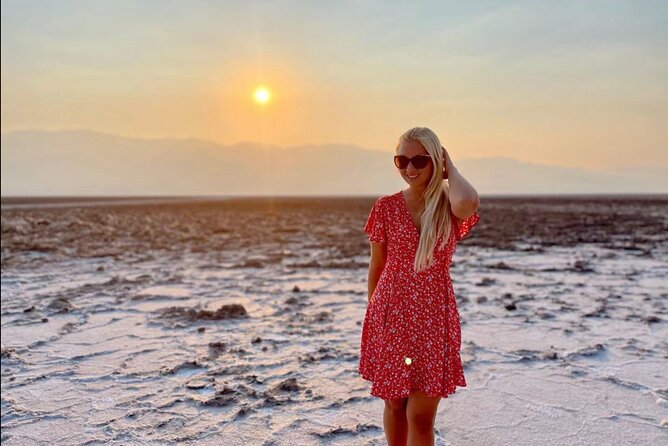
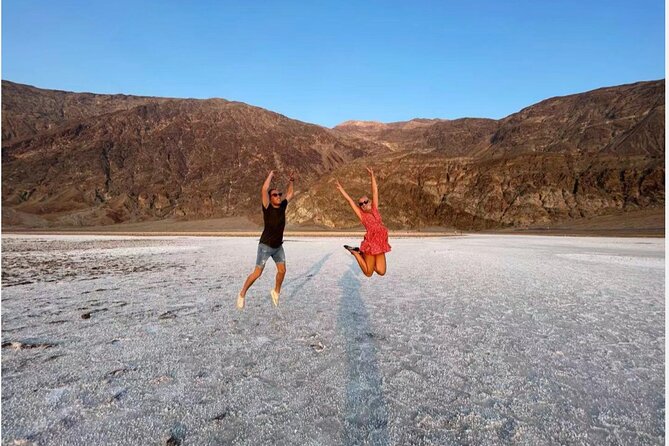
Badwater Basin is the iconic low point in North America, 282 feet below sea level. Here, you walk onto vast white salt flats. The view is surreal: it’s bright, flat, and broken by polygon-shaped salt patterns that look almost engineered.
This stop rewards you if you like walking a bit and if you pay attention to your footing. Salt flats can be slippery in some conditions, and the ground can feel uneven depending on where you step. Bring shoes with grip.
The color and texture stops: dunes and Artist’s Palette
Death Valley isn’t just scale. It’s texture, color, and contrast.
Mesquite Flat Sand Dunes: soft sand, surreal patterns
The Mesquite Flat Sand Dunes offer rolling golden dunes with rippled patterns. The tour gives time for a short walk into the dunes so you can feel the sand underfoot, not just view it from the edge.
For photos, dunes are all about timing and your angle to the light. For silhouettes, this stop can look dramatic near sunset. For comfort, consider wearing shoes you’re happy to get sandy and bringing sunglasses—you’ll be staring at glare.
Furnace Creek Visitor Center: restrooms and a breather
Furnace Creek is the park’s central hub, and it’s a smart place to pause. You’ll find restrooms and exhibits about the park’s extreme climate. This is also where the schedule works in a dinner break at local restaurants before you shift toward sunset and stargazing locations.
Even if you don’t plan to learn every detail from the exhibits, this break matters. It helps you reset before the day gets colder at night and calmer at the sky-stops.
Artist’s Palette: mineral colors you can’t fake
Artist’s Palette delivers rock colors in shades of pink, green, yellow, and purple. Those tones come from oxidized minerals, and the viewpoint is reached along Artist Drive. You’ll have time to walk around and capture those multicolored formations.
If your camera tends to turn colors “muddy,” this is one of the best places in the day to test it. The contrast between pastel-ish mineral bands and harsh desert light often makes photos look better than you’d expect.
Sunset and the final dark-sky session at Death Valley Junction
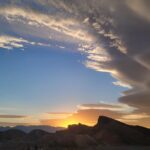
After the daylight viewpoints, the tour transitions toward evening, where the timing matters most. A big part of why this experience feels special is that you’re not doing stargazing too early. You’re staged for night visibility.
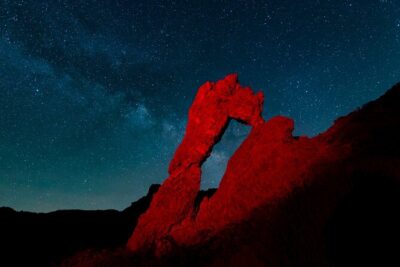
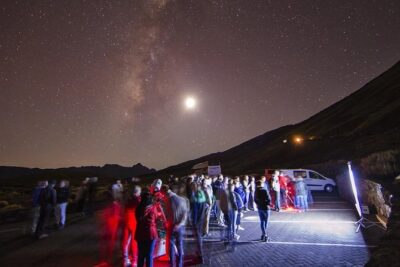
The tour ends with a 45-minute stargazing session at Death Valley Junction, known for clearer views away from major city lights. Your guide points out major constellations, and the Milky Way visibility depends on seasonal conditions.
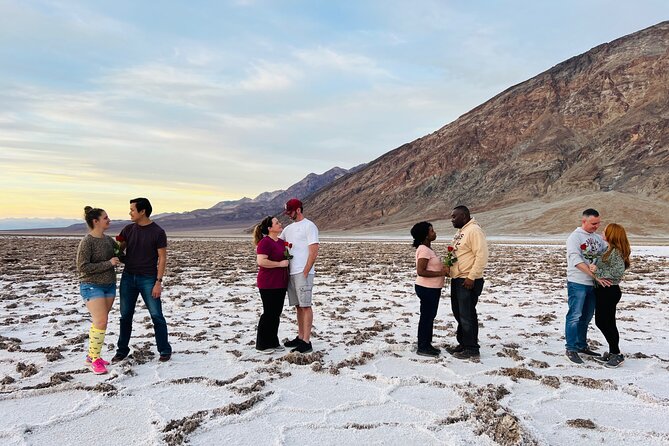
Here’s the practical advice I’d follow from the experience: choose a night close to new moon if you want the best odds of seeing stars well. Several guides shared the same idea in reviews—full moon can wash out faint stars. And even with a new moon, clouds can still block the sky, so keep expectations flexible.
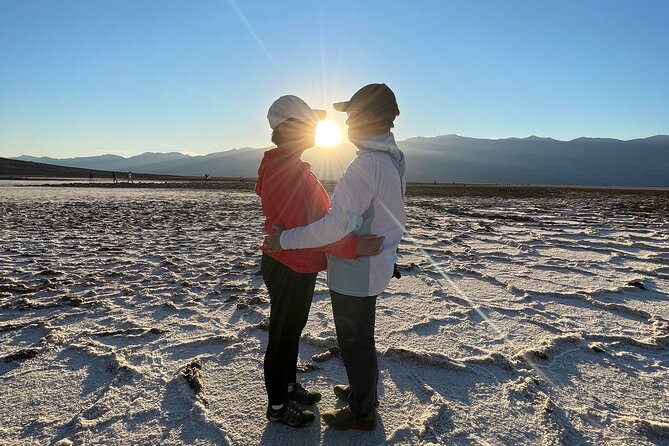
Also, bring a plan for comfort. Desert nights can feel chilly even when daytime is scorching. You’ll likely be standing outside for the sky to do its thing, so layer up.
The desert logistics nobody wants to think about
Death Valley is not a gentle environment. The tour covers a lot of distance, and that means heat, sun, and timing all matter.
- Dress for very hot days. One guest specifically warned June heat can hit 100°F-plus, so sun protection is essential.
- Wear shoes that handle walking on uneven ground, dunes, and salt flats.
- Bring a hat and sunscreen, even if you think you’ll be in the car a lot.
You also get bottled water as part of the included items, plus lunch and snacks. That’s a big value piece because food logistics in remote areas can get annoying fast.
And on the photo side: many guests said guides take photos of you with a camera setup, then share the images later. That’s great if you’re tired of being the person behind the lens. It also helps if you’re traveling with someone who wants to focus on just enjoying the views.
Price and value: what you’re really paying for at $299
At $299 per person, you’re buying more than transportation. You’re paying for:
1) A routed plan that strings together the biggest sights without you guessing distances and drive times.
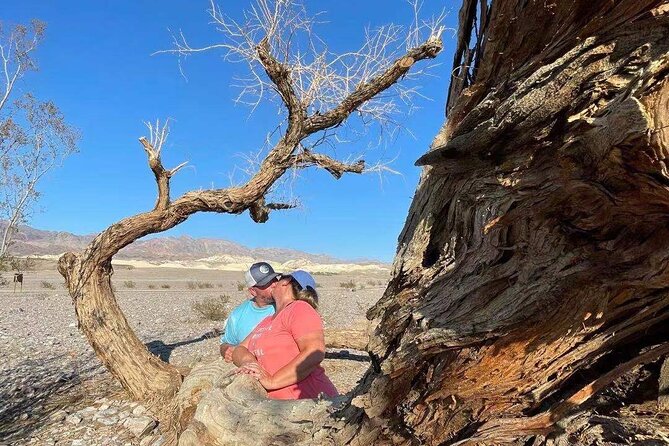
2) Time at the right places (not just a drive-by), including dedicated photo windows at Dante’s View, Zabriskie Point, dunes, and Badwater.
3) A dark-sky stargazing stop outside the glow of towns.
4) Included food support (lunch and snacks) plus bottled water.
If you tried to DIY this, you’d still face the same daylight planning problem and the night problem—where do you go for real stargazing, and how do you get there on time? A guided day-and-night schedule is basically the shortcut around all that guesswork.
Is it “luxury”? Not really. Reviews don’t suggest this is a VIP party bus. But it does seem to deliver strong value when you focus on what matters most: seeing Death Valley’s signature sites plus a real stargazing session, with guides who know how to time the light and help with photos.
Who should book this tour, and who should skip it
This tour is best for you if:
- You have one day near Las Vegas and want an efficient Death Valley sampler that still includes proper stargazing.
- You like photography and want guidance on where to stand and how to frame shots.
- You want a calmer day than driving yourself, with pickup and drop-off handled.
You might want to skip or choose another style tour if:
- You have vertigo or motion sickness, since the route includes windy roads and long vehicle time.
- Mobility is very limited. There are short walks and a few more active moments at dunes and viewpoint areas.
If you’re okay with walking moderately and dressing for extreme temperatures, the format makes a lot of sense.
Should you book Death Valley Day & Night?
I think you should book this if your goal is a complete Death Valley experience in one go: high overlooks, salt flats, mineral color, dunes, sunset timing, and then an actual night-sky stop. The included meal support and water reduce stress, and the photo help from guides like Alex, Jay, Mama Lankun, and Lorenzo is repeatedly called out as a highlight.
I’d hold off if you’re sensitive to vehicle motion or if you need guaranteed stargazing every time. Weather can reduce visibility, and even on clear nights, moon phase affects what you’ll see.
If you’re flexible, pack for heat in the day and cooler temps at night, and aim for a near-new-moon date, this can turn into one of your most memorable Las Vegas-area days.
FAQ
FAQ
Do I need to arrange hotel pickup for this Death Valley tour?
Pickup is offered from hotels along the Las Vegas Strip. You’ll need to confirm your pickup location and time by contacting the operator at least 24 hours before your tour date.
How long is the tour?
The duration is about 11 hours.
What group size is this tour limited to?
The tour has a maximum of 13 travelers.
Is lunch and water included?
Yes. Lunch and snacks are included, and bottled water is provided.
Where does the tour stargazing take place?
Stargazing is at Death Valley Junction, which is outside the park in a low-light dark sky area.
How much time do you spend exploring during the Death Valley portion?
You’ll have about 5 hours spread over several different Death Valley locations for sightseeing and stargazing.
What should I wear?
Wear hiking or athletic shoes. Dress for the season: cooler months may call for long pants and a warm jacket, while warmer months are better with shorts, a light shirt, and a hat.
Are restrooms available?
Restrooms are available at the visitor center at Furnace Creek and at a few other stops. It’s recommended to use the restroom before leaving for quieter stretches.
What if the weather is bad?
The tour runs in weather conditions the operator can manage. If the local operator cancels due to weather, you’ll be offered a different date or a full refund.
Is this tour suitable for young children?
The tour isn’t recommended for guests under age 5, and guests under 18 must be accompanied by a parent or guardian (they cannot participate in the winery portion).