REVIEW · GRAN CANARIA
Tejeda: Sunset & Night Sky Guided Astronomy Hiking Tour
Book on GetYourGuide →Operated by RockNatour · Bookable on GetYourGuide
A night sky lesson is best when it comes with a walk and a view. This Tejeda sunset trek turns into hands-on astronomy for beginners, so you’re not just looking, you’re learning what you’re seeing. I especially liked the mix of forest trail time and the shift from sunset colors to a real star field. The only real drawback is simple: it gets cold fast once you stop walking, and you also need your own car because public transport won’t work in these areas.
This is a small-group tour (up to 10 people), and the guide is bilingual in English and Spanish. You may meet Pablo, a guide whose approach is clearly driven by a love of astronomy and making it feel approachable.
One more practical note. There are no telescopes used, and depending on weather you may need to change the date. If you’re ready for a “learn the sky with what you have” kind of night, you’ll be in the right place.
In This Review
- Key highlights you’ll feel on the ground
- Tejeda sunset-to-stars: why this timing works
- Meeting point in the mountains: plan for your own car
- Camino de Santiago de Gran Canaria: forest walking with purpose
- Ventana del Nublo at sunset: Roque Nublo, Teide, and the first lesson
- Guided stargazing without telescopes: what you learn instead
- Milky Way, constellations, and planets: how the guide helps you see
- Snacks, blankets, and hot drinks: staying still is the hard part
- Weather reality checks and what to expect from date changes
- Price and value: is $71 worth it?
- Who should do this Tejeda night sky hike?
- Book it or skip it? My take
- FAQ
- How much does the Tejeda Sunset & Night Sky guided astronomy hike cost?
- How long is the tour?
- Where is the meeting point, and can I park there?
- Is there a transfer or pickup included?
- What languages does the guide speak?
- How many people are in the group?
- What is included in the experience?
- Do you use telescopes during the tour?
- What should I bring or wear?
- What if the weather changes, and what about cancellations?
Key highlights you’ll feel on the ground
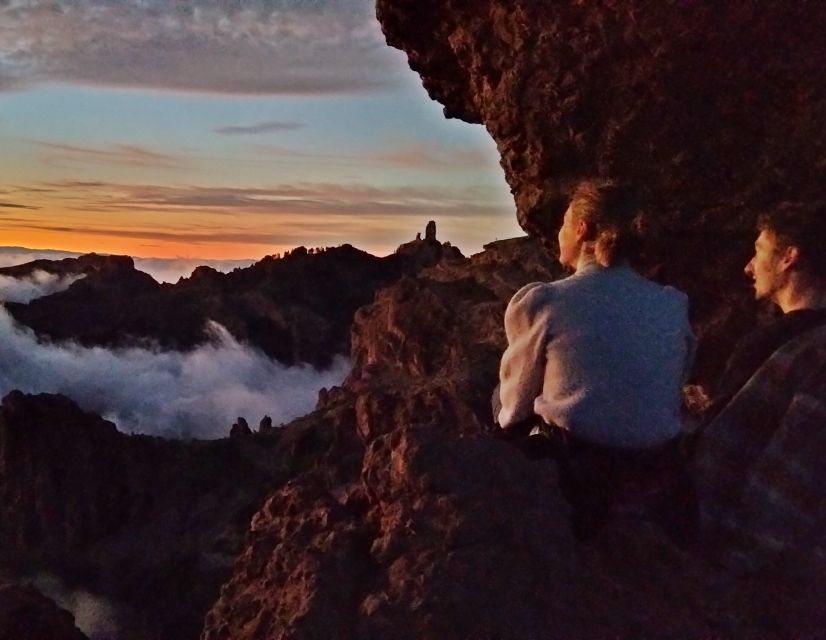
- Ventana del Nublo sunset viewpoint with views toward Roque Nublo and Teide as the sky darkens
- Camino de Santiago de Gran Canaria walking route through the forest, timed for the day-to-night shift
- Constellation and Milky Way identification basics so you can keep spotting stars on your own later
- Comfort supports: blanket, light, hot drink, and snacks while you watch the night sky
- Binoculars and an explanation screen for guided astronomy without telescopes
Tejeda sunset-to-stars: why this timing works
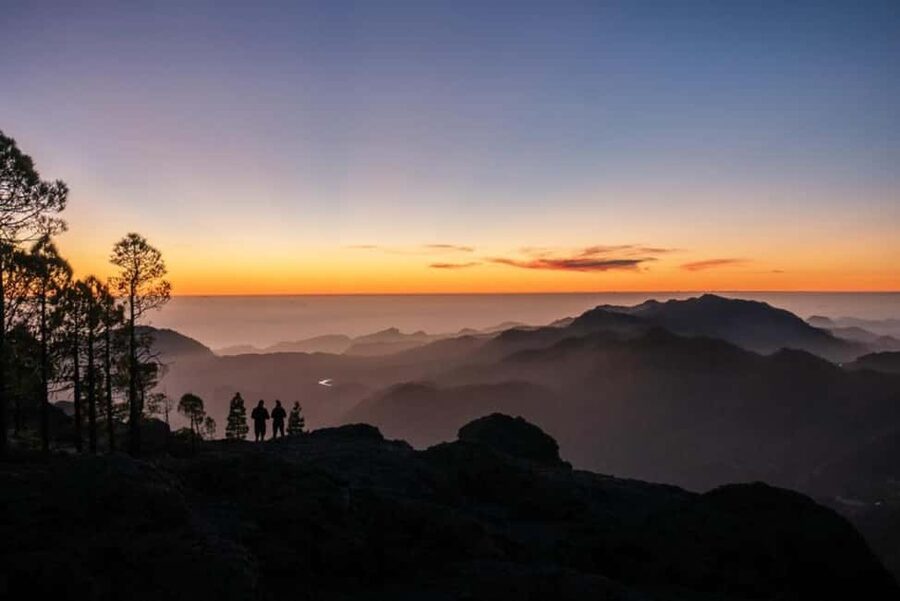
Gran Canaria is great for beaches, yes. But the island also has nights that feel surprisingly close to the sky. What makes this tour click is the order: you start with daylight views, then you watch the sky change in real time.
The tour goes to Ventana del Nublo for the sunset moment, with wide-ranging sights that include Roque Nublo and Teide (on clear nights). That’s not just scenic decoration. Seeing the horizon and landmarks first helps you get oriented, so when constellations start appearing, they have a context you can remember.
Then the pace shifts. After dark, you’re not racing from spot to spot. You spend time identifying things overhead—constellations, planets, and the Milky Way—with a guide who helps you translate what you see into something you can repeat later.
You can also read our reviews of more tours and experiences in Gran Canaria.
Meeting point in the mountains: plan for your own car
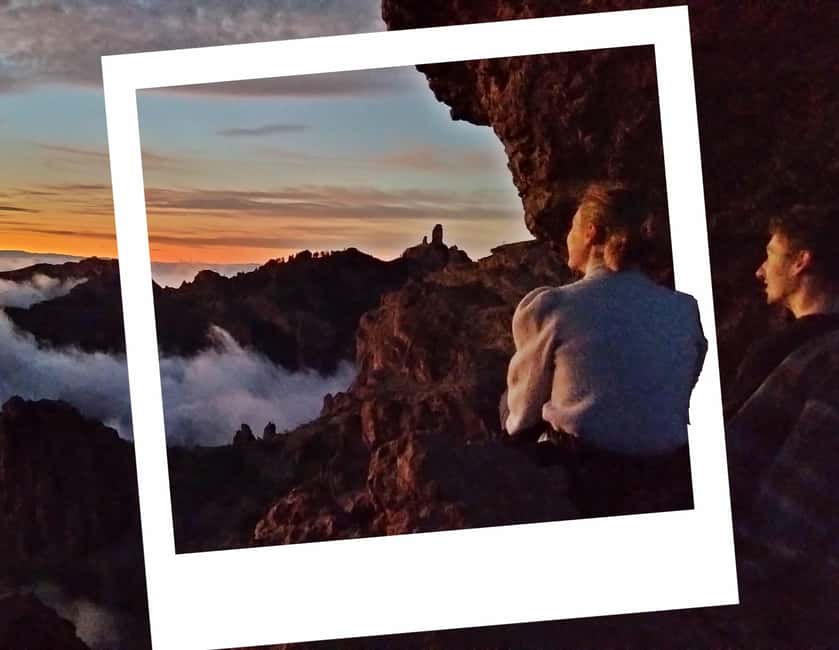
This is one of those experiences where logistics matter, because you’re going into zones where public transport doesn’t work. You’ll need your own car to reach the campground area meeting point. The good news: there’s parking there, so you don’t have to play guessing games with streets at night.
Also keep in mind there’s no transfer. That means you’ll want a realistic driving plan before the sky gets dark—headlights on, phone battery charged, and a little patience if the road is slower than you expect.
If you’re hoping for a quick hop on a bus and then a stroll, this isn’t that tour. This one is more like: drive out, meet the group, hike, learn, and then head home.
Camino de Santiago de Gran Canaria: forest walking with purpose
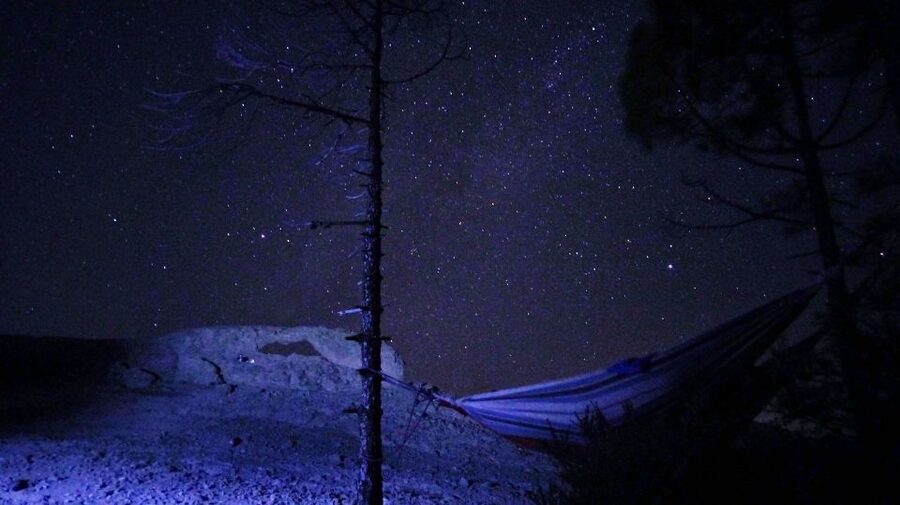
The hike begins from the campground area, in the center of the island, surrounded by mountainous terrain. From there you take the Camino de Santiago de Gran Canaria, which is known as the island’s most famous trekking route.
The walk is part of the magic. You’re moving through a forest and watching the light shift as you go. That matters because astronomy teaching lands better when your eyes have time to adjust and your brain has something to do besides stare at your phone.
You’re also building “body memory” for the evening. When you reach Ventana del Nublo and the horizon opens up, it feels like a reward rather than just a destination.
Comfort-wise, bring hiking shoes. Even if the route isn’t described as extreme, you’re hiking on natural ground at night. A sturdy sole helps you feel steady while the group pauses to look up.
Ventana del Nublo at sunset: Roque Nublo, Teide, and the first lesson
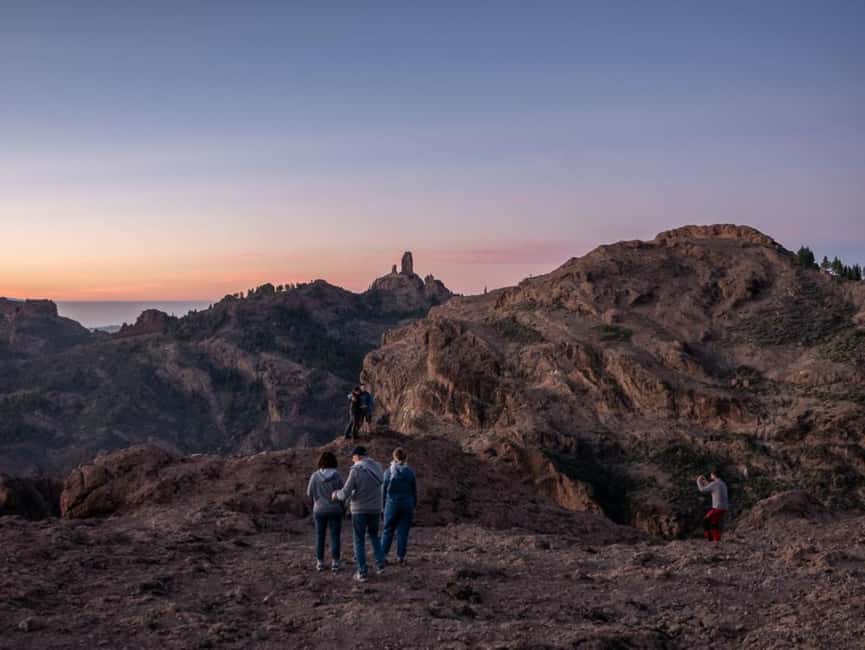
Arriving at Ventana del Nublo is the moment the tour really starts to feel special. This is an iconic place in Tejeda, and it’s chosen for a reason: it gives you a dramatic stage as the sun drops.
As you watch the sunset, your guide explains basic astronomy concepts. The goal isn’t to overwhelm you with science. It’s to give you a simple framework: how to think about the sky as you look upward, and how the darkness changes what you can see.
The view helps. You’re not staring into emptiness. You’re looking across the island with familiar reference points like Roque Nublo and Teide in the distance (again, on clear nights). That gives your night sky “map” a frame.
And there’s a practical trick here: you’re learning before full darkness. That means the group can start identifying things sooner once the sky truly turns black.
Guided stargazing without telescopes: what you learn instead
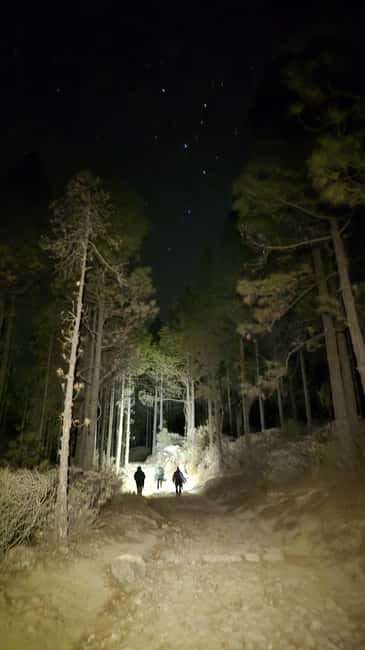
Here’s a key detail: telescopes are not used. That might sound like a letdown if you’re expecting a gadget show. But it’s actually what makes the tour good value.
Instead of relying on instruments, you learn how to make progress with normal sight and support tools like binoculars (which are included). You’ll also use an explanation screen during the teaching portion, which helps you connect the “picture in your head” to the real sky above you.
This style matters for your future plans. If you learn how to spot constellations and understand a couple of basic ideas, you don’t need a big setup to enjoy the night sky on other evenings.
From the experiences shared by past participants, Pablo in particular focuses on turning astronomy into something you can actually use. That’s the difference between a talk and a skill-building walk.
Milky Way, constellations, and planets: how the guide helps you see
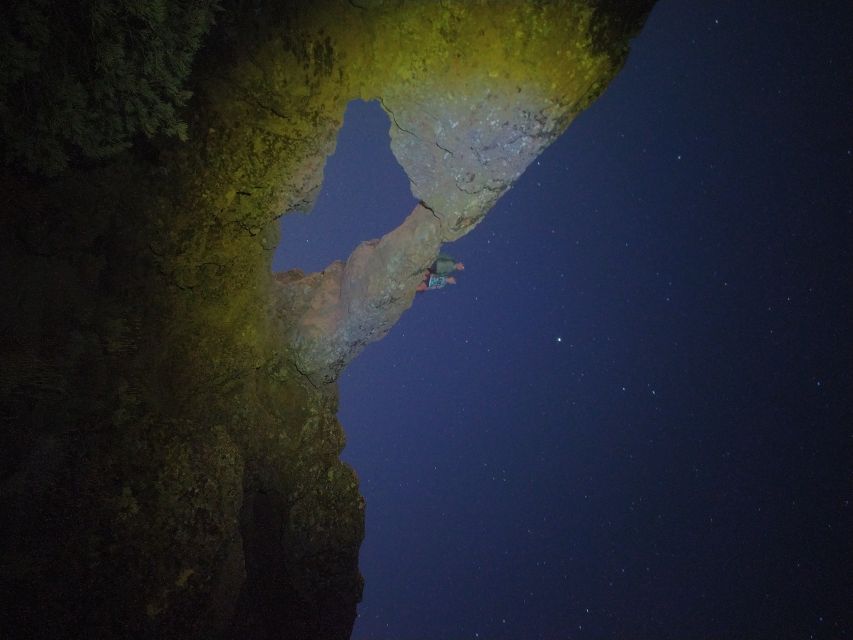
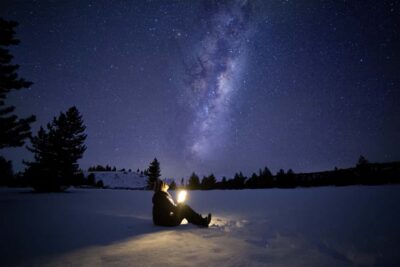
Once the sun sets, the tour becomes star-hunting time. The tour includes a snack and hot drink while you watch, but the main activity is identifying constellations, planets, and the Milky Way.
The most helpful part is usually the method. The guide helps you interpret what you’re seeing and gives you a way to keep finding things after the tour ends. That’s the real payoff: you’re not only impressed in the moment, you’re set up to enjoy similar nights on your own.
You can think of it like this:
- Constellations give you a pattern to follow.
- Planets are the “not blinking the same way” objects that stand out once you know what to watch for.
- The Milky Way becomes easier to recognize when you understand where to look and what “dark sky” actually means.
Binoculars can help with some details, but the tour’s philosophy is clear: use what you have, and learn how to look. That’s what makes it work for people who don’t bring astronomy equipment.
Snacks, blankets, and hot drinks: staying still is the hard part
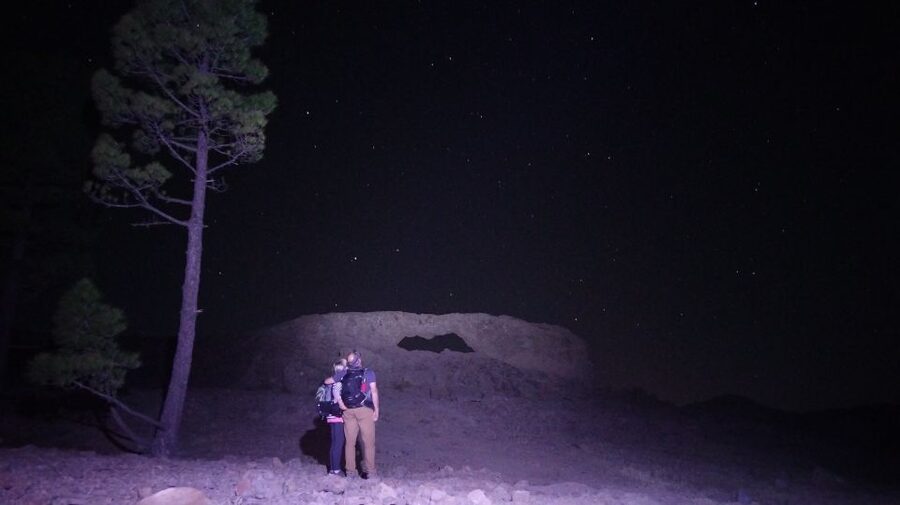
The hardest part of a night sky tour is often the simplest one: you’ll likely spend time standing or pausing. The included blanket and hot drink help a lot. There’s also light provided, which matters for safety and for moving around without tripping in the dark.
The snack is small, but it helps you last through the pauses while you identify objects overhead. When you’re cold and distracted, it’s hard to absorb new information. This tour tries to fix that by keeping you comfortable enough to focus.
Bring warm clothing even if you think you won’t need it. One practical tip: when you stop moving to watch the stars, the temperature drop feels sharp. A warm layer is your best friend here.
Weather reality checks and what to expect from date changes
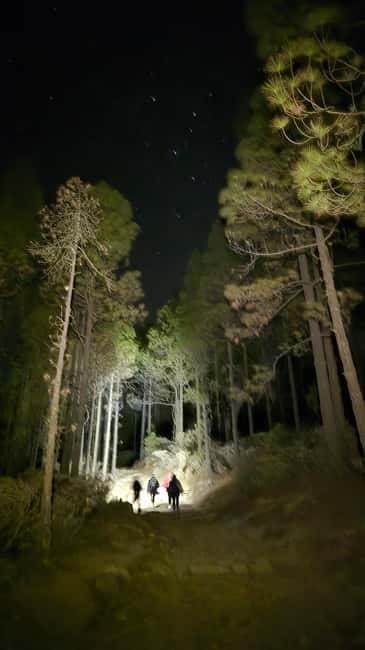
The schedule depends on the sky. The tour notes that, depending on weather conditions, the activity may require a change of date. That’s not unusual for astronomy events, but it’s worth planning around.
If you’re on a tight itinerary with no flexibility, you’ll want to be aware of that risk before booking. If you can adapt, the chance to get proper night visibility makes the tour more likely to deliver.
Also remember: this is a hiking-based astronomy experience. Clouds, wind, and fog can affect how comfortable you’ll be outside—and how many stars you can actually see.
Price and value: is $71 worth it?
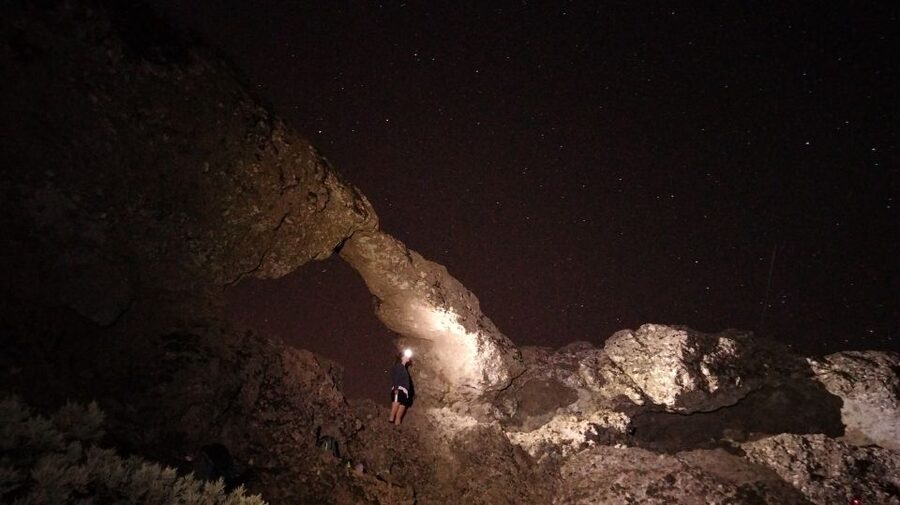
At $71 per person for about 3 hours, you’re paying for a very specific combo: guided hike, guided astronomy teaching, and night-sky comfort items.
Here’s what you’re getting that usually costs money or time elsewhere:
- a live guide in English/Spanish
- a structured route to a major viewpoint (Ventana del Nublo)
- included support items: blanket, light, binoculars, snack, and hot drink
- a teaching approach built around basic sky concepts (with an explanation screen)
Because there are no telescopes, the tour isn’t selling you expensive gear time. It’s selling skills: how to identify what you see, plus the experience of watching the Milky Way and constellations in a guided setting.
So the question isn’t only the price. It’s whether you want something you can learn and repeat. If your goal is to come away with the ability to look at the night sky and make sense of it, the value is strong for a 3-hour evening.
Who should do this Tejeda night sky hike?
This tour fits best if you like practical learning and you enjoy views more than sightseeing checklists.
You’ll probably enjoy it if:
- you want an evening activity that’s different from the usual sun-and-sand plans
- you’re a beginner who wants astronomy explained in plain terms
- you don’t want heavy equipment, and you’re happy using binoculars and your eyes
- you want a small group experience rather than a big bus crowd
This might be a weak choice if:
- you absolutely expect a telescope night
- you hate cold and don’t plan to dress for standing outside
- you don’t have access to a car for the meeting point
Book it or skip it? My take
I’d book this Tejeda sunset & night sky tour if you’re looking for a real skill—learning how to spot constellations and understand what you’re seeing—while getting a gorgeous sunset viewpoint as the sky transitions.
If you’re the type who enjoys astronomy just enough to keep it going on your own, this is a smart use of an evening. The combination of a guided hike to Ventana del Nublo, included comfort items, and telescope-free teaching makes it feel both accessible and memorable.
If you’re coming to Gran Canaria for a low-effort evening with easy public transport access, then you’ll need to adjust expectations. But if you can drive, wear warm layers, and stay curious, you’ll likely leave with the kind of night-sky confidence that makes future stargazing better.
FAQ
How much does the Tejeda Sunset & Night Sky guided astronomy hike cost?
The price is $71 per person.
How long is the tour?
The tour lasts 3 hours.
Where is the meeting point, and can I park there?
You meet at the campground area. You can also park there.
Is there a transfer or pickup included?
No. Transfer is not available, and you need your own car to reach the meeting point.
What languages does the guide speak?
The tour is offered with a live guide in Spanish and English.
How many people are in the group?
The group is small, limited to 10 participants.
What is included in the experience?
Included items are the guided astronomy hike, blanket, light, snack and hot drink, binoculars, and a screen for explaining astronomy concepts.
Do you use telescopes during the tour?
No telescopes are used in this activity.
What should I bring or wear?
Wear warm clothing and hiking shoes.
What if the weather changes, and what about cancellations?
The activity could require changing the date depending on weather conditions. Cancellation is free up to 24 hours in advance for a full refund.