REVIEW · REYKJAVIK
Northern Lights: Aurora Basecamp Observatory Guided Experience
Book on Viator →Operated by Aurora Basecamp · Bookable on Viator
Want a sharper shot at the aurora? This Aurora Basecamp observatory experience gives you real-time aurora-style guidance plus a warm, low-lit viewing setup. I like that you’re not left staring at the sky with zero context: you get a guide-led walkthrough in a small exhibition with Northern Lights Plasma Tubes. The main drawback to expect going in is simple: the lights still depend on weather and geomagnetic activity, and the tour doesn’t include transport from Reykjavik.
Plan for about 1 hour 30 minutes on the Hafnarfjörður outskirts, with hot chocolate and tea included to keep you comfortable between glances. The group is capped at 50 travelers, so you get narration without feeling swallowed by a crowd, and the location is easy to find once you’re at Aurora Basecamp. If you’re hoping for a sure thing, you’ll want to set expectations early.
In This Review
- Key things that make this aurora experience worth your time
- Aurora Basecamp in Hafnarfjörður: what this observatory does best
- Stop 1 at Aurora Basecamp: the guided aurora lessons that make your eyes work
- The outdoor viewing area: fire pits, low light, and staying comfortable
- How the guide’s aurora tips help when the sky gets tricky
- Price and value: is $30 a good deal for an aurora observatory?
- Logistics that actually matter on an aurora night
- Who should book this, and who should adjust expectations?
- Should you book Aurora Basecamp Observatory?
- FAQ
- How long is the Aurora Basecamp guided experience?
- What is included with the ticket?
- Where do I meet for the tour?
- Is transportation included from Reykjavik?
- What is the group size limit?
- Is the outdoor area comfortable for viewing?
- Is hot chocolate and tea provided?
- Are service animals allowed?
- Is free cancellation available?
Key things that make this aurora experience worth your time
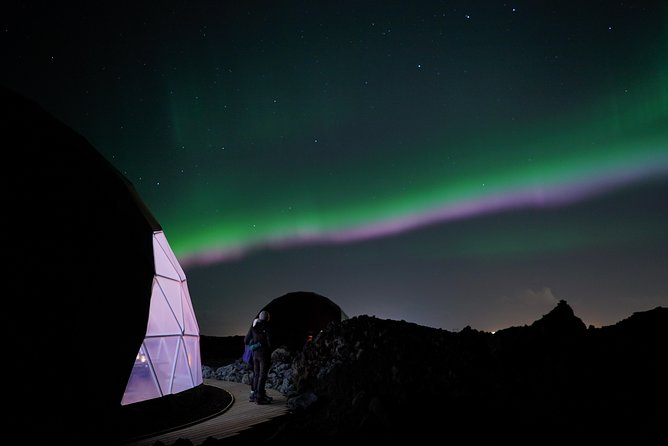
- Plasma Tubes show aurora activity in real time so you learn what you’re actually looking for
- Indoor exhibition + warm drinks means you’re doing something useful even if the sky stays quiet
- Low-lit outdoor area with benches and fire pits helps you watch without freezing or glare-killing the view
- A guide stays with you to explain what’s happening and how to improve your odds
- Small-group feel (max 50) keeps the experience focused on your questions
- Ends back at the meeting point so you’re not piecing together the night at multiple locations
Aurora Basecamp in Hafnarfjörður: what this observatory does best
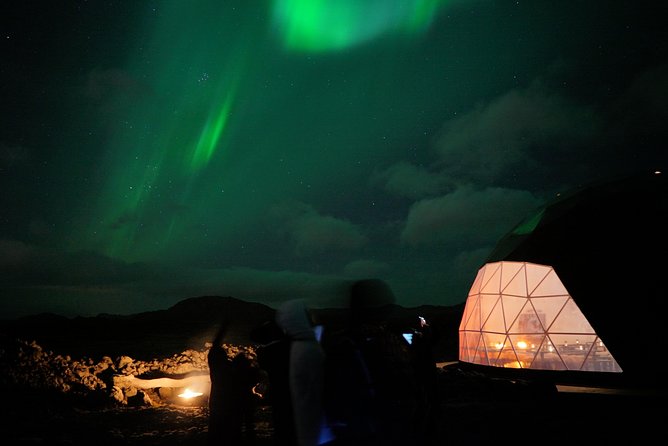
The Aurora Basecamp setup is built for one job: helping you spot the northern lights more intelligently. Instead of treating the night like a coin toss, it gives you a framework—what different stages look like, how the aurora behaves, and what to watch for when the sky is moody.
The base is in Hafnarfjörður (meet at Aurora Basecamp, 417, 221 Hafnarfjörður). Even though it’s near Reykjavik in practical terms, it still feels like a dedicated aurora stop rather than a random roadside viewpoint. That matters because the experience is designed around minimizing distractions: low lighting outdoors, plus a comfortable indoor area where you’re not stuck waiting in the cold.
Also, the format is straightforward. You’re with a guide, you get narration through an exhibition, and then you move outside when conditions are right. It’s a simple plan, which is exactly what you want when daylight is fading and you’re hunting something that can change fast.
You can also read our reviews of more tours and experiences in Reykjavik.
Stop 1 at Aurora Basecamp: the guided aurora lessons that make your eyes work
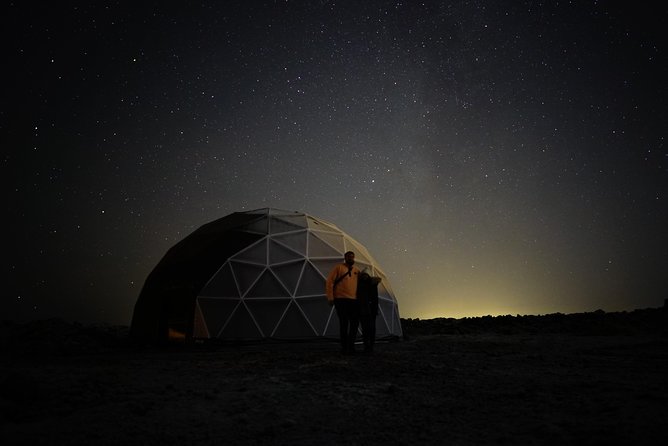
Your night starts inside, where the guide takes you through a small exhibition focused on how the northern lights work. This is where you get the benefit most people miss on aurora tours: you learn to recognize patterns, not just chase pretty color.
You’ll walk through the aurora in phases—how the activity develops and how it can look different depending on what’s going on overhead. The goal isn’t to overwhelm you with science jargon. It’s to give you a mental checklist so when the sky flickers, you know whether it’s noise, cloud movement, or something worth watching longer.
One of the most unique tools here is the Northern Lights Plasma Tubes, which mirror aurora borealis activity in real time. Even if you’ve seen videos before, this kind of analog training helps you spot the “signature” movement and intensity changes quicker. You’re basically teaching your eyes before you send them to the dark.
If you like learning while you travel—hands-on, guided, and actually connected to the night sky—this indoor start is the engine of the whole experience. Without it, aurora nights can feel like staring at a blank screen until someone points and hopes you noticed. Here, you’re learning what to notice from the start.
The outdoor viewing area: fire pits, low light, and staying comfortable
Then you go outside, and that’s where the conditions decide the story. The outdoor area is intentionally low lit, with benches around fire pits. That combination does two key things.
First, low lighting preserves your night vision. Second, the fire pits mean you can rest without turning every moment into a cold-weather endurance test. When you’re trying to see faint activity, fatigue is a real enemy. If your body is miserable, you miss the subtle stuff.
You’re also not just “out there and hope for the best.” The experience is structured so your guide can keep watching the sky with you and shift your attention to what matters. When conditions don’t cooperate, the exhibition time already gave you something worthwhile, instead of a wasted hour and a half.
One practical note from how the experience is described: there’s an indoor option as well, like a warm space you can use while you wait. That’s valuable because northern lights viewing is not a constant thrill ride. It’s often a lot of waiting between peaks, and you’ll feel better when you know you can warm up quickly.
How the guide’s aurora tips help when the sky gets tricky
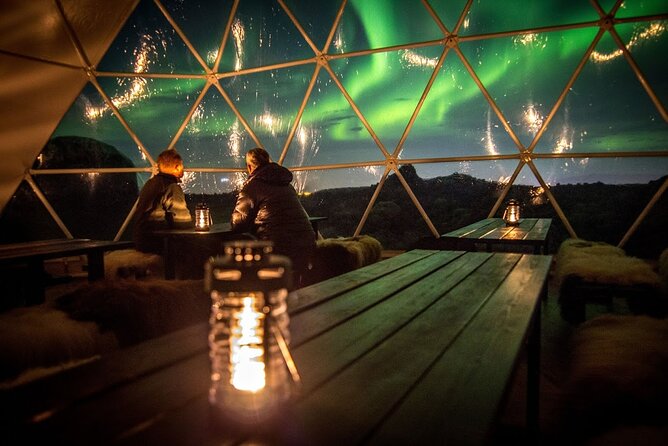
The aurora is partly science and partly attention. You can’t control clouds, darkness, or solar activity—but you can improve what you do with the time you have.
This is where the guided narration earns its keep. The guide shares insider tips to improve your chances, and the biggest benefit is that you’re not learning those tips alone from guesswork. When conditions are favorable, you’ll be quicker to identify promising activity. When conditions are slow, you’ll know what signals to keep an eye on instead of switching your focus every few minutes.
Even in nights that aren’t perfect, the experience still tends to land because the guide’s explanations make the sky feel less random. The most memorable moments aren’t just the color in the sky. They’re the moment someone helps you understand what you’re seeing—why the aurora might look faint, why it might move, and what to watch next.
And yes, sometimes you’ll get lucky and see the lights clearly. But the best part is that you’re not betting everything on luck. You’re practicing recognition. That’s the difference between a night that feels like a blank screen and a night that feels like progress.
Price and value: is $30 a good deal for an aurora observatory?
At $30 per person, this sits in the “small add-on” category rather than a major, full-day northern lights extravaganza. That’s good news if you’re trying to manage your Iceland budget without turning every night into an expensive production.
Here’s how I think about value with aurora tours:
- You pay for time, expert guidance, and a viewing setup that supports night visibility.
- You’re not paying for guaranteed lights, because you can’t buy weather or geomagnetic certainty.
So the question becomes: does $30 buy you real advantages? It does, because you’re getting an indoor teaching segment with plasma tube learning, a guide who stays with you, and a low-lit outdoor viewing setup with fire pits. Those elements matter whether or not the sky cooperates—because they make the experience useful, not just scenic.
One caution is transportation. The experience itself does not include it, and that can change the math if you’re starting in Reykjavik. If getting there adds a meaningful cost, you’ll want to compare the total price of your whole plan (tour + transport). Still, as a guided aurora observatory stop, $30 is a very reasonable entry price.
Also, because this tends to be booked ahead (about 38 days on average), you’ll likely have less choice last minute. If you’re traveling during peak aurora season, it’s smart to lock your slot sooner rather than later.
Logistics that actually matter on an aurora night
Let’s keep it practical.
Duration: about 1 hour 30 minutes. This is long enough for an exhibition walkthrough and outdoor viewing, but short enough that you’re not committing your whole evening to one location.
Group size: capped at 50 travelers. That’s big enough to feel social but small enough that the guide can still narrate and respond as needed.
Ticket type: mobile ticket. If you’re already using your phone for maps and boarding passes, this fits smoothly into Iceland travel life.
Meeting and ending: it starts and ends back at the same place (Aurora Basecamp). That means less scrambling when the night is cold and you’re tired.
And finally: confirm that you understand the transport piece. Since the experience doesn’t include transportation, plan how you’ll reach Aurora Basecamp in Hafnarfjörður—and how you’ll get back afterward.
Who should book this, and who should adjust expectations?
This is a great fit for you if you want your aurora night to have structure. If you like learning as you go, this observatory format will feel like value, not fluff. It’s also family-friendly in spirit; the tone and warm drinks help make it more than just a late-night adult hobby.
It’s also a solid choice for couples and solo travelers because the experience is guide-led and self-contained. You’re not bouncing between several far-flung viewpoints hoping one works.
Who should adjust expectations? Anyone who wants a guaranteed northern lights show. This is still the aurora. Weather and geomagnetic conditions are the final boss. If you come in expecting certainty, you’ll be disappointed.
That said, if you want a night that improves your odds and gives you context in the process, Aurora Basecamp is exactly the kind of stop that makes aurora travel feel more controlled—even when nature isn’t.
Should you book Aurora Basecamp Observatory?
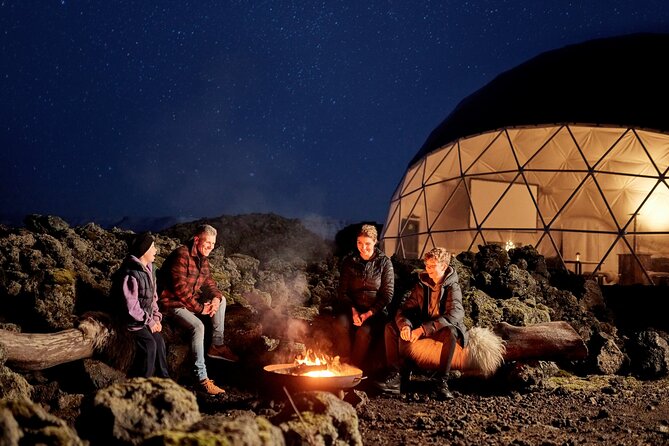
I’d book it if your goal is a guided, educational aurora night with a practical viewing setup. For $30, you get more than a photo stop: you get aurora-focused instruction, real-time learning with plasma tubes, and a comfortable outdoor area designed for watching.
Skip or rethink if transportation is going to add a big chunk to your total cost, or if you’re only willing to pay for a guaranteed lights display. In that case, it’s worth planning your entire evening carefully so you don’t end up angry at the sky.
FAQ
How long is the Aurora Basecamp guided experience?
It lasts about 1 hour 30 minutes.
What is included with the ticket?
You get a guided experience that includes an exhibition and outdoor viewing, plus hot chocolate and tea.
Where do I meet for the tour?
You meet at Aurora Basecamp, 417, 221 Hafnarfjörður, Iceland.
Is transportation included from Reykjavik?
No. Transportation is not included.
What is the group size limit?
The experience has a maximum of 50 travelers.
Is the outdoor area comfortable for viewing?
Yes. There is a low-lit outdoor area with benches and fire pits to help you stay warm.
Is hot chocolate and tea provided?
Yes, hot chocolate and tea are included.
Are service animals allowed?
Yes, service animals are allowed.
Is free cancellation available?
Yes. You can cancel up to 24 hours in advance for a full refund.