REVIEW · PAGE
Ligai Si Anii Stargazing Night tour through Antelope Canyon
Book on Viator →Operated by Antelope Valley Canyon Tours · Bookable on Viator
Stars and slot canyon walk in one night.
The Ligai Si’ Anii Stargazing Night Tour pairs a guided hike through the canyon with wide-open views of the night sky, including chances to spot the Milky Way center.
I especially liked the headlamps (they’re included, and guides help you use them without wrecking your night vision). I also loved that your guide turns the “cool stars” moment into something you can actually capture, with real phone photo tips and time built in for photos inside the canyon.
The main thing to consider is the stairs: this is a steep descent and an even steeper climb back, so it’s not ideal for anyone who struggles with stairs or darkness.
In This Review
- Key things you’ll remember
- Ligai Si’ Anii at Night: What changes when the lights go out
- Price and value: $71 that’s actually doing work
- Getting there: meeting point details that can save your evening
- The night walk in the canyon: headlamps, careful steps, and photo time
- Stargazing after the canyon: Milky Way time when skies cooperate
- The guides and the Navajo stories: why people rate this so high
- Weather and cloudy skies: how to plan for the best and still enjoy it
- Getting photos you’ll actually want: practical tips from the guides’ playbook
- Who should book this tour, and who should pass
- Should you book Ligai Si’ Anii Stargazing Night?
- FAQ
- FAQ
- What is the duration of the Ligai Si’ Anii Stargazing Night tour?
- How much does the tour cost?
- What is included in the ticket price?
- Is the Navajo Nation Park fee included?
- Where do I meet the tour?
- Is it a mobile ticket?
- What happens if the sky is cloudy?
- How early should I arrive?
- Are headlamps provided?
- What if weather is poor and the tour can’t run?
Key things you’ll remember
- Ligai Si’ Anii at night: a different look than the usual daytime Antelope Canyon tours
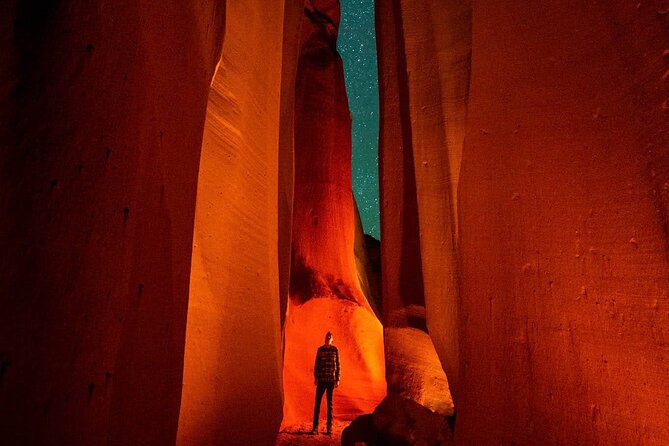
- Headlamps included: white and red light use shows up in the best photo moments
- Milky Way viewing focus: stargazing aims for the sky’s big hits, not just general “look up” time
- Real night-photo help: guides teach phone settings and composition for the canyon + stars
- Guides who share Navajo stories: expect culture and land knowledge, not just facts
- Small-to-midsize groups: capped at 50 travelers, which matters when the canyon is dark
Ligai Si’ Anii at Night: What changes when the lights go out
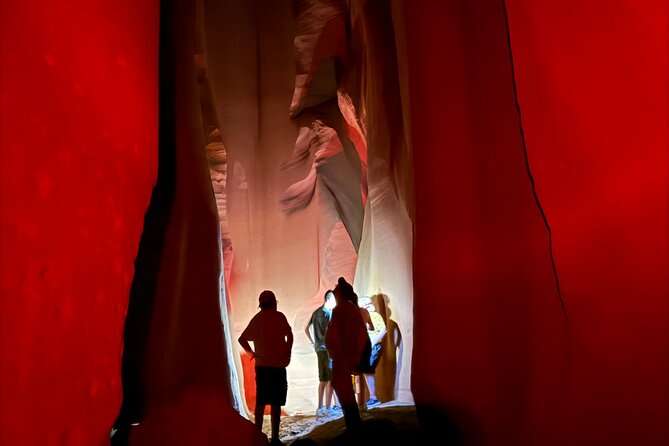
Daytime Antelope Canyon gets all the postcards. This tour is different because you’re seeing the canyon with shadows, uplights, and controlled lighting. That matters. The slot walls still wow, but the feeling shifts from “pretty canyon” to “you’re inside a rock sculpture under the sky.”
The route is short but dramatic. You start on a 30-yard style slot trail that drops and rises, with dark footing and real stairs. Then night takes over, and you look upward from deep in the canyon geometry—where the sky can feel larger than you expect.
One practical note: this isn’t the same lighting drama you’ll get from the more common Antelope Canyon tours in daylight. The best way to enjoy Ligai Si’ Anii night is to lean into the night setting—headlamps, slow pacing, and patience for stars and photos.
Price and value: $71 that’s actually doing work
At $71 per person for about 2 hours, the pricing makes sense because you’re paying for three things at once: guided canyon access, headlamps, and guided stargazing time. The tour also includes an entrance fee, but the Navajo Nation Park fee is not included—plan on $10 per person added on top.
So what’s the value? You’re not just being dropped off to take pictures. You’re learning a night-photo approach inside a slot canyon while someone manages the flow of the group. In a place like this, that guidance saves time and frustration—especially if you’re trying to get Milky Way shots with a phone.
Also, you’re paying for access to a guided experience on tribal land, which brings its own context. Several guides on this tour are specifically praised for Navajo stories and land knowledge, which is a big part of why people feel it’s more than a “walk and look.”
Getting there: meeting point details that can save your evening
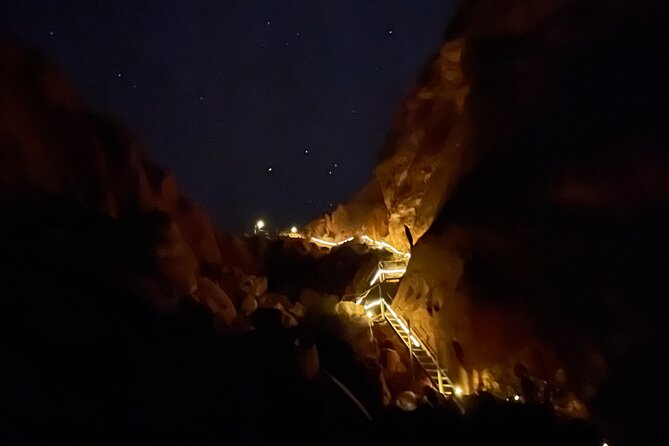
Your meeting point is: Antelope Valley Canyon Tours – Ligai Si’ Anii, Milepost 35.5 (8 miles), Coppermine Rd N20, Page, AZ 86040, USA.
Two timing/logistics tips show up repeatedly in real-world experience:
1) Arrive early. Even though the start is listed as 7:00pm, the group may leave around 6:45pm. If you show up on the clock, you risk missing the start.
2) Use the address info and call ahead. GPS can be inaccurate, so get the exact directions before you drive out.
Once you’re checked in, expect that you’ll travel on tribal land in a vehicle for a bit—reviews mention about 15–20 minutes each way. That transfer is part of the experience, not just transportation.
The night walk in the canyon: headlamps, careful steps, and photo time
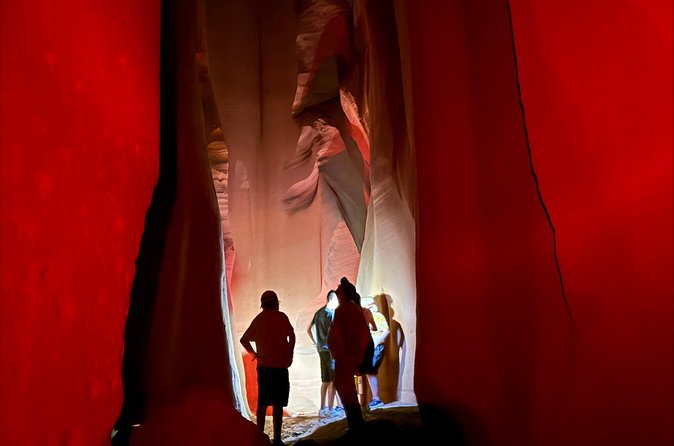
The tour starts with the canyon hike. You’ll go down and up stairs while the canyon is lit for safety and photos. Headlamps are included, and you’ll likely use them during the darker sections to avoid blinding yourself or other people.
Here’s what I think you should watch for:
- Footing is serious. It’s not a long hike, but it’s dark and stair-heavy. One review flags a very short intense stair portion on the way back; another calls the stairs not for mobility limits.
- Lighting matters for photos. The guides often help guests with phone night photography settings. People report using headlamps in white light and red light for more creative shots without killing night vision.
- You get time. Multiple reviews praise the pacing and the time given for photos inside the canyon—not just a rushed “look quick and go.”
In a slot canyon, your best shots come from timing and positioning: letting the wall lines lead the eye, then syncing your camera/phone settings to the darkness. The guides who get top marks (people name guides like Ron, Wally, and others such as Victoria and Michelle) are the ones who slow down enough to teach.
If you’re bringing a phone, consider this an advantage. The tour is set up for learning phone night photography, not for bringing a full gear kit.
Stargazing after the canyon: Milky Way time when skies cooperate
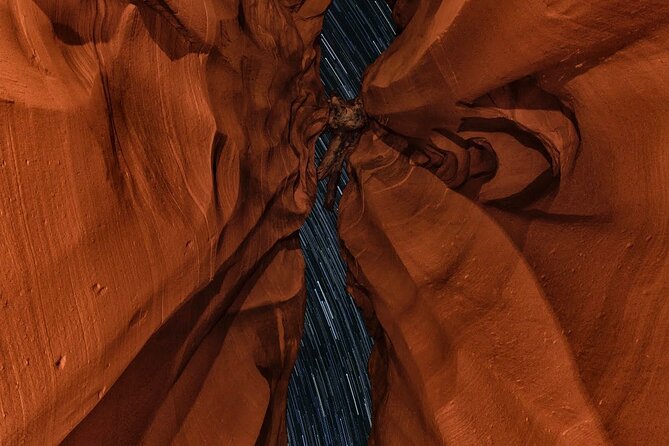
The stargazing portion is the reason most people book. You’re taken away from city lights, and the goal is to see thousands of stars, with a shot at the Milky Way’s center.
What you can realistically expect:
- On clear nights, people report big sky moments like Milky Way visibility, Saturn, and even shooting stars.
- On cloudy nights, you might not get the same star density, but the experience doesn’t automatically fall apart. Reviews describe cloudy nights as still beautiful, with time for nighttime canyon photography and guide storytelling.
The practical value of guided stargazing is that you’re not just staring up randomly. The guide is there to point out constellations and share celestial stories. That helps you feel oriented, and it makes the night sky more than a vague blur.
Also, in the dark canyon environment, you’ll want calm patience. Stars don’t appear instantly like a light switch. If you’re the type who wants immediate results, give it time—your best view can come after your eyes adjust.
The guides and the Navajo stories: why people rate this so high
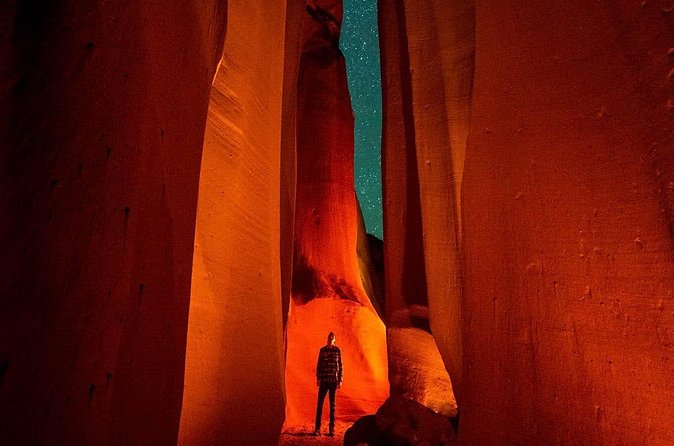
This is one of those tours where the guide can make or break the night, and the positive feedback is strong. People name guides like Ron and Wally for patience, teaching, and a kind, attentive tone. Several reviews highlight help with phone settings for night shots and a steady pace for groups.
What also matters: the tour doesn’t feel purely mechanical. Guides share Navajo culture and practices, and in some accounts, they even explain uses of plants and talk about their family and connection to the land. That’s part of what makes the stargazing feel grounded, not just scenic.
That said, balance matters. A small number of lower reviews describe an attitude problem or communication issues. One mentions feeling “forgotten” in a remote area during a delay, another describes tension when skies were cloudy, and another says they were told not to expect stars after a long drive. Those reports are not the norm, but they’re a reminder that night-weather tours are high-stakes for mood and logistics.
My takeaway: if you book, bring flexibility. Ask questions early, and understand that weather and timing can shift.
Weather and cloudy skies: how to plan for the best and still enjoy it
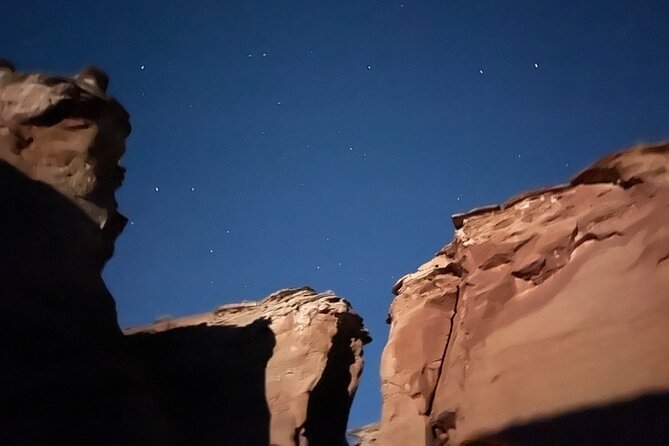
This experience is weather-dependent. The provider states the tour requires good weather, and if it’s canceled for poor conditions, you’ll be offered a different date or a full refund.
But if it’s not canceled and the sky is just cloudy, here’s how to think about it:
- You’re still walking the canyon at night, and people report gorgeous canyon photos even when stars are limited.
- The “Milky Way” goal becomes more of a bonus than a guarantee.
- Your success with night photos depends on the mix of cloud cover and darkness, so give the guide time to work with what’s happening.
Cloudiness can reduce the star count and make Milky Way shots harder. Still, the canyon’s geometry and guided lighting can keep the photos interesting—especially if the guide helps you frame shots that use wall texture and starlight pockets.
Getting photos you’ll actually want: practical tips from the guides’ playbook
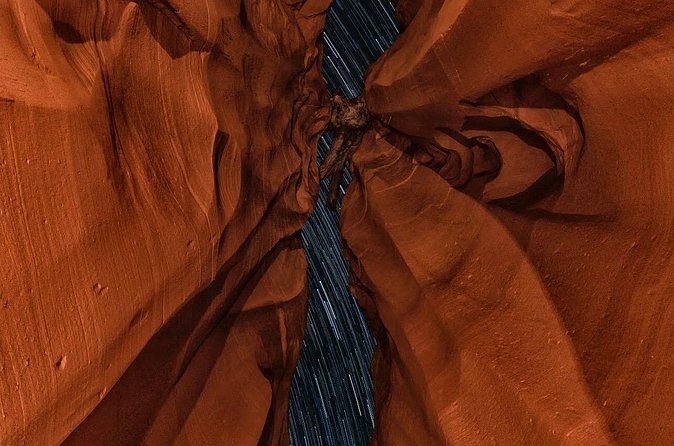
Even if you don’t call yourself a photographer, this tour is set up for phone night photography. Multiple reviews mention the guide teaching people step-by-step on how to capture night scenes using phones.
Use this as your game plan:
- Listen for the phone settings guidance. The best experiences include hands-on help and patience.
- Use the headlamp wisely. Red light can help preserve night vision; white light can help when you’re lining up shots.
- Give yourself time in the canyon. Don’t rush through the slots. People praise tours that allow photo time and multiple attempts.
If you’re hoping for specific planets or a perfect Milky Way shot, be realistic. Those moments happen on clear nights. Still, even a “cloudy but beautiful” night can produce a strong canyon-and-night-sky set—especially if you’re willing to shoot the darkness, not just the stars.
Who should book this tour, and who should pass
This tour is best for people who:
- Want something different from the usual daytime Antelope Canyon experience
- Enjoy stargazing and are excited to learn night photography on a phone
- Prefer guided storytelling and cultural context, not just sightseeing
It may not be the right fit if:
- You have difficulty with steep stairs and climbing in the dark
- You’re very sensitive to cold and delays in remote areas (some lower reviews mention long waiting time in cold conditions when issues happened)
- You want zero surprises. Night tours can change based on clouds, timing, and visibility
If you’re traveling as a couple, the romance factor is real. Several reviews describe it as a memorable, photo-friendly date-night kind of outing. Families also seem to do well when everyone can handle stairs and darkness.
Should you book Ligai Si’ Anii Stargazing Night?
If your idea of a great Page, Arizona evening includes a guided slot canyon at night plus a shot at the Milky Way, this is a strong pick. The biggest reason to book is the combination: you get canyon time and a guided stargazing/phone-photo lesson, with headlamps included and guide support that many people specifically praise.
I’d book if you can:
- arrive early and follow the exact meeting details,
- handle steep stairs in the dark, and
- tolerate weather uncertainty with a good attitude.
I’d think twice if you can’t do stairs, or if you have no flexibility for a night that might be cloudy or shifted due to conditions. One of the “best night” dreams can turn into a “still beautiful canyon photos” night—but that trade-off only works if you’re okay with it.
If that sounds like you, book it. This one gives you a view of Antelope Canyon that most people never see.
FAQ
FAQ
What is the duration of the Ligai Si’ Anii Stargazing Night tour?
The tour runs about 2 hours.
How much does the tour cost?
It costs $71.00 per person.
What is included in the ticket price?
The tour includes headlamps and an entrance fee.
Is the Navajo Nation Park fee included?
No. The Navajo Nation Park fee is $10.00 per person and is not included.
Where do I meet the tour?
The meeting point is Antelope Valley Canyon Tours – Ligai Si’ Anii, Milepost 35.5 (8 miles), Coppermine Rd N20, Page, AZ 86040, USA.
Is it a mobile ticket?
Yes. You’ll use a mobile ticket.
What happens if the sky is cloudy?
The experience depends on good weather, but cloudy nights can still be enjoyable, with nighttime canyon photography even if stars are less visible.
How early should I arrive?
Arrive early. Even though the tour is listed as starting at 7pm, there are reports that it leaves around 6:45pm.
Are headlamps provided?
Yes, headlamps are included.
What if weather is poor and the tour can’t run?
If the experience is canceled due to poor weather, you’ll be offered a different date or a full refund.