REVIEW · PALM SPRINGS
Stargazing and UFO Tour
Book on Viator →Operated by Addicted2Wonder Stargazing Joshua Tree · Bookable on Viator
The desert turns stargazing into a show. On this Joshua Tree night tour from Palm Springs, I love the GEN3 AN/PVS-7 night vision goggles and how they make faint stars and planets feel suddenly close. I also like the storytelling, with guides such as Tony and Cuz tying sky views to legends and old ways of reading the heavens.
One thing to plan around: there are no bathrooms. The viewing area is out in the dark, so use facilities before you head out.
You’ll start at West Entrance Station in Joshua Tree, then meet your guide for a short drive to a carefully chosen secret spot. The exact location is shared 24 hours before your tour, and the experience ends back at the meeting point about 1 hour 30 minutes later.
In This Review
- Key highlights that make this tour worth the drive
- Joshua Tree’s dark sky: why the location matters more than the “wow”
- GEN3 night vision goggles: what you’ll actually notice
- The UFO theme, plus the history behind the sky
- Walking through the tour flow: from West Entrance Station to the final sky look
- 1) Meet at West Entrance Station, Joshua Tree
- 2) Drive to the secret sky location (details come 24 hours before)
- 3) Night vision session: find stars, planets, and objects with pointers
- 4) Stories and legends: why the sky feels personal
- 5) Head back to the meeting point
- What you get (and the one thing you must handle yourself)
- Price and value: $1,500 per group can be either steep or smart
- Who this tour suits best (and who might feel underwhelmed)
- Practical tips: what to wear, what to bring, and what to ask
- Should you book this Palm Springs / Joshua Tree stargazing UFO tour?
- FAQ
- FAQ
- Where does the tour start and where does it end?
- How long is the stargazing/UFO tour?
- What is the price and how many people can be in a group?
- What gear is included?
- Are there bathrooms at the viewing location?
- What should I do for the meeting location?
- How is the secret viewing location handled?
- Is this a private group experience?
- What happens if weather is poor?
- Are service animals allowed?
Key highlights that make this tour worth the drive
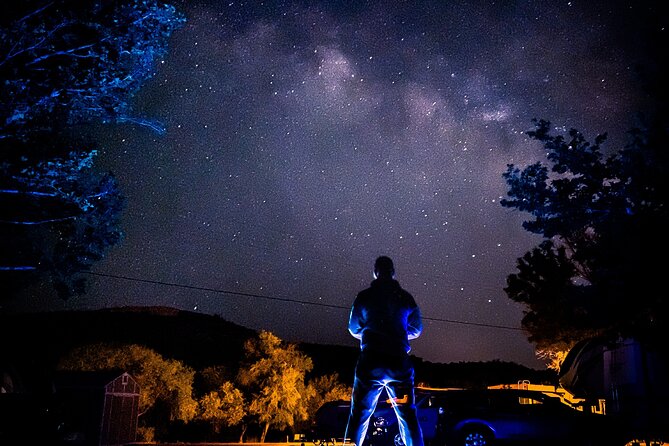
- GEN3 night vision goggles (AN/PVS-7) to see far beyond what your eyes can catch
- Laser pointers + night-sky navigation, so you’re not just staring, you’re tracking objects
- Small-group feel with time to ask questions (private group up to 8)
- Star stories with cultural history, told alongside what you’re seeing overhead
- Cold-weather setup that’s been improved with heated blankets and chairs (when available)
- Secret dark-sky location picked for real viewing conditions, away from city lights
Joshua Tree’s dark sky: why the location matters more than the “wow”
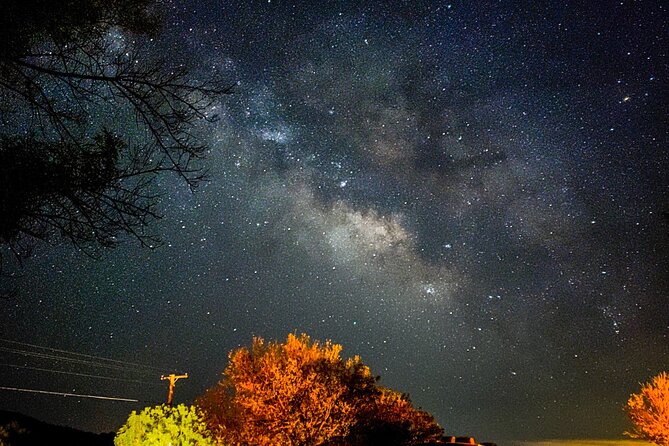
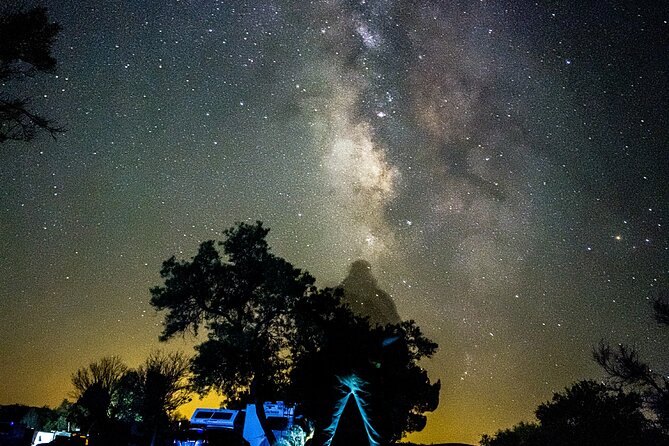
Joshua Tree is famous for night skies, but this tour takes that idea seriously by sending you to a secluded viewing spot selected for conditions. That means you’re not competing with nearby headlights or light domes from towns—your guide is working with the kind of darkness that lets the night sky look almost unreal.
The “secret location” part isn’t just drama. Your time is limited (about 1.5 hours), so the goal is simple: get you to a place where the stars and planets are visible fast, then keep improving the view with the right tools. When the sky is stable and dark, even basic constellations turn into something you can follow with your guide instead of just guessing at.
A practical note: you’ll make your own way to West Entrance Station to start. Once you’re there, you’re not on your own—your guide organizes the drive to the best spot for that night, then brings you back when the session ends.
You can also read our reviews of more tours and experiences in Palm Springs.
GEN3 night vision goggles: what you’ll actually notice
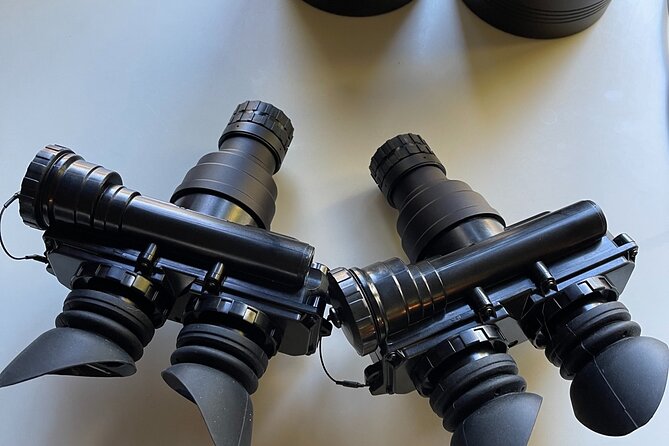
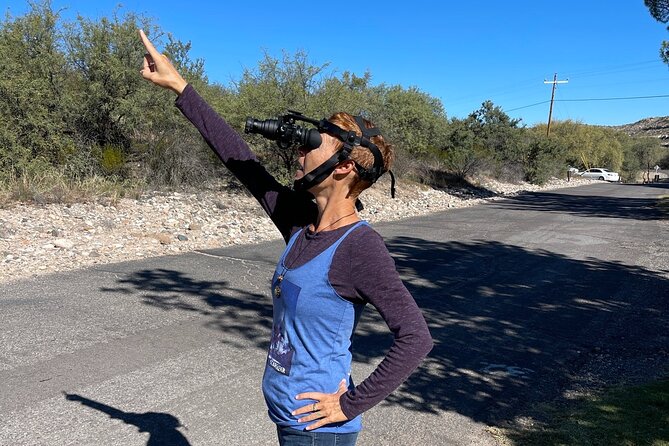
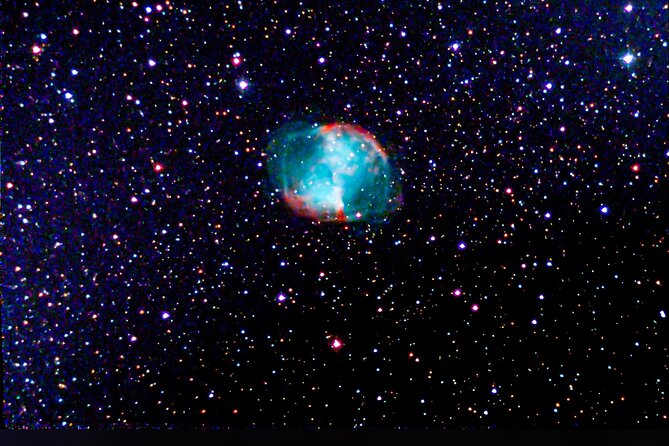
The star magic here comes from the GEN3 AN/PVS-7 night vision googles (plus laser pointers and binoculars). Night vision isn’t like turning on a bright light. It’s more subtle than that: it changes what’s visible and how much of the sky you can “hold” in your view at once.
Here’s what this usually feels like in practice:
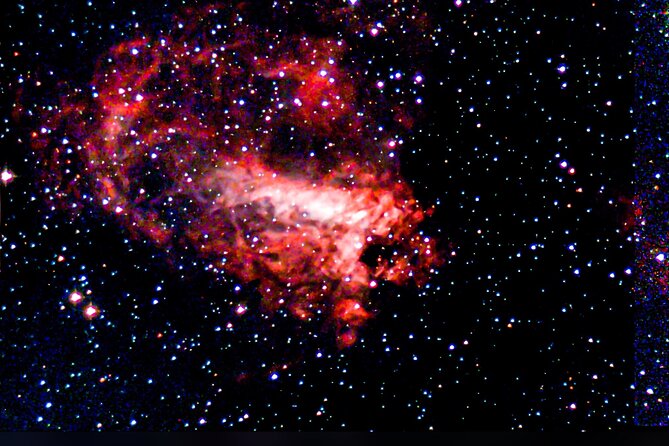
- Stars that are hard to see with the naked eye become easier to spot and group together.
- Planets and standout objects become easier to track as your guide points and refocuses your attention.
- The desert ground (the horizon and foreground) becomes part of the experience instead of being a black void.
In the real world, this also helps first-timers. If you’ve ever struggled to find the Big Dipper or couldn’t tell a star from a distant light, night vision can get you past that learning curve quickly. You’re not “bad at stargazing.” You’re just human, and your eyes don’t see like sensitive equipment.
A small consideration: night vision gear means you should treat it like tech, not a toy. Listen when your guide explains how to use it, and be patient while you adjust. Expect a learning moment before it clicks.
The UFO theme, plus the history behind the sky
Even with the UFO-style framing, the core of the tour is stargazing plus stories—how different cultures interpreted the sky and how myths were built from real observations. That’s why the experience feels more than just “look up and hope.”
Guides like Tony and Cuz (and, on some dates, Molly in support/coordination) bring the sky to life by pairing what you see with meaning: legends, folk tales, and the idea that humans have been mapping the heavens for thousands of years. One of the most praised aspects is how that storytelling gives context. You’re not just identifying objects; you’re learning why people cared in the first place.
Some nights also include extra tools beyond the headline gear. In past sessions, guests have described seeing additional tech like telescope viewing and even augmented reality headsets as part of how the guide “builds” the sky for you. If your night includes that, it can make the constellations feel like a living map rather than a static diagram.
One thing to watch for: a few guests noted the session ran a bit longer than expected. That doesn’t sound like a problem if you’re there for stories and questions, but it matters if you’re on a tight schedule.
Walking through the tour flow: from West Entrance Station to the final sky look
This is a straightforward experience with a clear rhythm.
1) Meet at West Entrance Station, Joshua Tree
You begin at West Entrance Station, Joshua Tree, CA 92252. You’ll need to get yourself there. After you check in, your guide organizes the small group and explains what happens next.
The payoff of starting at a real trailhead-style meeting point is that you aren’t hunting your way across dark roads. Still, double-check your exact meeting instructions—while the viewing spot is shared 24 hours before, the start point is fixed.
2) Drive to the secret sky location (details come 24 hours before)
You’re driven to a location selected based on viewing conditions. The exact spot is given to you 24 hours in advance, which helps reduce last-minute stress and keeps the group from arriving at the wrong dark corner.
The drive is part of the setup. It’s how the tour gets you away from the light you didn’t know you were missing. Once you arrive, you’ll usually settle into chairs and let your eyes catch up with the night.
3) Night vision session: find stars, planets, and objects with pointers
This is the heart of it: your guide shows you how to spot objects, then you use the equipment to see more. The laser pointers matter because they give you direction in the dark. Without that, stargazing can become an aimless exercise.
Expect a mix of:
- Looking with night vision and then comparing to naked-eye views
- Switching to binoculars to scan the sky
- Following the guide’s cues so you know what you’re actually seeing
If you’re lucky (and conditions cooperate), you may also see shooting stars. At least one guest described spotting multiple shooting stars and wanting to return for a meteor shower.
4) Stories and legends: why the sky feels personal
During the viewing time, the guide ties what’s overhead to what humans have imagined and recorded for generations. This is where the tour earns its “UFO” curiosity without promising aliens in the windshield.
It’s also where small-group format shines. If you have questions—about what you’re seeing, why a story exists, or how stargazing works—there’s time to ask rather than rush past your wonder.
5) Head back to the meeting point
At the end, you return to the start point. The total time is about 1 hour 30 minutes. If you’re planning dinner or a second stop, treat the “about” seriously—some nights run slightly longer.
What you get (and the one thing you must handle yourself)
The included gear list is clear:
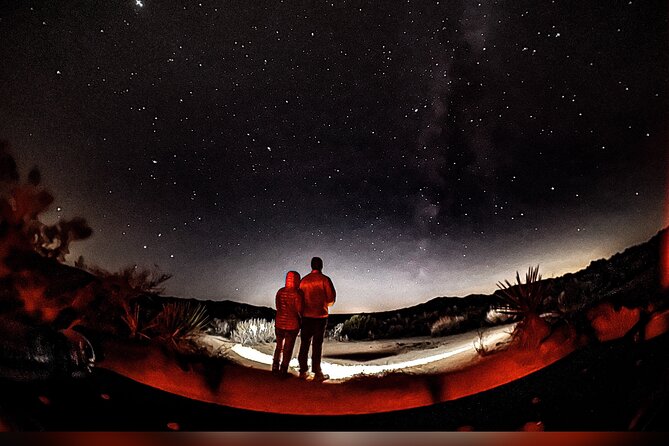
- GEN 3 AN/PVS-7 night vision googles
- laser pointers
- binoculars
- chairs
- hand sanitizer
In several accounts, heated blankets were mentioned as a helpful extra, plus reclining chairs that make long looks more comfortable. That’s not in the written gear list, but you should expect comfort items, because desert nights can turn from chilly to “why do I live here?” fast.
The big missing item is simple: there are no bathrooms. This is the main “bring your own plan” reality for the experience. If you’re even slightly nervous about going out without a restroom nearby, arrive prepared.
Also remember: the desert gets cold, especially if wind picks up. Dress for layers and wind, not just “nighttime temps.”
Price and value: $1,500 per group can be either steep or smart
The price is $1,500 per group (up to 8) for about 1 hour 30 minutes. On a per-person basis, that can sound high—especially if you’re going solo or as a couple.
But stargazing like this isn’t a public lecture where you’re paying for one guide’s time. You’re paying for specialized night vision equipment and a guided session in remote darkness. The equipment and the careful location choice aren’t cheap, and the private-group format means you’re not sharing attention with strangers.
So here’s how I’d judge value:
- If you can fill a group of friends or family and split the cost, the experience can feel fair fast.
- If you’re going just as a couple, you’re paying more per person—but you’re still getting a small-group setup, guided interpretation, and equipment you likely won’t rent easily on your own.
- If your goal is learning plus comfort (chairs, equipment, stories), the price starts to make more sense.
One tip: don’t judge value only by the $1,500 number. Judge it by what you’d pay for the gear, a dark-sky location, and a guide who can explain what you’re seeing while you actually see it.
Who this tour suits best (and who might feel underwhelmed)
This works best if you:
- Want a guided stargazing experience rather than a DIY hunt for constellations
- Like your science with story, including cultural legends and sky myths
- Appreciate tech that changes what you can see in the dark
- Prefer small-group attention and a chance to ask questions
It may not fit if you:
- Want a long, marathon session (the tour is about 1.5 hours)
- Hate cold and don’t want to bundle up
- Expect bathrooms on-site (there aren’t any)
- Need a flexible itinerary with lots of stops (this is one main viewing session style)
For families, the equipment can be a huge hit—one account described an 8-year-old being blown away. Still, bring kid-friendly patience. Stargazing rewards slow looking, not instant gratification.
Practical tips: what to wear, what to bring, and what to ask
Plan as if the desert will be colder than you think. Even when the day is pleasant, the night can bite. Dress in layers and add something windproof. Bring gloves if you get cold hands easily, and keep your head warm.
You’ll also want to think ahead about timing and comfort:
- Arrive early enough to settle without rushing.
- Use the bathroom before you leave for the meeting point since there’s no bathroom at the site.
- Keep water and a snack plan in mind, if you’re the type who gets hungry during long waits. (Some guides have offered extras like snacks in past sessions, but don’t count on it.)
What to ask your guide when you’re there:
- What’s the easiest planet/object to look for right now?
- How should I compare night vision vs my naked-eye view?
- Which stories are most connected to what we’re seeing tonight?
That last question turns the “UFO theme” into something personal. You’re learning why people looked up in the first place.
Should you book this Palm Springs / Joshua Tree stargazing UFO tour?
If your top priority is seeing the night sky in a way that goes beyond basic constellations, I think this is a strong booking. GEN3 night vision gear, a dark-sky location, and guide-led stories make it easier to understand what you’re looking at and actually enjoy the time instead of fumbling around.
I’d also book it if you’re traveling with people who want a shared “wow” moment that doesn’t depend on knowing astronomy. The equipment and pointers do the heavy lifting, and the guide’s storytelling gives it meaning.
But if you’re sensitive to cold, need restroom access on-site, or are unwilling to commit to a remote, dark setting, you’ll probably feel irritated rather than amazed. In that case, choose a different night activity—or at least be ready to bundle up and plan your bathroom situation.
FAQ
FAQ
Where does the tour start and where does it end?
It starts at West Entrance Station, Joshua Tree, CA 92252, USA, and it ends back at the same meeting point.
How long is the stargazing/UFO tour?
The duration is about 1 hour 30 minutes.
What is the price and how many people can be in a group?
It costs $1,500.00 per group, up to 8 people.
What gear is included?
Included gear is Gen 3 AN/PVS-7 night vision googles, laser pointers, binoculars, chairs, and hand sanitizer.
Are there bathrooms at the viewing location?
No. There are no bathrooms.
What should I do for the meeting location?
You’ll make your own way to the start point at West Entrance Station in Joshua Tree.
How is the secret viewing location handled?
The exact location is provided 24 hours prior to your tour.
Is this a private group experience?
Yes. It’s private, and only your group participates.
What happens if weather is poor?
This experience requires good weather. If it’s canceled due to poor weather, you’ll be offered a different date or a full refund.
Are service animals allowed?
Service animals are allowed.