REVIEW · SPETSES
Spetses Stargazing
Book on Viator →Operated by Stargazing by Aegean Astronomy Club · Bookable on Viator
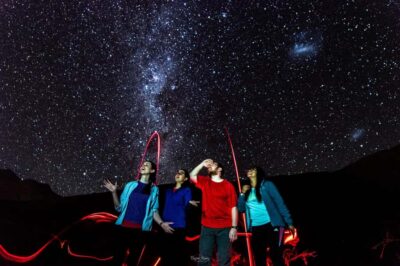
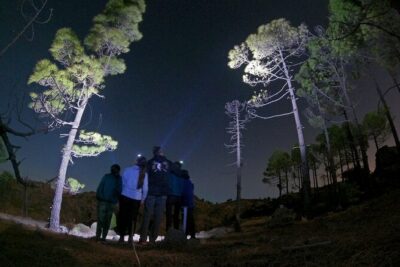
A night sky tour can be pretty, but this one has a plan. Spetses Stargazing pairs practical star-finding with big-picture astronomy, so you’re not just staring at darkness. You meet at Kaïki Beach Club at 10:00 pm and spend about 1 hour 30 minutes learning how to read the sky like a story.
I really love two things here. First, the guide-led mix of Greek mythology and officially recognized constellations helps you get oriented fast instead of fumbling for familiar shapes. Second, Panos is a patient, welcoming host who handles questions well and keeps the tone friendly and curiosity-first.
One consideration: this experience depends on good weather. If clouds roll in, you’ll either be offered a different date or a full refund. So if you’re traveling on fixed dates, keep some flexibility.
In This Review
- Key points to know before you go
- Spetses at 10 pm: why the timing and setting matter
- The 3-part night-sky flow: from star stories to cosmic questions
- Part 1: Observational astronomy and getting oriented
- Part 2: Philosophical astronomy and big mysteries
- Part 3: Photography tips so your night has a record
- Stop in Spetses: what you’ll actually do under the stars
- The constellation-and-myth section: how stories help your eyes
- Philosophical astronomy: mind-bending facts that change how you look
- The photography portion: turning night sky wonder into an actual photo
- Meet the host: why Panos’ style makes the night work
- Price and value: is $100.88 per person worth it?
- Who this Spetses stargazing experience fits best
- Quick practical tips before you go
- Should you book Spetses Stargazing?
- FAQ
- How long is the Spetses stargazing experience?
- What time does the tour start?
- Where does the experience begin?
- Is this a private experience?
- What happens if the weather is bad?
- Can I use a mobile ticket?
- Are service animals allowed?
Key points to know before you go
- Aegean Astronomy Club guidance: You’ll be led by certified astronomy staff tied to AAC.
- Greek myths meet real constellations: Stories aren’t just added fluff; they’re used to help you recognize patterns.
- A 3-part structure that keeps you engaged: Orientation, mind-bending astronomy ideas, then photography-focused tips.
- Ask-anything pacing: The host is known for being patient with questions.
- Private, group-only experience: It’s just your group, not a packed crowd.
Spetses at 10 pm: why the timing and setting matter
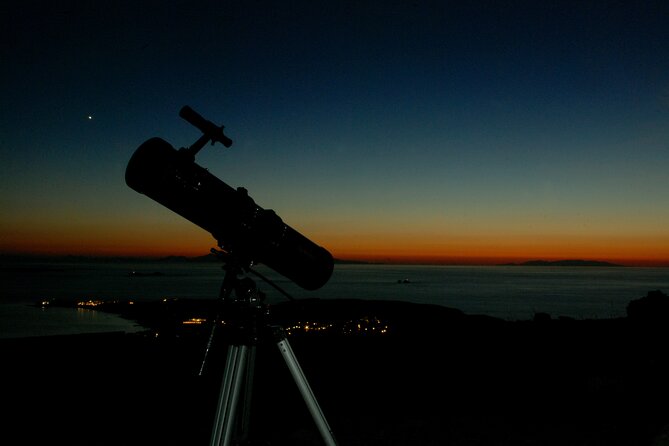
Spetses works well for stargazing because you’re watching from an island setting in the Saronic Gulf, away from big-city light spill. Starting at 10:00 pm is smart: you’re usually past the peak evening bustle, and the night sky has more of a chance to show its details. The tour ends back at the meeting point, so you’re not dealing with long transfers at night.
The vibe is also different from a typical classroom talk. You’re outdoors, you’re looking up, and the guide is actively pointing out what you should be seeing. That matters because astronomy can feel vague if you don’t know what you’re hunting for. Here, you’re given a path: first orientation, then the fun brain-stretcher facts, then practical guidance on capturing what you see.
The 3-part night-sky flow: from star stories to cosmic questions
This experience is built as a sequence, and you’ll feel it as it goes. The program is divided into three themed sections, each with a clear job.
Part 1: Observational astronomy and getting oriented
You begin with an introduction that connects astronomy to people, not just instruments. The guide talks about the history of astronomy and ancient civilizations, then moves into officially recognized constellations and how they’re associated with Greek mythology. The point isn’t to recite dates—it’s to help you locate patterns in the sky using stories you can actually remember.
You’ll also do a quick “get your bearings” approach: learning how to orient yourself according to what you see overhead, so the rest of the night makes sense.
Part 2: Philosophical astronomy and big mysteries
Next comes the fun part: astronomy as a set of questions. This section focuses on mind-bending facts and the bigger “how does this work?” ideas that make space feel both huge and weirdly personal.
In plain terms, you’ll leave with a new way to think about what’s up there—beyond the usual “stars are far away” line. It’s the sort of discussion that makes you look again, because now you understand the sky isn’t random. It’s structured, and your perception of it is part of the experience.
Part 3: Photography tips so your night has a record
Finally, you get photography tips and techniques for night viewing. Even if you’re only using a phone, guidance helps. The main benefit is learning how to approach shooting the sky so you don’t waste the best moments fiddling with settings. You also get a framework for what to aim for visually, rather than just hoping the camera does magic.
Stop in Spetses: what you’ll actually do under the stars
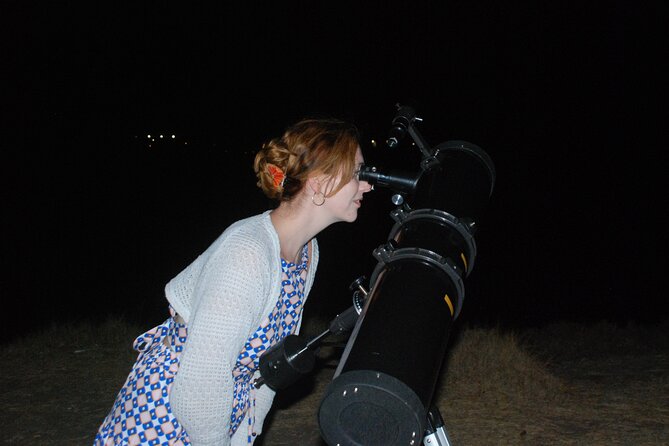
There’s one core location in this experience: Spetses, centered around your start point at Καΐκι Beach Club. That means you’re not bouncing around the island. Instead, you’re setting up your attention in one place long enough to learn the sky in a coherent way.
Here’s what that usually feels like in practice:
- You arrive and settle in around the guide’s instructions.
- You start identifying sky references and constellation patterns linked to myth.
- You look up again during the philosophical astronomy section, which turns recognition into understanding.
- You get photography tips at the end while your eyes are still trained on the sky.
The “back to meeting point” structure is also useful. At night, it reduces friction. You don’t have to worry about navigation, late-night rides, or finding your way back while you’re tired from the excitement.
The constellation-and-myth section: how stories help your eyes
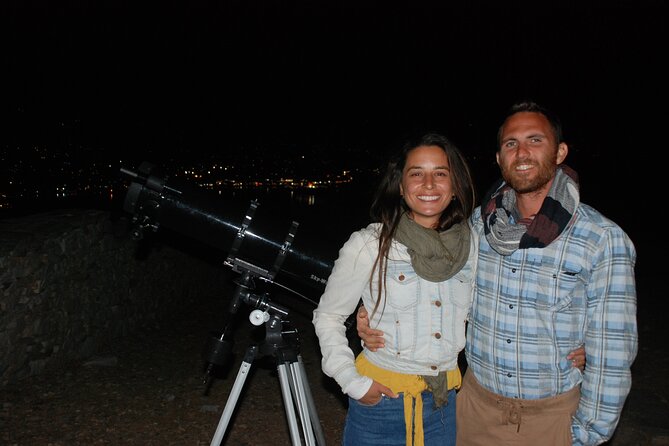
I love this part for one reason: it’s practical. Knowing myth is nice, but the real value is that stories give your brain handles—anchors you can grab when the stars look like scattered points.
When the guide connects Greek mythology to constellations, you’re not memorizing facts like flashcards. You’re learning a method: use the story as a label, and use that label to orient yourself in the sky.
This is also where you typically get your first real wins. Once you identify a constellation, the rest of the sky starts to feel less like noise and more like a map. That’s when stargazing stops being passive and becomes active.
And if you’re the type who asks lots of questions, this section tends to reward you. A good host doesn’t rush you past confusion; they turn it into momentum.
Philosophical astronomy: mind-bending facts that change how you look
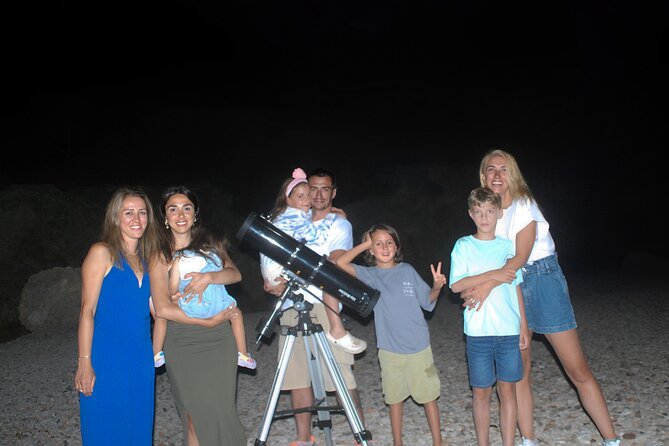
The second section is the reason I’d choose this over a basic stargazing “look and listen” event. The guide’s focus is on the big, slightly challenging questions—facts and queries that make you rethink scale, motion, and what it means to observe the universe.
You’ll hear astronomy framed in a way that connects to human curiosity. That’s important. When astronomy is taught like pure data, it can feel distant. Here, it feels like a conversation with the universe—still grounded, but not sterile.
Also, there’s a calm confidence to the pacing. The host’s job is to keep the questions interesting while also guiding your attention back to what’s visible. That keeps the ideas tethered to reality, so you don’t float off into abstract territory.
The photography portion: turning night sky wonder into an actual photo
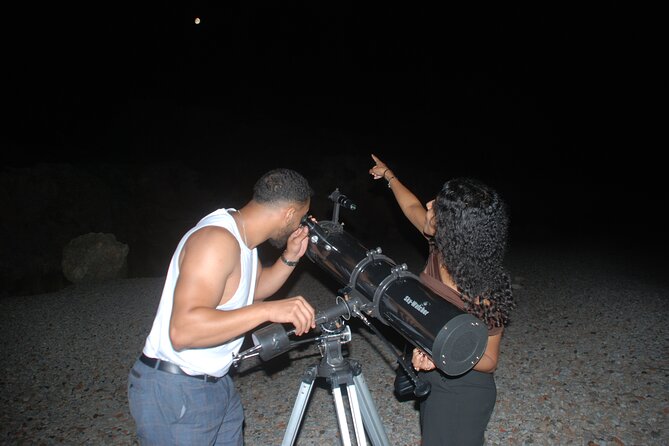
The final segment is about how to take photos without losing the moment. Even when you’re not a serious photographer, night sky shooting is tricky—so tips from someone who’s done it with real people in real conditions can save you.
You’ll get photography guidance tied to what you’re seeing, which helps you decide:
- What you should try to capture
- How to plan your shots rather than random clicking
- How to think about results you can realistically achieve in this setting
I’d treat this as “practical coaching” more than an advanced workshop. The real win is that you’ll end the experience with a clearer sense of what to attempt next time you’re out under dark skies.
Meet the host: why Panos’ style makes the night work
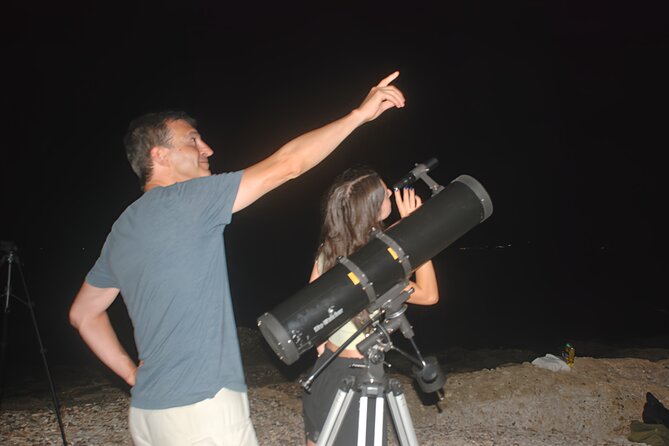
The strongest signal from the experience is the way the host leads. In multiple accounts, Panos comes up as the kind of guide who makes people comfortable asking questions. That’s huge for stargazing, because the moment you feel silly or rushed, you stop looking closely.
One funny detail I also appreciate: people sometimes mishear names or labels for planets in the excitement of the moment—Saturn is an example that comes up. A good guide corrects quickly and kindly, then gets you back to the sky.
That combination—warm hosting plus clarity—turns a potentially intimidating subject into something you can actually participate in.
Price and value: is $100.88 per person worth it?
At $100.88 per person, this isn’t a cheap “maybe-see-some-stars” activity. But it also isn’t priced like a premium private yacht experience, and it does include what matters for value: real instruction, a themed structure, and an astronomy-provider team behind the teaching.
Here’s how I’d evaluate the value for your trip:
- You get guidance, not just a location. A one-time stargazing session is only worth it if you learn how to see. This format is built for that.
- It’s private for your group. You’re not competing with strangers for the guide’s attention.
- You have a full 90-minute arc. That’s enough time to orient, learn, look again, and leave with usable takeaways (including photography tips).
If you’re the kind of traveler who likes experiences with a teaching component—history, mythology connections, and hands-on interpretation—this price can feel fair. If you only want casual star gazing with no instruction, you might feel the cost more strongly.
Who this Spetses stargazing experience fits best
This tour is a great match if you:
- Enjoy guides who can explain what you’re looking at without making you feel lost
- Like mythology connections, especially when they’re used to help you recognize patterns
- Want a late-night activity that feels calm and meaningful, not rushed
- Prefer a private group vibe over a big crowd
It may not be the best fit if:
- You don’t handle nighttime outings well (you’ll be out during the late hour)
- You’re extremely timing-sensitive and can’t adjust for weather changes
- You expect heavy technical gear instruction (the available info points to tips, not a full equipment course)
Quick practical tips before you go
A few small things will make a noticeable difference:
- Dress for cool night air. Even if the day feels warm, nights on islands can feel sharp.
- Bring something for comfort. You’ll be outside for about 1 hour 30 minutes, so plan for standing or waiting around comfortably.
- Come ready to look up. If you spend the session checking your phone nonstop, you’ll miss the guide’s star-finding cues.
- If you’re bringing a camera/phone, be ready to try. The photography portion is there for a reason—take advantage of it instead of treating it as optional.
Should you book Spetses Stargazing?
Yes, if you want stargazing that teaches you how to see. The format is built around orientation, mythology-linked constellation recognition, and conversation-level astronomy ideas, plus practical photo guidance to help you remember the night. If you’re lucky enough to get Panos, you’re also getting a host known for patience and a friendly question-friendly approach.
If you’re the type who needs guaranteed clear skies, then be cautious. This is weather-dependent, and the best stargazing nights happen when clouds stay away.
FAQ
How long is the Spetses stargazing experience?
It lasts about 1 hour 30 minutes.
What time does the tour start?
The start time is 10:00 pm.
Where does the experience begin?
It starts at Καΐκι Beach Club (Σχολές 180 50, Greece).
Is this a private experience?
Yes. It’s a private tour/activity, meaning only your group participates.
What happens if the weather is bad?
This experience requires good weather. If it’s canceled due to poor weather, you’ll be offered a different date or a full refund.
Can I use a mobile ticket?
Yes. The tour uses a mobile ticket.
Are service animals allowed?
Yes. Service animals are allowed.