REVIEW · AMARGOSA VALLEY NEVADA
Las Vegas: Death Valley Sunset and Stargazing Day Tour
Book on GetYourGuide →Operated by EMOTION TRIP · Bookable on GetYourGuide
Desert magic, timed to the sky. This Death Valley day tour stacks classic viewpoints, a sunset at Zabriskie Point, and stargazing later on dark nights.
I like how the day feels organized without being rushed, with free time at key stops and a light walk to enjoy the scenery. I also like the small group setup (limited to 14) and the professional guide running the show in English.
One watch-out: it’s a long day in harsh desert conditions, and the tour has firm limits for age and health, including no wheelchair access and restrictions for people with back problems or high blood pressure.
In This Review
- Quick hits before you go
- Why Death Valley sunset and stars work as one plan
- Hotel pickup, timing, and the 12-hour rhythm
- Morning warmup: Pahrump and that first Death Valley orientation stop
- Dante’s View: the photo stop that frames everything
- Furnace Creek breaks and Furnace Creek again: built-in rest without wasting the day
- Badwater Basin: lowest sea level, high drama photos
- Artist’s Palette: the rainbow-colored mountains moment
- Zabriskie Point at sunset: where the day tilts into magic
- Amargosa Valley stargazing: the dark-sky highlight
- Getting your money’s worth from a $249 day
- Who should book, and who should skip this one
- Should you book this Death Valley sunset and stargazing tour?
- FAQ
- FAQ
- How long is the Death Valley sunset and stargazing tour?
- Where does the pickup happen?
- What time will you be picked up?
- How big is the group?
- What major places do you visit during the day?
- Where do sunset and stargazing happen?
- Is food included in the price?
- What should I bring for the tour?
- What if the stars or sunset are blocked by weather?
- Who can participate, and who should avoid it?
Quick hits before you go
- Three-in-one day: viewpoints, sunset, then stars in one continuous outing
- Zabriskie Point for the payoff: the sunset stop is built around the best views in Death Valley
- Low-level salt flat drama: Badwater Basin photo moments include the lowest sea level in the park
- Rainbow-colored mountains: Artists Palette is one of the most photogenic stops on the route
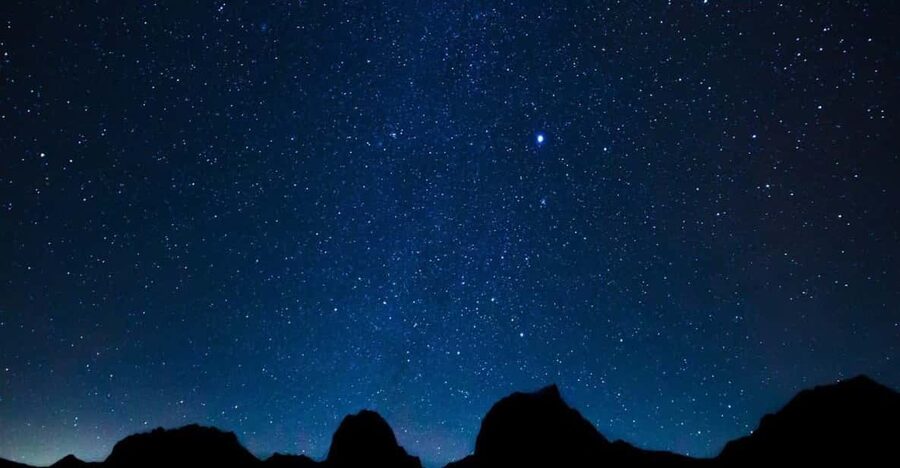
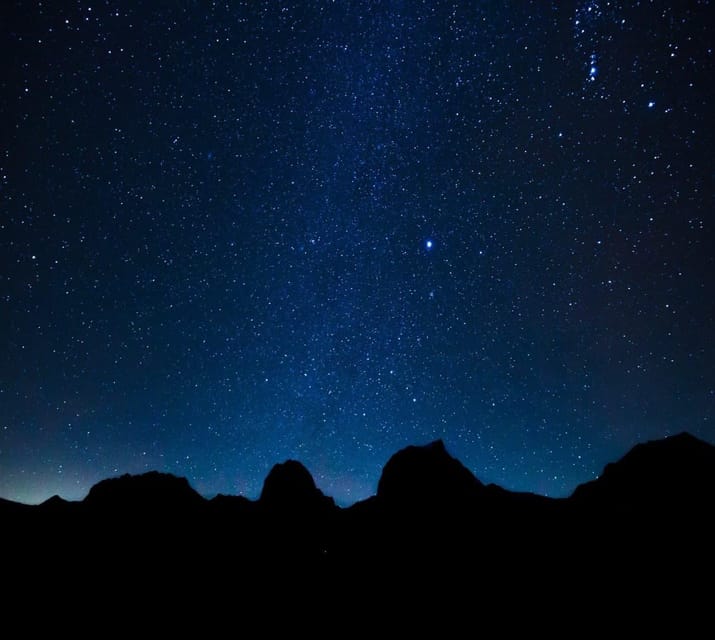
- Amargosa Valley at night: stargazing is the highlight when the sky turns properly dark
- Long but not frantic: you get multiple stretches of free time to breathe and take photos
Why Death Valley sunset and stars work as one plan
Death Valley can be overwhelming on your own. It’s huge, the drive times add up, and sunset is a moving target. This tour solves that by building the day around daylight first, then committing to the evening sky once the light changes.
What makes it especially interesting is the pairing: big daytime geography, then the quiet payoff of stargazing after dark. Your eyes go from harsh desert contrast in the afternoon to something much calmer at night—bright points of light against a sky that actually feels dark. And because the tour has a set flow, you’re not trying to guess timing from your phone.
You should know the weather reality. If clouds roll in, you might not get the stars you came for. That’s not the tour’s fault, but the tour’s policy is strict: no refunds if weather blocks sunset or stargazing.
Hotel pickup, timing, and the 12-hour rhythm
This is a 12-hour tour that starts somewhere between about 8 AM and 1 PM, depending on sunset timing. Pickup is from hotels on the Las Vegas Strip, and you’ll wait in the hotel lobby for your driver. Your exact pickup location and time are sent by the guide the day before.
Two practical things matter here. First, since the pickup window shifts, plan your morning in Las Vegas around it—not around a fixed schedule. Second, your tour is built around being on the road early enough to hit the day stops, then make Zabriskie Point for the evening.
The group is small—limited to 14 participants—so you don’t get the feeling of being herded. The guide is English-speaking and keeps the pacing sensible for a long day outdoors.
Morning warmup: Pahrump and that first Death Valley orientation stop
After pickup, the day starts with a quick visit in Pahrump (about 20 minutes). It’s not a “big attraction” moment; it’s more like getting your bearings and switching from Vegas time to Death Valley time. Use this stretch to reset—water, bathroom if needed, and a quick look at your shoes and sun protection.
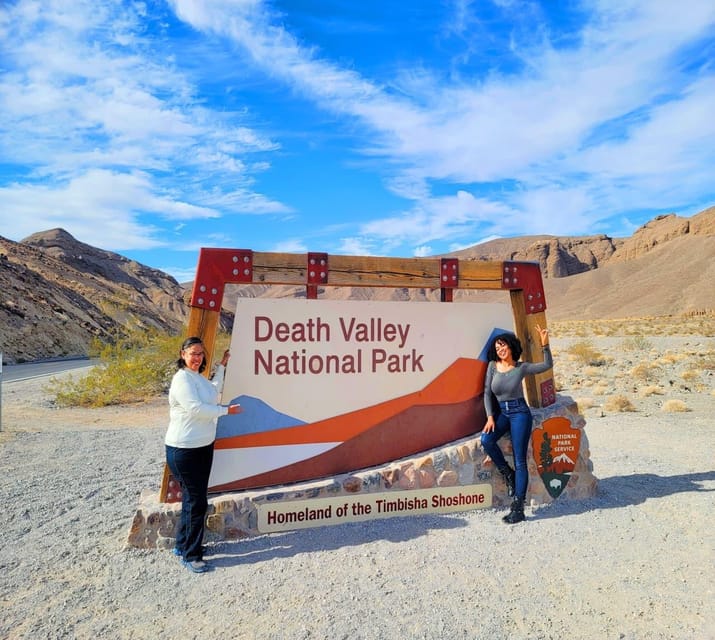
Next comes Death Valley National Park with a photo stop by the welcome sign plus about 20 minutes of free time. This is your first chance to stretch your legs without a big commitment. You’ll also get a feel for how quickly the desert environment takes over your senses: heat, wide open views, and that dry light that makes everything look sharper.
If you’re hoping for perfect photos, remember this early stretch is where you can set up your rhythm. Take the shot you want, then don’t burn your energy before the heavier viewpoints later.
Dante’s View: the photo stop that frames everything
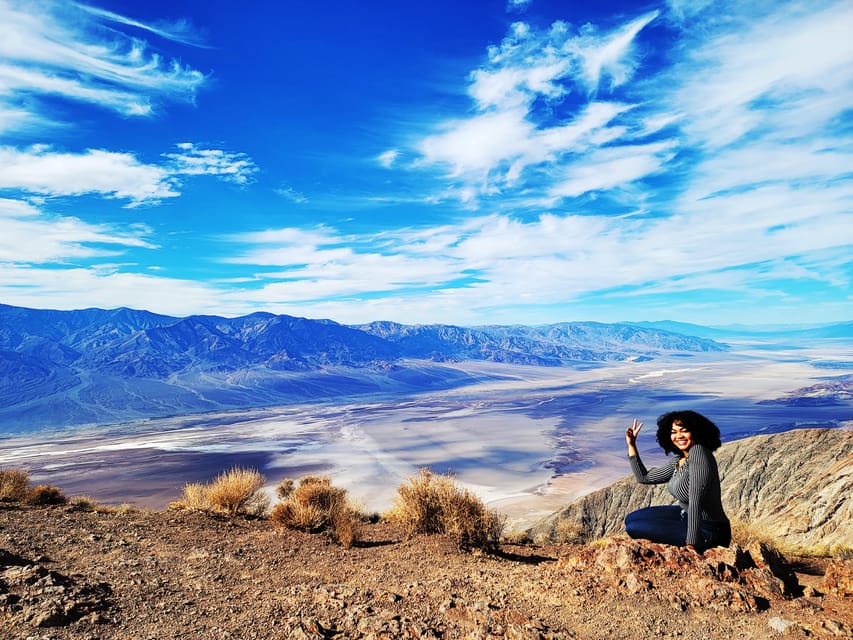
The tour heads to Dante’s View next (around 30 minutes total, with photo time plus sightseeing and free time). This is one of those places where you look out and suddenly understand how dramatic Death Valley really is.
Here’s why Dante’s View works on a guided day like this. The guide can time your arrival and help you aim for the angles that usually look best. One guide on this route—Leo—is known for being funny and helpful, with a knack for photography tricks. That kind of guidance can save you from wandering around with no plan.
A possible drawback: it’s a photo stop, so you’ll be standing and walking a bit. Wear comfortable shoes and take your time. The point is to enjoy the view, not sprint from one frame to the next.
Furnace Creek breaks and Furnace Creek again: built-in rest without wasting the day
You’ll pass through Furnace Creek twice. The first time is a shorter break (about 20 minutes), then later there’s a longer stop back at Furnace Creek with about 1 hour that includes free time.
This is where the tour earns its value for people who don’t want to play logistics. Death Valley doesn’t forgive a bad plan, and a long day without structured breaks can wear you down. Even if you don’t eat on the spot, this is the time you can cool off a little, use the facilities, and reset your legs.
Just know one key detail: food and drinks are not included. So if you want lunch during that longer Furnace Creek break, you’ll need to pay for it separately. Bring the mindset that the breaks are part of the schedule, but you still handle your own meals.
Badwater Basin: lowest sea level, high drama photos
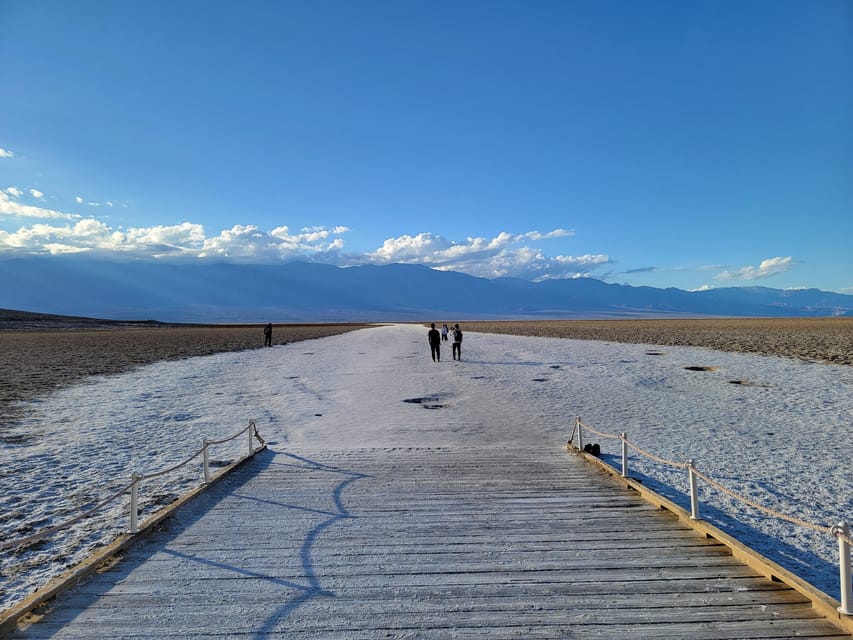
Next up is Badwater Basin (photo stop plus sightseeing and free time, around 30 minutes). This is the big “wow” for many people: salt flats that feel endless, and the knowledge that you’re seeing the lowest sea level area in the park.
Badwater Basin is not just scenic; it’s visual proof of how extreme this place is. Even if you’ve seen pictures, being there in person changes the scale. The white flats, the shadows, the bright sky—all of it makes it feel like a different planet.
The trade-off is time and heat. Thirty minutes sounds short, but it can feel like enough when you’re standing in full sun. This is where your comfortable clothes and sunglasses matter most. Take quick photos, step back for a second to breathe, and then move on before you feel wiped out.
Artist’s Palette: the rainbow-colored mountains moment
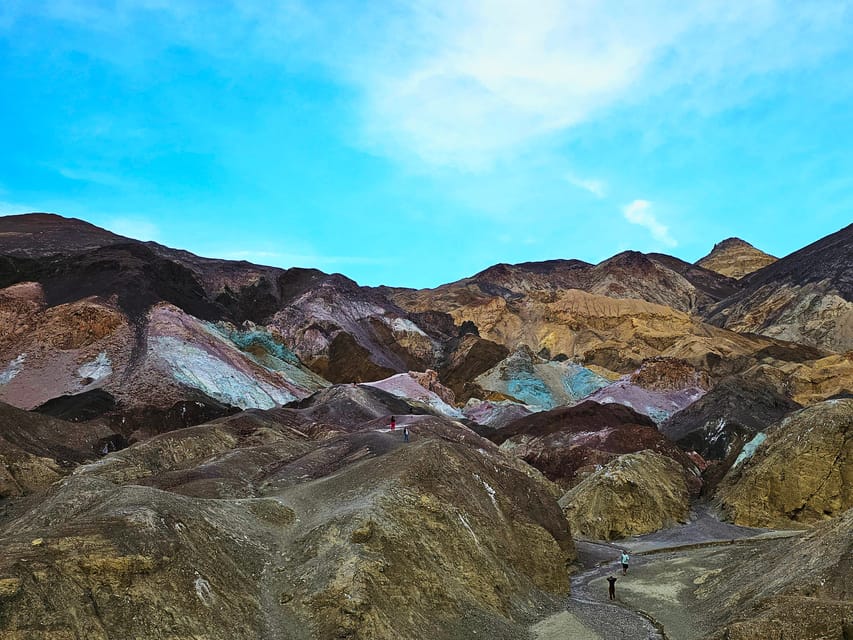
After Badwater Basin, the tour stops at Artist’s Palette (about 30 minutes total with photo time, visit, and free time). This is the stop many people remember because the colors are so unusual. The mountains can look like layers of paint, and it’s exactly the kind of place that rewards a calm stroll.
One practical note: your free time is part of the experience here. Don’t treat it like a checkbox. Slow down, look from different angles, and you’ll see how the colors shift with the light.
This stop is also a good marker that you’ve officially moved from “basic sightseeing” into “real Death Valley character.” From here, sunset is only a matter of time.
Zabriskie Point at sunset: where the day tilts into magic
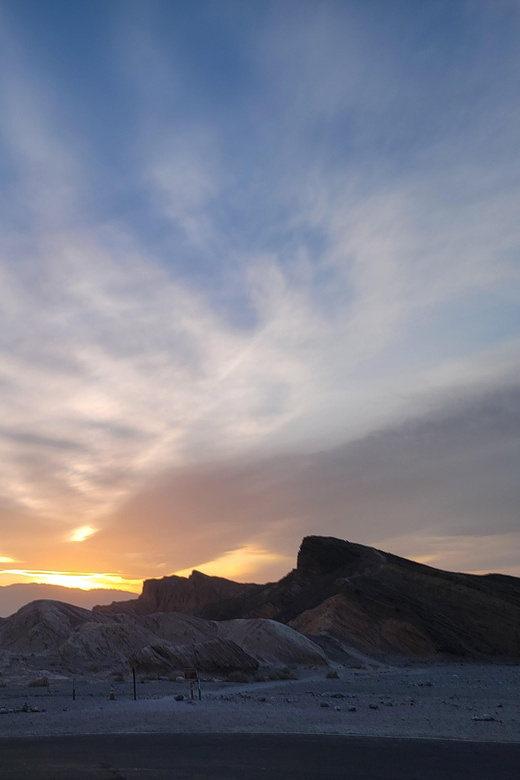
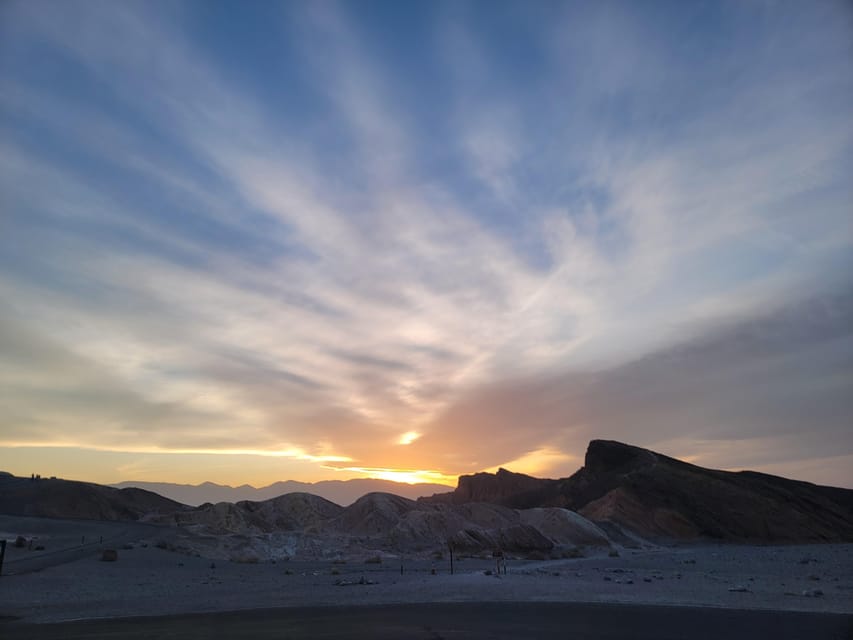
Then you get to Zabriskie Point (about 40 minutes, including photo stop, visit, free time, sightseeing, and sunset). This is the evening anchor, and it’s described as having the most beautiful views in Death Valley—so the tour builds a serious chunk of time around it.
What you’ll likely appreciate is the balance: you’re not rushed to sit in one exact spot and wait in silence. You get time to watch, take photos, and enjoy the scenery. A light walk is mentioned as part of the tour style, and Zabriskie Point is the kind of place where a slow walk makes sense.
One more thing: this is also where your tour’s timing matters most. If you’re late to Zabriskie Point, you miss the change in sky. The tour timing is set so you arrive with enough time to settle in before the sun drops.
Amargosa Valley stargazing: the dark-sky highlight
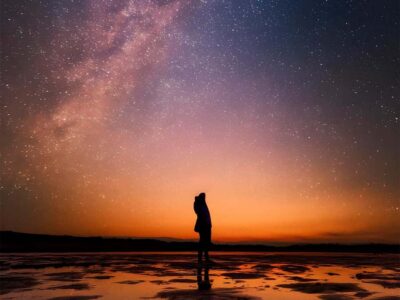
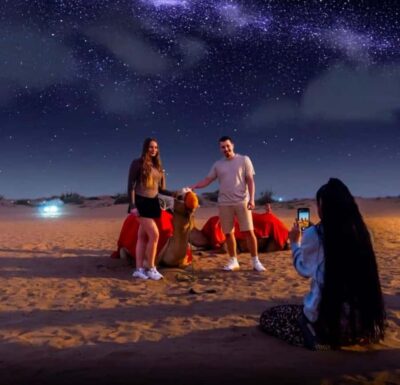
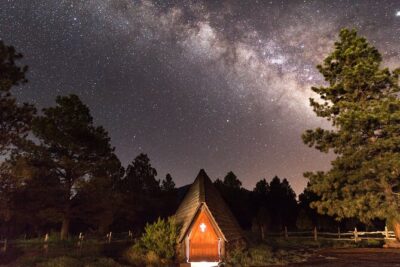
After sunset, you head to Amargosa Valley, Nevada (about 30 minutes, with photo stop, visit, free time, and stargazing). This is the highlight of the trip when conditions allow it.
The stargazing part is not just a line item; it’s the reason the day works as a single package. You spend the afternoon seeing extremes of terrain, then you switch gears to something you can’t easily replicate on your own in Vegas. The payoff is seeing the stars shining brightly in the dark sky.
Important reality check: the tour states refunds will not be issued if you can’t see the stars due to weather conditions. That doesn’t mean you’ll have a bad time—it just means the company can’t control cloud cover.
If you’re the type who plans your trip around night skies, this is where you’ll feel the most satisfied.
Getting your money’s worth from a $249 day
At $249 per person for a 12-hour tour, you’re paying for three things that are hard to DIY in one smooth day.
First, you’re paying for transportation and routing. Hotel pickup and drop-off removes the biggest headache: getting out to Death Valley at the right times without burning your day driving, guessing, and backtracking.
Second, you’re paying for a guide who helps you land the right stops at the right moments. One guide—Justin—is described as amazing, sweet, and helpful, which matters when you’re in a long day and want clear direction.
Third, you’re paying for the evening “sequence” that people often struggle to pull off: daylight viewpoints first, then sunset at Zabriskie Point, then stargazing. If you try to stitch that together yourself, the timing can fall apart fast.
Food isn’t included, but water is—unlimited bottled water is provided. That’s not glamour, but it’s practical for a place where you’ll be outside for hours.
Who should book, and who should skip this one
This tour is listed as small group and not for everyone.
You should consider it if:
- you want a full Death Valley sampler without driving yourself
- you care about sunset at Zabriskie Point and actual stargazing afterward
- you prefer free time at viewpoints instead of a nonstop lecture tour
You should skip it if:
- you need wheelchair access (not suitable for wheelchair users)
- you have back problems or pre-existing medical conditions
- you have high blood pressure
- you’re over 75 (not suitable)
- you’re traveling with children under 4 (not permitted) or under 5 (listed as not suitable)
Also, the tour is only available with a minimum of 2 participants, which means it’s designed to run as a true group outing rather than a solo wandering plan.
Should you book this Death Valley sunset and stargazing tour?
I’d book it if you want the biggest Death Valley highlights in one day and you’re excited by the idea of ending with stars, not just more viewpoints. The structure—morning stops, Zabriskie Point sunset, then Amargosa Valley stargazing—fits people who dislike uncertainty.
I wouldn’t book it if you hate long days outdoors or you’re sensitive to heat, because you’ll be outside for many hours. And don’t count on a guaranteed star show if the weather turns cloudy—this tour explicitly won’t refund for that.
FAQ
FAQ
How long is the Death Valley sunset and stargazing tour?
The tour runs for 12 hours.
Where does the pickup happen?
Pickup is only available from hotels located on the Las Vegas Strip, with many strip hotels listed as options.
What time will you be picked up?
Pickup time varies from about 8 AM to 1 PM depending on the sunset time. The exact pickup time and location are provided by the guide the day before the tour.
How big is the group?
The group is limited to 14 participants.
What major places do you visit during the day?
You’ll stop in Pahrump, visit Death Valley National Park with a photo stop by the welcome sign, go to Dante’s View, make breaks at Furnace Creek, visit Badwater Basin, and stop at Artist’s Palette.
Where do sunset and stargazing happen?
Sunset happens at Zabriskie Point. After dark, stargazing takes place in Amargosa Valley, Nevada.
Is food included in the price?
No. Food and drinks are not included.
What should I bring for the tour?
Bring comfortable shoes, sunglasses, sunscreen, and comfortable clothes.
What if the stars or sunset are blocked by weather?
Refunds are not issued if you’re unable to see the stars or the sunset due to weather conditions.
Who can participate, and who should avoid it?
The tour is not suitable for wheelchair users, people over 75, children under 5 years, and people with back problems or pre-existing medical conditions (including high blood pressure). Children under 4 are not permitted.