REVIEW · JERVIS BAY
Jervis Bay Beach Stargazing Tour with our Astronomer
Book on Viator →Operated by Blue Mountains Stargazing · Bookable on Viator
One of the easiest wow-factors in Australia’s south. Jervis Bay’s night sky is famously dark, and this tour turns that into a guided, 90-minute sky lesson on Nelsons Beach with wave sounds and sunset views. I love that it starts with naked-eye astronomy right where you’re sitting, then moves to telescope views and ends with a Q&A.
If you want a simple value pick, this one is $60.97 and stays small, with a maximum of 20 people. A possible drawback: the experience depends on clear skies, so if it’s overcast you may be cancelled and rescheduled, with fees kept from any refund.
The science angle is legit too. Dimitri, an Astrophysicist PhD, brings years of observing experience from places like Sydney Observatory and world-renowned sites including Lake Tekapo in New Zealand, plus work at Emirates One & Only Wolgan Valley, and he’s a TEDx speaker. One more thing I appreciate: you might get to check for bioluminescent glow in the sea, and you also have chances to spot shooting stars.
In This Review
- Key highlights to know before you go
- Why Jervis Bay’s dark sky feels different
- Meeting at Moona Moona Beach, then settling in for Nelsons Beach stargazing
- The naked-eye astronomy session: where you learn to actually find things
- Checking the sea: bioluminescence and why the timing matters
- Telescope time: what you might see (and what changes by season)
- Who you’re with: Dimitri and the teaching style
- Price and group size: what you’re really paying for
- Weather reality: what happens if it’s overcast
- What kind of night this is perfect for
- Should you book this Jervis Bay stargazing tour?
- FAQ
- Where is the meeting point for the tour?
- How long is the Jervis Bay Beach stargazing tour?
- How much does the tour cost?
- How many people are in a group?
- What kinds of things will I see during the night?
- Is bioluminescence included?
- What happens if the sky is overcast?
- Is there a Q&A at the end?
- What ticket do I need?
Key highlights to know before you go
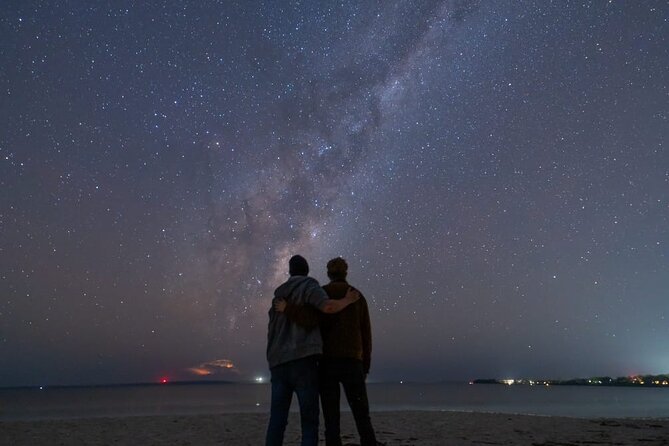
- Dark-sky stargazing at Jervis Bay with ocean soundscapes and proper guidance
- Laser-guided naked-eye astronomy so you can actually find things fast
- Telescope views that can include the Moon, planets, Orion Nebula, star clusters, and the Milky Way
- A bioluminescence check for glowing waters, depending on conditions
- Small-group format capped at 20, plus time for questions
Why Jervis Bay’s dark sky feels different
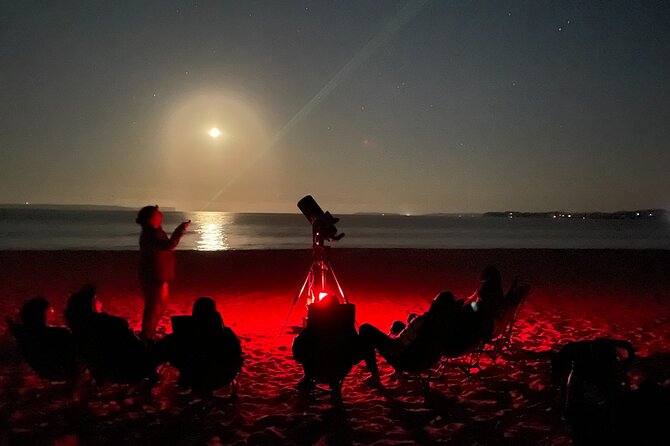
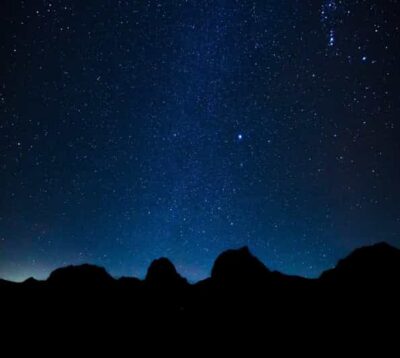
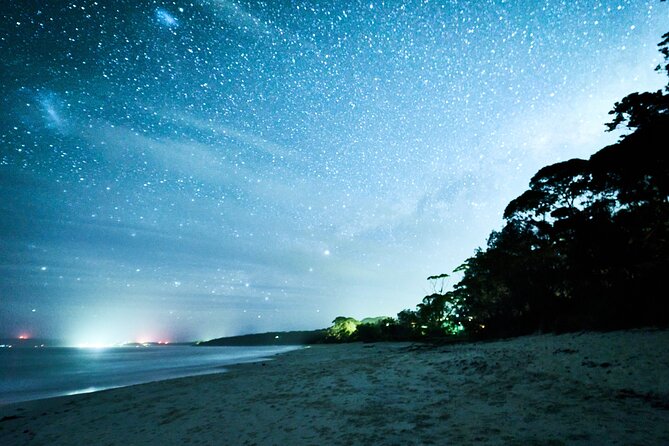
Jervis Bay is one of those places where the night looks like it’s been turned up. Out here, you’re away from city glow, so the stars don’t just “show up” in a cute way. They organize themselves. Once your eyes adjust, patterns start to click, and the sky stops being background noise.
That’s exactly what this tour is built for: helping you go from blurry wonder to clear recognition. You get a guided start with laser pointers, and you’ll learn how to pick out constellations and navigate the sky without needing any special equipment. Then you shift gears into telescope viewing for the objects your eyes can’t pull out on their own.
This is also a good night out because it’s not just for astronomy nerds. It’s designed as an all-ages experience for date nights, families, and groups, with a structure that keeps you engaged for the full 1 hour 30 minutes.
Meeting at Moona Moona Beach, then settling in for Nelsons Beach stargazing
You meet at Moona Moona Beach Playground, 7 Tapalla Ave, Huskisson NSW 2540. From there, the tour experience takes you into the stargazing setup on Nelsons Beach, where the night starts in a calm, beachfront way.
The vibe matters more than people think. You aren’t sprinting from stop to stop in the dark. Instead, you get positioned for viewing, and the guide leads you through what’s overhead. The reviews point out that the stargazing spot feels clearly set up, with chairs and blankets provided, which helps a lot when you’re planning to stay outside for 90 minutes.
Bring the kind of clothing you’d wear for a cool evening by the water. Even in months that don’t feel cold in daylight, nights near the sea can get chilly once you stop moving.
The naked-eye astronomy session: where you learn to actually find things
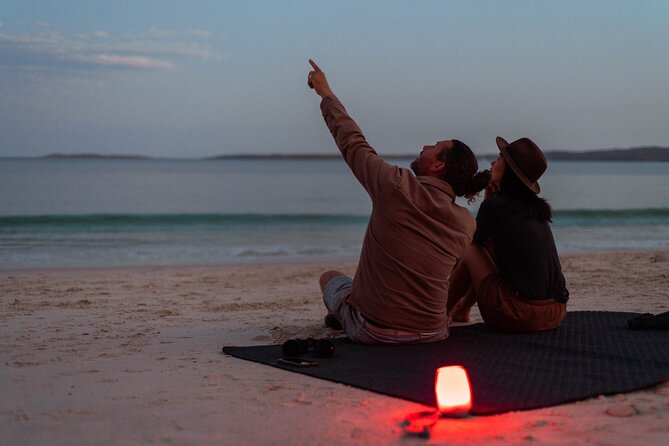
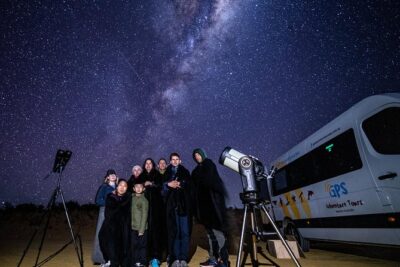
The tour kicks off with naked-eye astronomy on Nelsons Beach. Think of it as your sky orientation class, done with a view. You’ll get laser-guided pointing, plus tips and hacks for spotting stars and constellations.
This part is the best value for most people, because it changes how you experience the rest of the night. When you can name even a few points in the sky, the telescope views make more sense. You stop treating objects like random dots and start understanding how they connect.
You’ll also get navigation tips alongside constellation storytelling. That’s one of the reasons this works for first-timers. You’re not just learning facts. You’re building a mental map. And because the session happens with ocean sunset views and wave sound, it doesn’t feel like a lecture. It feels like guided wonder with structure.
Checking the sea: bioluminescence and why the timing matters
One of the coolest extras is the chance to check for bioluminescence, meaning glowing water or glowing plankton in the sea. The idea is simple: look for that faint, living glow in the water, if conditions line up.
This is not guaranteed, so the tour treats it as an opportunity rather than a promise. Still, the possibility is what makes the evening more memorable. One review specifically mentioned seeing luminescent planktons during the experience, which is the sort of moment you’ll remember because it looks like the ocean briefly turned into something magical.
If you’re curious about the mechanics, the practical takeaway is: pay attention when your guide cues it, and don’t rely on your eyes alone. When bioluminescence appears, it can be subtle at first. Watching closely when the guide directs you is the difference between catching it and missing it.
Telescope time: what you might see (and what changes by season)
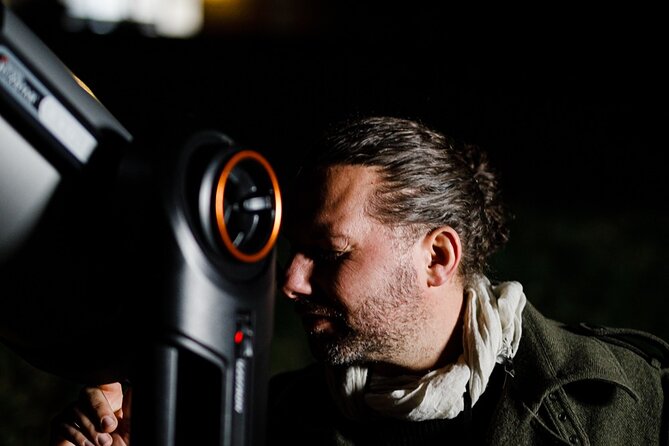
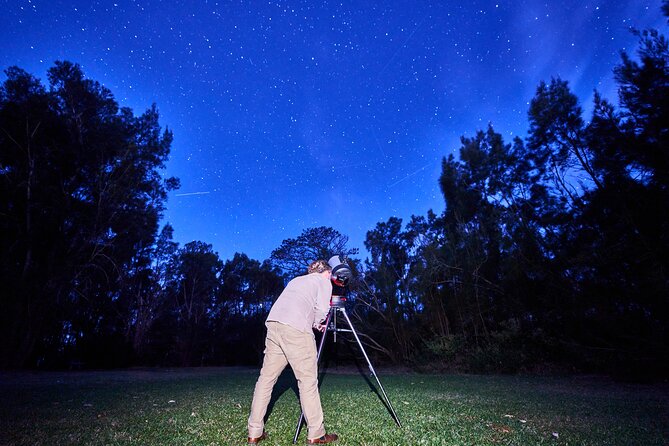
After the naked-eye segment, you’ll observe through a state-of-the-art telescope. What you see depends on the time of year and the night’s conditions, but the tour lists common targets so you know what the goalposts are.
Potential telescope highlights include:
- The Moon
- Planets
- The Orion Nebula
- Star clusters
- Deep sky objects
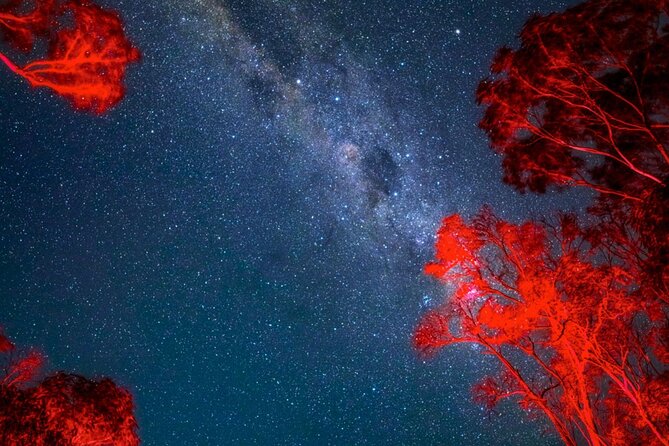
- The Milky Way
Here’s the practical reason the telescope portion matters. Your eyes can only do so much. A dark sky helps, but it still can’t show the same detail as magnified viewing. With the telescope, you get to experience celestial objects as physical objects instead of distant pinpoints.
And because the guide is an astrophysicist, you’ll usually get context that’s more than just “look here.” Dimitri’s background includes observing and sharing astronomy in real settings, from Sydney Observatory to international observatories like Lake Tekapo in New Zealand and work at Wolgan Valley. That kind of experience tends to translate into clean explanations that don’t assume you already speak astronomy.
You might also notice that the tour stays flexible. Celestial targets are listed as depending on timing and conditions, which is a polite way of saying the guide adapts to what’s available that night.
Who you’re with: Dimitri and the teaching style
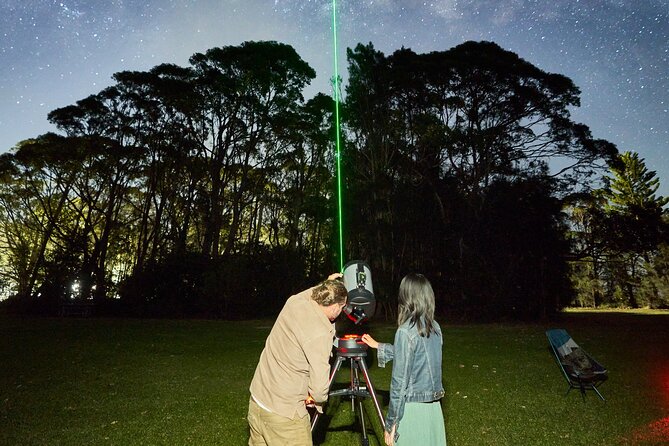
This experience is guided by Dimitri, an Astrophysicist PhD with 10+ years of experience, including astronomy work at major observatories and luxury astronomy settings. He also gives cultural astronomy talks and is a TEDx speaker.
In plain terms: you should expect astronomy talk that connects to real viewing. It’s not just facts. It’s cues for where to look and how to interpret what you’re seeing.
The reviews also mention Tom leading sessions at least some of the time. So depending on the date, you might get a different guide from the same provider. Either way, the key is the same: you’ll have guided attention plus a chance to ask questions.
And that Q&A at the end is part of why this works. Instead of finishing with confusion, you can ask what you missed, what you should look for next time, or how to think about the objects you saw.
Price and group size: what you’re really paying for
At $60.97 per person for about 1 hour 30 minutes, you’re paying for two things: expert guidance and dark-sky access with a telescope setup.
You’re not just buying entry into a stargazing spot. You’re buying structure—laser-guided finding, constellation tips, telescope observing, and Q&A. For many people, that’s the difference between spending 90 minutes staring at the sky without a clue and leaving with an actual mental map.
The small-group cap of 20 people matters too. In a big crowd, it’s easy to feel lost. Here, the setup supports a more personal pace, so you can look, ask, and actually keep up with what the guide is pointing at.
The reviews rate it highly (4.8 out of 5 from 35 reviews) and recommend it strongly (97%). The highest praised parts are the smooth communication, the defined viewing spot with chairs and blankets, and the fact that it’s a well-run experience even when conditions aren’t perfect.
Weather reality: what happens if it’s overcast
Stargazing is weather-dependent. If it’s overcast, the tour emails a cancellation notification at 3 pm on the day of the tour. You’ll be offered a chance to reschedule with credit valid for 3 years in Jervis Bay and the Blue Mountains, and that credit is transferable to other people as a gift card. A refund is also possible, but with 5% kept as non-refundable merchant and service fees.
One review called out frustration about service charges being deducted on a refund. That’s the only major note of caution in the feedback, and it’s worth keeping in mind if you’re booking as a strict one-night plan.
Practical tip: if you can be flexible, you’ll enjoy this more. Overcast doesn’t mean the trip is a disaster. It means you might need to shift to another session.
What kind of night this is perfect for
This tour is a strong fit if you want an easy, guided way to experience the southern sky without carrying gear or learning astronomy in advance. It’s also a solid family choice because it’s designed for all ages and keeps the experience moving.
It’s especially good if you:
- Want a first-time stargazing win where you learn what you’re seeing
- Like nature, night skies, and hands-on explanations
- Prefer a small group rather than a large crowd event
- Enjoy “potential surprises,” like the chance of seeing bioluminescent glow in the sea
If you’re the type who needs zero flexibility and hates weather risk, then plan your expectations carefully. You’re choosing an outdoor sky experience, not a room-based show.
Should you book this Jervis Bay stargazing tour?
Yes, I think you should book it if your goal is a guided night sky experience that’s both fun and educational, with the chance of real-life surprises like glowing plankton. The dark-sky setting at Jervis Bay does the heavy lifting, and the tour’s format does the rest—laser-guided finding, telescope observing, and a Q&A so your questions don’t go unanswered.
I’d book it soon (it’s commonly reserved around 25 days in advance) if you’re traveling in peak season or on weekends, since slots can fill. And if you’re booking with weather sensitivity, keep an eye on conditions and be ready to reschedule if clouds roll in.
Bottom line: this is not just a look-up-at-the-stars event. It’s a guided night where you leave able to point at the sky and understand a bit more of what you’re seeing.
FAQ
Where is the meeting point for the tour?
You meet at Moona Moona Beach Playground, 7 Tapalla Ave, Huskisson NSW 2540.
How long is the Jervis Bay Beach stargazing tour?
It runs for about 1 hour 30 minutes.
How much does the tour cost?
The price is $60.97 per person.
How many people are in a group?
The tour has a maximum of 20 travelers.
What kinds of things will I see during the night?
You may see the Moon, planets, the Orion Nebula, star clusters, deep sky objects, the Milky Way, and you may also look for shooting stars.
Is bioluminescence included?
You’ll check for bioluminescence, meaning glowing waters in the sea, depending on the conditions.
What happens if the sky is overcast?
If it’s overcast, you’ll receive an email cancellation notice at 3 pm on the day of the tour. You can reschedule with credit valid for 3 years, or request a refund (with 5% non-refundable merchant and service fees).
Is there a Q&A at the end?
Yes. The tour ends with a Q&A with the astronomer.
What ticket do I need?
You’ll use a mobile ticket.